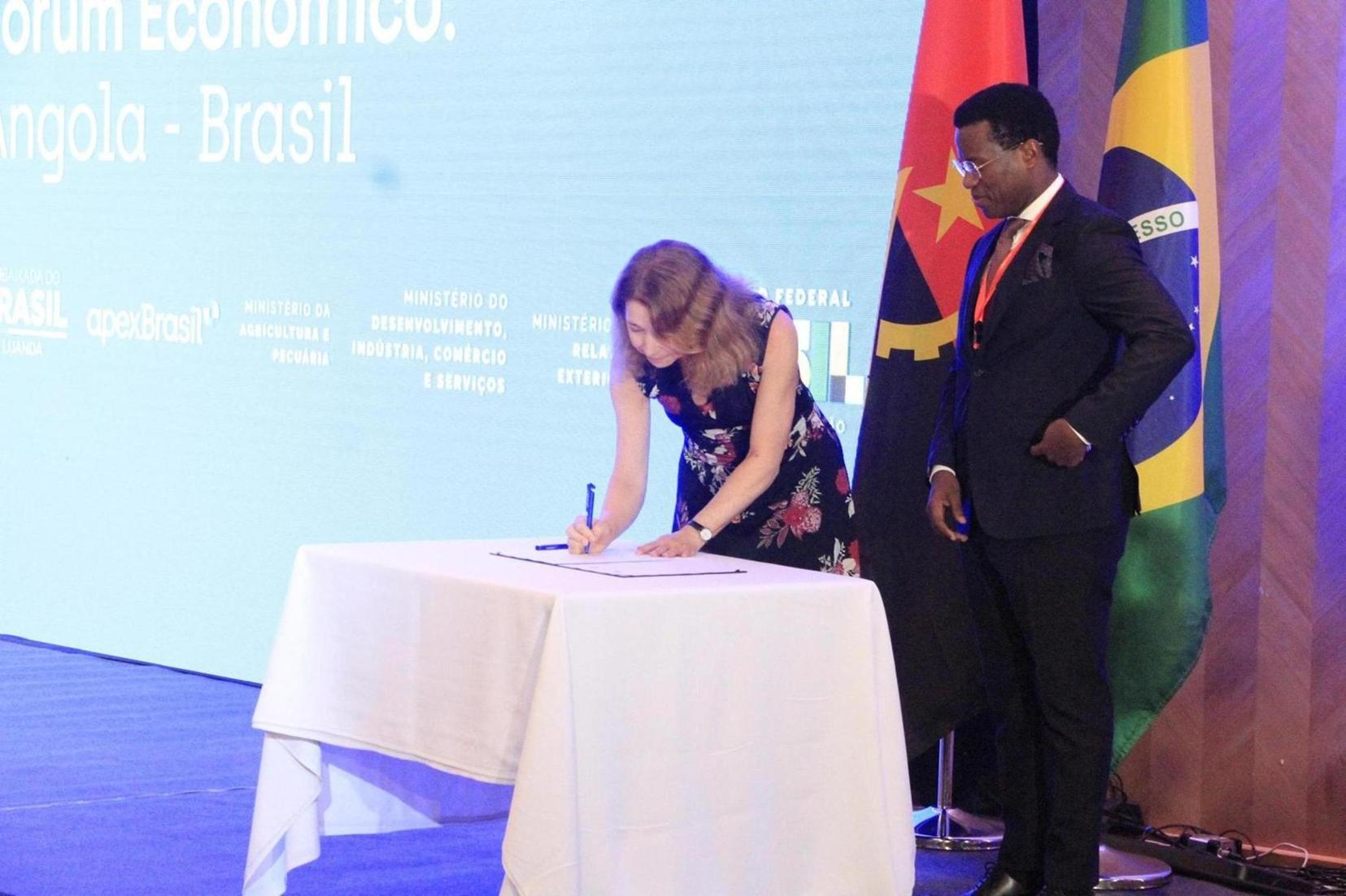
Africa-Press – Angola. The republics of Angola and Brazil signed, last Friday night, the action plan, 2023/2025, within the scope of technical cooperation and development of irrigated regions and policies to support family farming in southern Angola.
The plan is part of the “Programa do Vale do Cunene”, an initiative whose direct beneficiaries are the population of the Vale do Cunene, a semi-desert region, an experience also lived by the population of the Vale de São Francisco, in Brazil.
The initiative is coordinated by the Brazilian Cooperation Agency (ABC), by the Ministry of Foreign Affairs, involving other institutions of that South American country.
The Work Plan, signed by the deputy director of ABC, Luísa Lopes, and by the director of the Study and Statistics Office of the Ministry of Agriculture and Forestry of Angola, Anderson Jerónimo, establishes 25 priority actions, such as the elaboration of policies for family agriculture, training of Angolan staff and development of agricultural and livestock research.
The Cunene Valley program is a response to a request from President João Lourenço, who guides the authorities of the two countries (Angola and Brazil) to work together to diversify the agricultural production base in that region (Cunene Valley), as a way of country’s economy to stop depending on oil as the main export product for raising foreign exchange.
The project is integral and involves, in addition to the experience of knowledge and public policies, the attraction of investments in the production and inclusion of family farming.
San Francisco Valley Project
The Cunene Valley project is similar to that of the São Francisco Valley, in Brazil, managed by the Companhia de Desenvolvimento do Vale de São Francisco, which, in addition to family farming, was transformed into a region for large-scale diversified production, ensuring surplus for export.
The idea is to replicate in the extensive region of the Cunene Valley, with the irrigation channels being completed and expanded, a model that has been successfully implemented in Brazil.
For More News And Analysis About Angola Follow Africa-Press