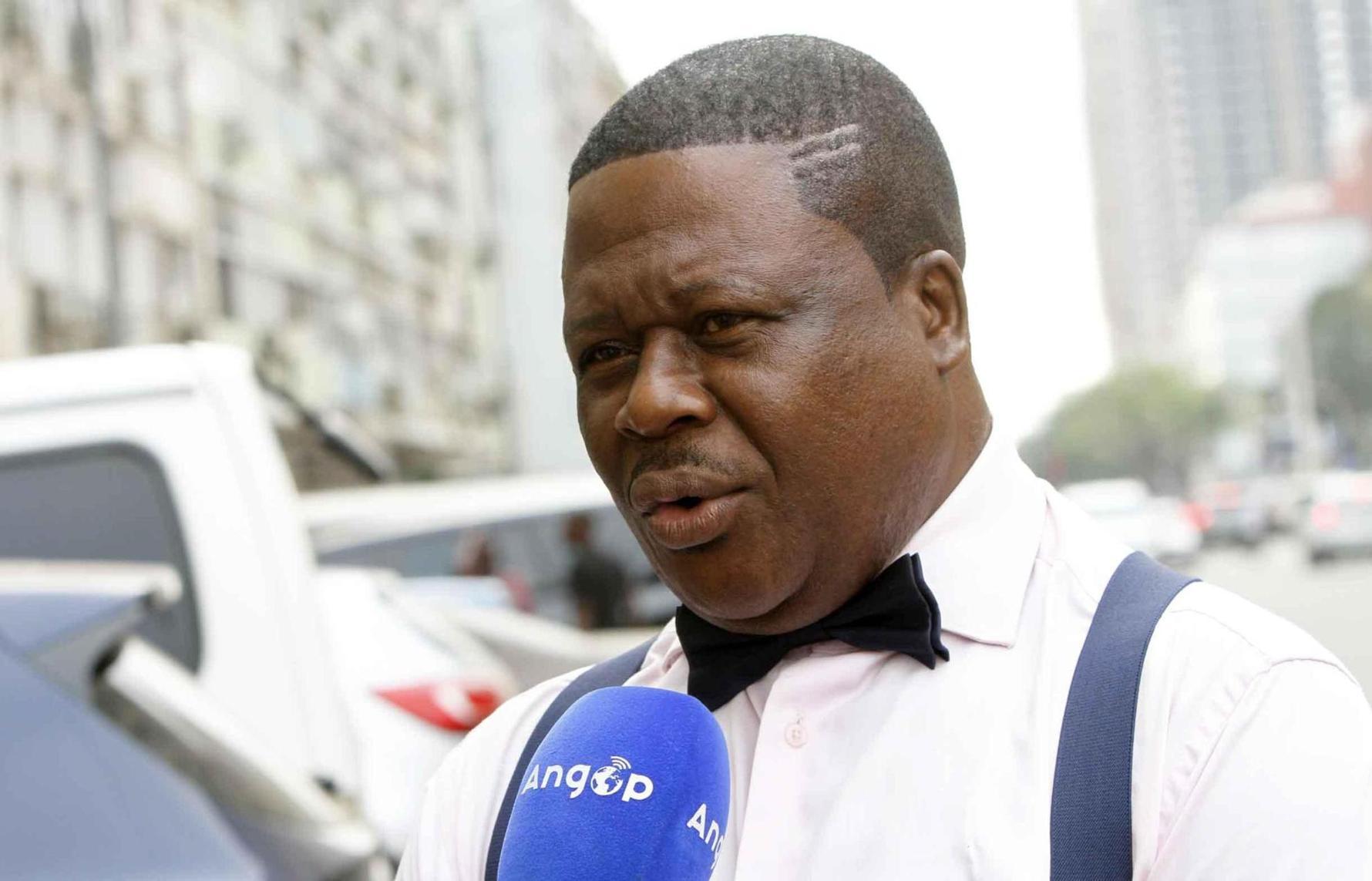
Africa-Press – Angola. The Angolan political analyst, Bernardino Neto, condemned, this Friday, in Luanda, the current political-military situation in the Republic of Gabon, in which the military seized power through a coup d’état, in the early hours of 30 August.
The military seized power in Gabon, marking the eighth coup d’état in a former French colony in the past three years. The officials justified this act by saying that they decided to “defend peace, putting an end to the current regime” and claiming that last weekend’s elections were fraudulent.
Bernardino Neto defended that a coup d’état does not always mean change, although many times, in a euphoric way, certain people conclude in this way.
Even so, he defended the need to analyze whether the situation in Gabon is really a coup d’état or not.
“Elections took place and a scenario of post-electoral conflicts was outlined, hence the emergence of military power precisely to impose legality”, he stressed.
The political analyst drew attention to the need for serious reflection on the fact that, in a period of three years, the African continent has faced several coups d’état.
“Since the beginning of the 21st century, more than 20 leaders of the African continent have been deposed without elections, by public demonstrations or through court decisions”, he said.
As an example, he pointed out the cases of Robert Mugab, in Zimbabwe, and Jacob Zuma, in South Africa, as well as the current cases of instability in some countries of Central and West Africa.
Repercussions on ECCAS
The Economic Community of Central African States (ECCAS), created in 1981, has its headquarters in Libreville, Gabon.
Bernardo Neto points out that the current political-military instability in Gabon is a challenge not only for the Community of Central African States, but also for the African Union (AU).
Likewise, he recalled that Gabon holds the presidency of the CEAC, which is a political scenario that requires a “cool head” and the help of other leaders, such as the President of Angola, João Lourenço, as a champion of peace in region.
In Gabon, the military leadership will take the oath next Monday and General Brice Nguema will be sworn in as President of the Republic.
This process takes place after all the institutions (Executive and Parliament) have been dissolved, with the exception of the Constitutional Court, which remains to take office.
In this context, the political analyst argues that power should not be in the hands of the military, “hence calling responsibility to those who carry out coups d’état so that it (power) is in the hands of civilians”.
Bernardino Neto stressed that, sometimes, “the military power being in the leadership of a certain State wants to command it as if it were in front of military institutions.
The soldiers who led this act in Gabon announced, through the public television channel, that President Ali Bongo Ondimba is under house arrest, following the coup.
The coup d’état took place after the election results were announced, according to which Ondimba would remain in power.
For More News And Analysis About Angola Follow Africa-Press