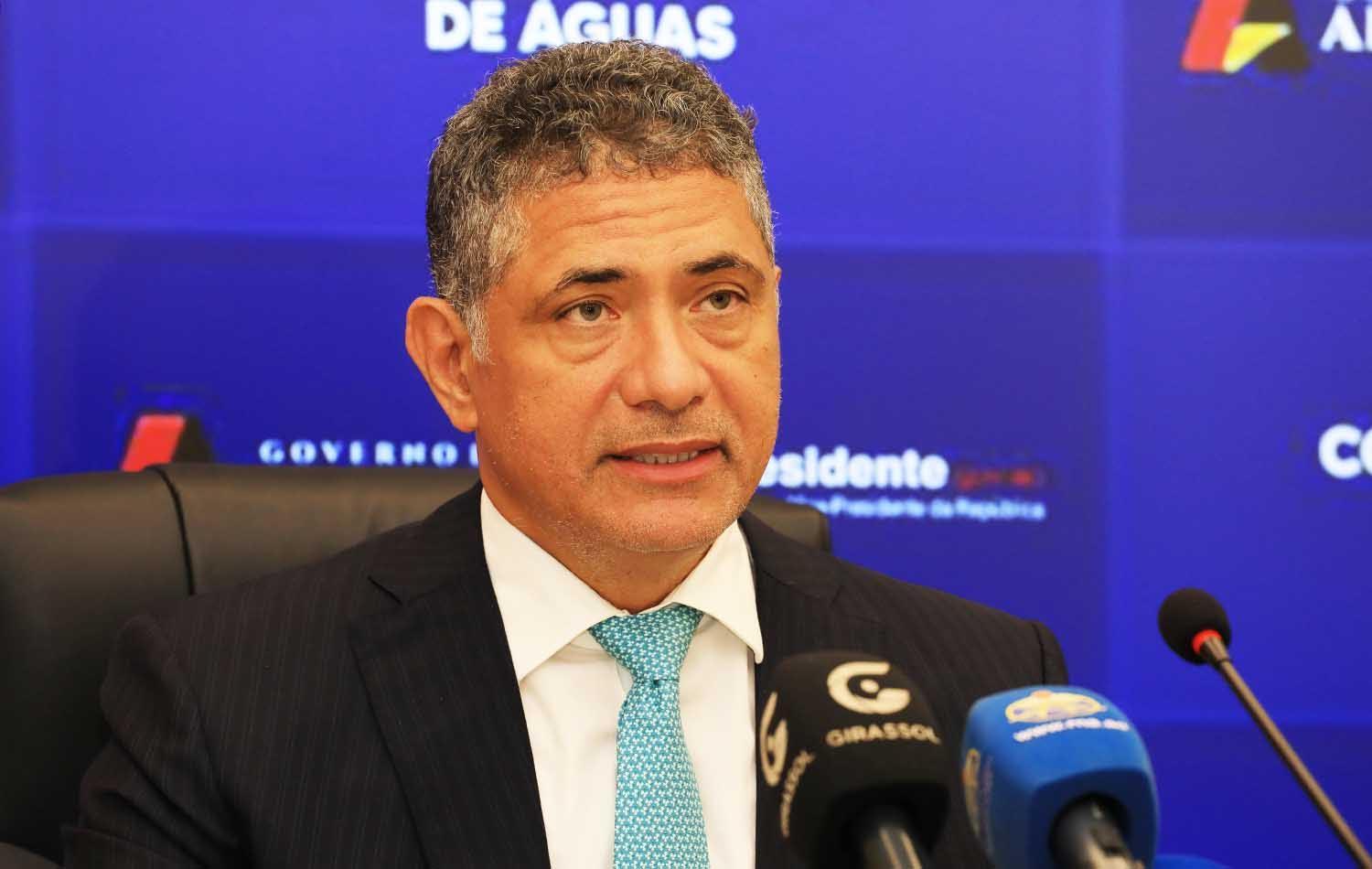
Africa-Press – Angola. The Minister of Energy and Water, João Baptista Borges, announced this Thursday, in Luanda, the creation of a commission to study mechanisms for exemplary punishment for vandalizing public infrastructure, with emphasis on water supply .
He said that the creation of the commission was considered at the 8th ordinary session of the National Water Council (CNA), guided by the vice-president of the Republic, Esperança da Costa.
João Baptista Borges stated that the commission, to be created, should discuss the transformation of fines and fines, applied to administrative transgressions, into punishments for crimes against State property.
“We need to be able to make large investments to reinforce supply capacity and also severely punish those who destroy public infrastructure,” he declared.
The minister said there is a water mining mafia, with the involvement of EPAL employees, which causes damage to pipelines and closes valves to intentionally generate need and then sells, informally, water to the populations of the affected localities.
He considered it necessary to restore authority, with the involvement of the police, to discourage such practices, which tend to grow.
On the other hand, it recognizes that there is a water supply deficit of around 50% in Luanda, which is remedied by water supply from cisterns.
However, the government official said that it is difficult to assess the financial losses resulting from mining, but the negative impacts resulting from the damage to pipelines are notable, such as the fact that populations are deprived of the liquid, as well as the contamination of the product with health implications. .
The minister stated that the country needs to make investments to match the population growth rates in cities and municipalities, considering that the UN points out that one hundred liters per day per inhabitant is ideal.
Regarding investments, he highlighted that the two new collection and supply systems under construction in Luanda represent two billion dollars in investments.
However, he considered it necessary not to stop because the population is constantly growing, hence the need for rigorous planning.
He declared that the CAFU project, built as part of the fight against drought in southern Angola, is fully functioning after making some corrections.
He informed that the CAFU project, currently managed by the contractor, will be transferred in 2025 to the responsibility of the owner, the State, which must create a multisectoral management body for the infrastructure.
On the other hand, the minister confirmed that the water quality of the Luachimo supply system, in Lunda Sul, was affected by inorganic debris, probably due to mining exploration, which damaged some equipment.
In this sense, he informed that work is underway to desilt the adduction channel and the reservoir basin, with plans to replace damaged equipment in the coming days.
The minister stressed that the problem must be resolved within the scope of the reorganization of the territory to prevent mining activity from affecting the functioning of the water supply system.
He mentioned that the 2023/2027 action plan considered at this Thursday’s meeting (13) has as its main priorities investment in infrastructure to increase the availability of drinking water for cities, particularly the most populous ones.
He noted that effective compliance with municipal master plans, which integrate the entire infrastructure component, was also advocated to avoid overlapping investments and changes due to land occupation.
He considered the regulation on the management of the 47 river basins essential as they constitute a guarantee of the availability of more water for the most diverse purposes.
For More News And Analysis About Angola Follow Africa-Press