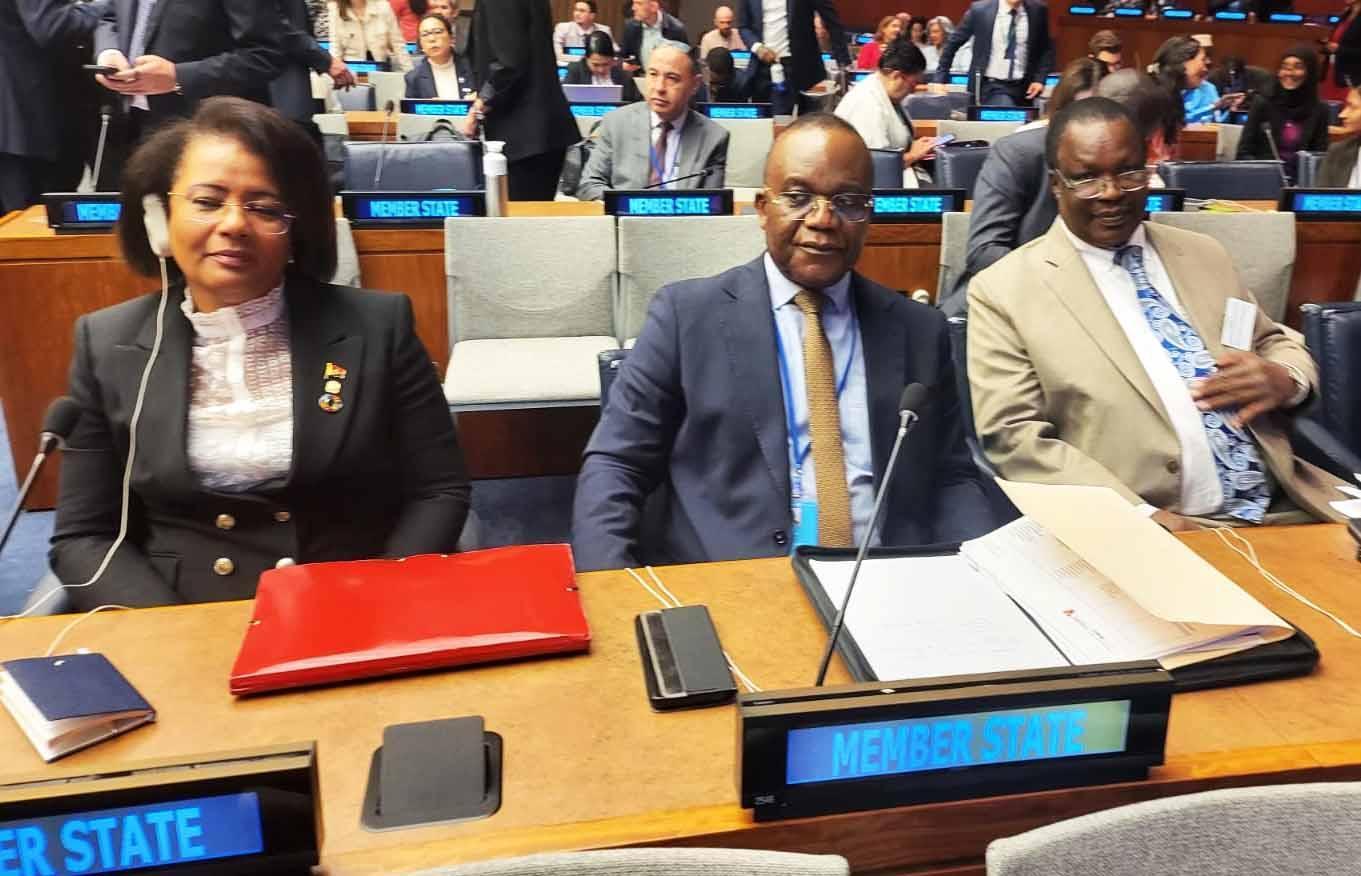
Africa-Press – Angola. Angola defended this Wednesday, at the headquarters of the United Nations, United States of America, the urgent establishment of a Fund for Losses and Damages, as an operational entity of the Financial Mechanism of the Climate Convention.
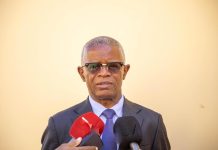
This need is stated in a document deposited at the UN, by the Minister of the Environment, Ana Paula de Carvalho, for whom the Fund must also serve the Paris Agreement, considering its sufficient capitalization with new contributions from public sources.
The Fund, which must provide financial assistance to nations most impacted by the effects of climate change, is a long-standing requirement of developing countries vulnerable to climate urgency.
Loss and Damage signals the negative consequences that arise from inevitable risks of climate change, such as rising sea levels, prolonged heat waves, desertification, ocean acidification and extreme events.
These are episodes that happen more and more frequently around the world, the consequences of which are becoming more severe. The list includes forest fires, endangered species and destroyed crops.
Available data indicate that countries on the African continent contribute the least to climate change, but are the most vulnerable to its impacts.
According to the same data, these countries “would have to spend five times more to adapt to the climate crisis
than they invest in healthcare”.
Meanwhile, G20 countries “account for around 75% of gas emissions.”
In her document, presented within the framework of the Climate Ambition Summit, the minister states, on the other hand, that, with COP 28, it will be important to adopt a decision that calls for a roadmap to fulfill the commitments made in Glasgow, in the sense to double adaptation funding by 2025.
Considers it equally important to reiterate that the New Climate Finance Objective for post-2025 must be based on science and the needs of developing countries with regard to mitigation, adaptation and losses and damages and must also be composed of quantitative and qualitative.
It also states that progress needs to be made in order to reach agreement on the amount and time horizon of this financing objective.
According to Angola’s representative at the event, the scientific evidence is unequivocal and if global emissions do not reduce quickly this decade, to align with the 1.5°C limit, the possibilities for climate-resilient development in vulnerable countries will be severely impacted. restricted.
It argues that adaptation to climate change is urgent and planning processes must be accompanied by large-scale implementation.
“Adequate support is needed to make transformational progress in adaptation. Investment in early warning systems and vulnerability assessments is essential to predict risks and impacts”, he concludes.
The United Nations Climate Ambition Summit was convened by the UN Secretary-General, António Guterres, to generate “new, tangible and credible climate actions” with the aim of “accelerating action halfway” towards the Sustainable Development Goals).
In the future, Guterres intends to press for a Climate Solidarity Pact, so that all large emitters “make an extra effort” to reduce greenhouse gas (GHG) emissions, in line with the 1.5 °C, and provide support to those who need it.
It is an opportunity for government, business, financial leaders, local authorities and civil society to deliver new, tangible and credible climate actions to accelerate the pace of change.
For More News And Analysis About Angola Follow Africa-Press