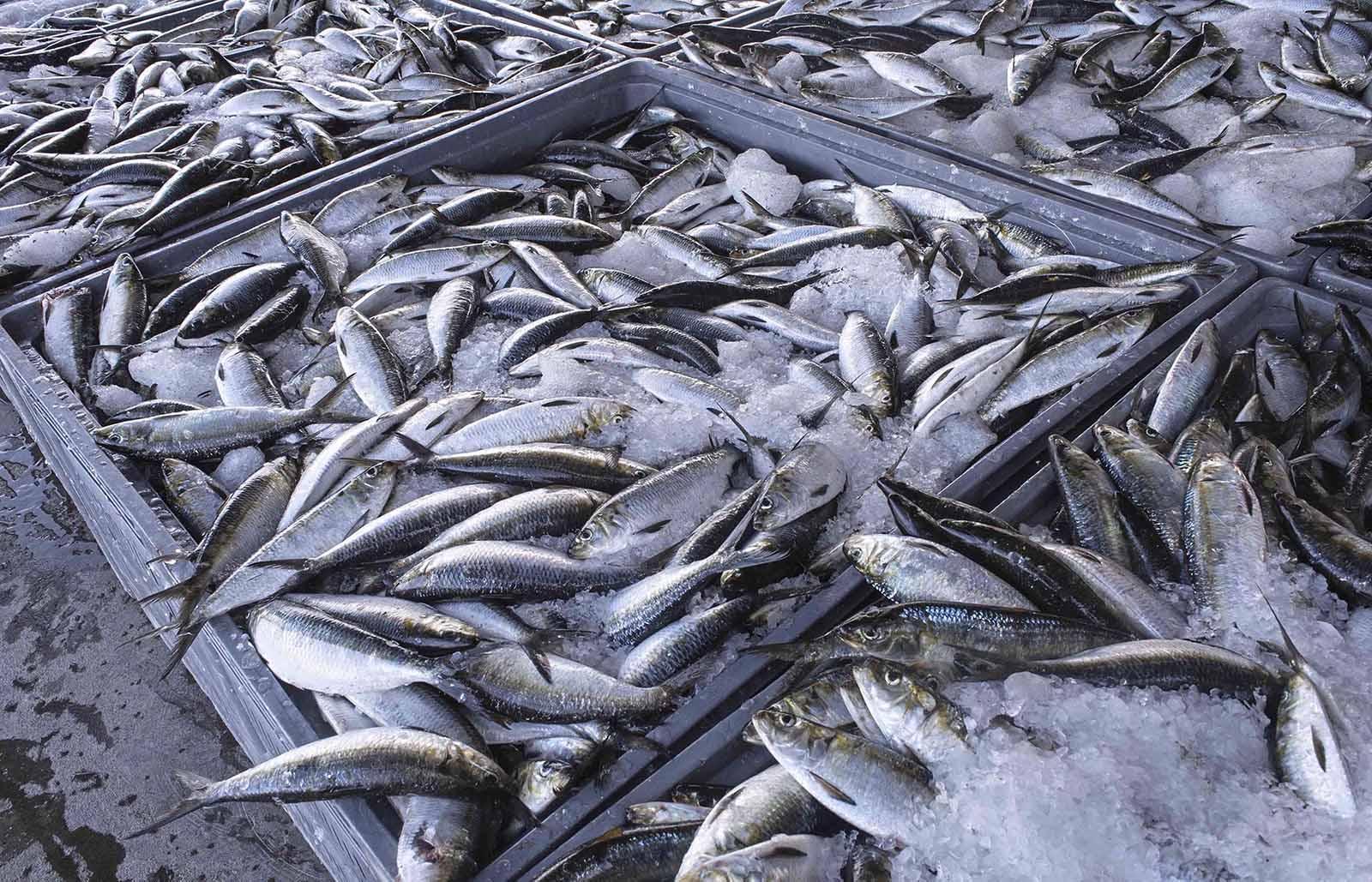
Africa-Press – Angola. The Angolan Government has planned, for this year, to increase the share of fish catches to 396 thousand tons, representing an increase of 16 thousand tons compared to the year 2022 (380,846 tons).
Among the catches planned for 2023, pelagic species stand out, such as horse mackerel and sardines, as well as demersal species (cachucho), according to the Minister of Fisheries and Marine Resources, Carmen Neto.
In an interview with Public Television of Angola (TPA), last Tuesday, the minister said that the quota is part of the regulation on marine fisheries management measures for 2023, which established the Total Allowable Catch (TAC) of various fish , including crustaceans, demersal and pelagic species, according to the Minister of Fisheries and Marine Resources, Carmen Neto.
He considered the respective increase in catches satisfactory, as it fits into preventive and safety actions for marine life, aimed at a permanent fight against trawling.
On the occasion, the minister recalled that Angola has a vast coastline, measuring 1,650 kilometres, with an exclusive economic zone of 550 square kilometres, where fishing takes place over 1,000 miles for artisanal fishing, 10 miles for semi-industrial activities and over 10 miles for industrial fishing, whose supervision requires extensive work to maintain TAC quotas.
This control, he continued, allows the normal reproduction of marine species, with emphasis on horse mackerel.
“The aim is to reach the quotas set by the Angolan Government, with a view to preserving species, despite our coast being vast (1,560 km), where there are several irregularities in the practice of fishing, because most shipowners do not respect the prohibition period”, he said.
As an example of the irregularities, he pointed out that, to date, fines valued at around four billion kwanzas have been issued in six months, a fact that shows that the challenge is great for the preservation of marine species.
Shipowners can have more support
According to the Minister of Fisheries and Marine Resources, shipowners will have more support from the Government, with the Fisheries Promotion Plan (Planapescas), designed for the period 2023-2027, with a forecast of an increase in fishing production by 4% per year and salt production by 15% annually, until the end of 2027.
He said that Planapescas will be supported by a financing line valued at 27 billion kwanzas/year, an amount to be guaranteed by the Angolan Development Bank (BAD).
So far, he said, work for its implementation is still ongoing, aiming to boost artisanal, semi-industrial and industrial fishing, which will increase the action capacity of shipowners and, consequently, the projection of an increase in the Allowable quota of Annual Capture.
According to the minister, boosting food self-sufficiency in fishery products and derivatives constitutes one of the main objectives of this plan, contributing to food security and diversification of exports.
In this sense, he stated that the study projects an increase in national consumption of 3% per year for fish and 13% annually for salt, slightly below the increase in production, which will allow the coverage rate to increase in the country.
The plan defines basic guidelines for seven specific areas – fishing fleet, supply of services and inputs, logistics and distribution equipment infrastructure, marketing policy, business environment and reinforcement of institutional capacity – essential for this to be implemented.
Salt from Angola reaches the oil sector
Without providing numbers, the Minister of Fisheries and Marine Resources, Carmen Sacramento Neto, said that Angola is already self-sufficient in the production of salt for human and animal consumption and, as such, companies producing this good supply the national oil industry.
This shows, he pointed out, that in this sector Angola is advancing and with the support instruments of the State, with a view to the adjacent work to iodize the salt produced in the country, and there are already joint actions with the United Nations Children’s Fund ( UNICEF) to promote producer training.
According to data from the Association of Salt Producers of Angola (Aprosal), by the end of 2021, around 900 tons of salt were sold to the national oil industry.
The first supply was made available by the regions of Namibe, Benguela and Cuanza Sul, as a result of a request from oil companies, marking what was said to be “a new cycle” of dynamization of the salt sector in the country. Angola, with three production seasons favored
by dry weather, has great potential for salt production.
The country has 20 salt mines, although only 14 are in production, operating together at 80 percent of available capacity.
For More News And Analysis About Angola Follow Africa-Press