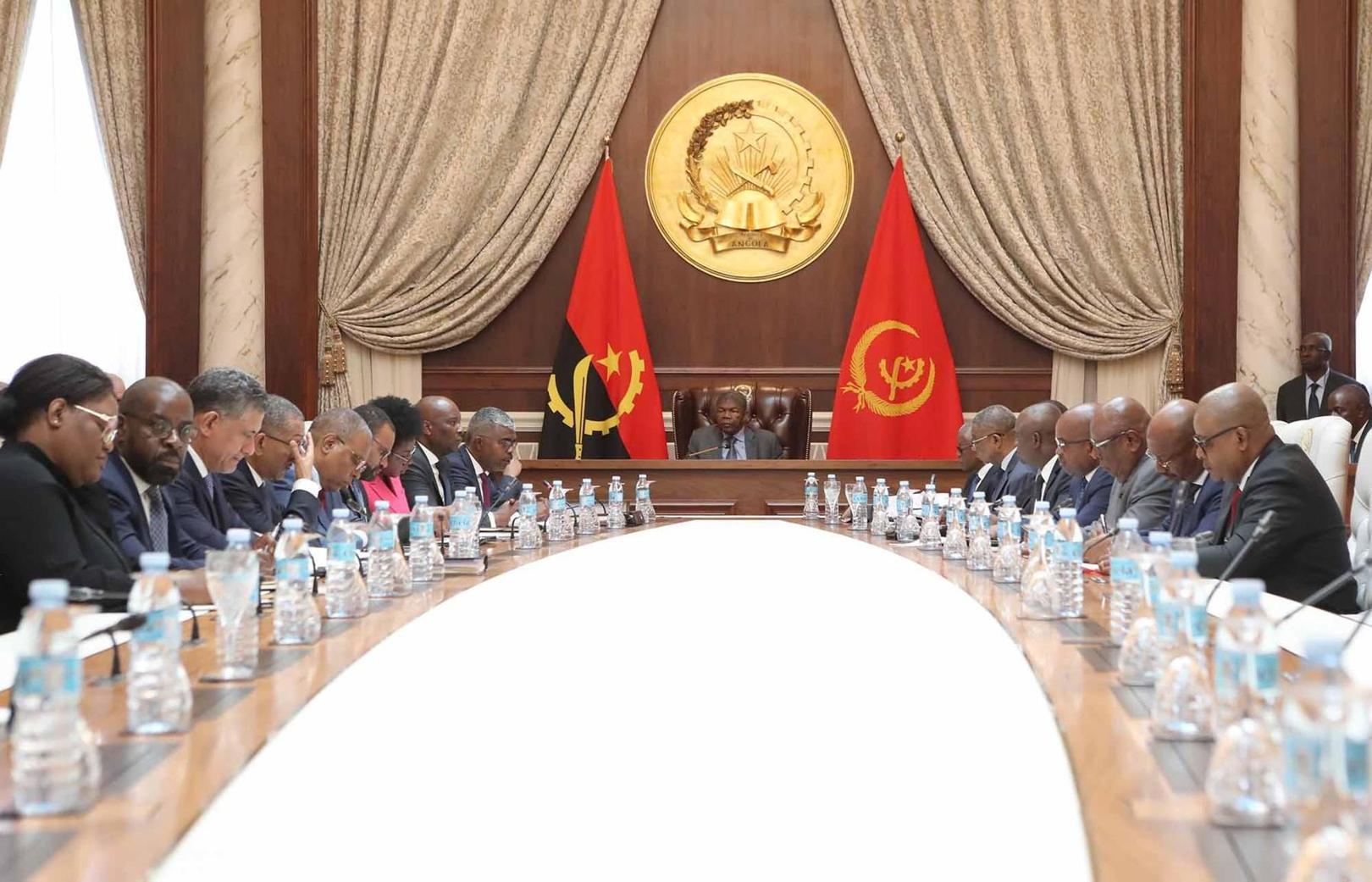
Africa-Press – Angola. The Council of Ministers assessed, this Monday, in Luanda, the proposed General State Budget for the 2024 Economic Year (OGE-2024), which includes estimated revenues of 24.6 billion Kwanzas and expenses set at the same amount for the same period.
The OGE, whose proposal will be sent to the National Assembly on Tuesday, is the main instrument for programming the State’s economic and financial policy, which expresses, in terms of values, the action plan to be carried out and determines the sources of financing.
According to the final document of the 4th extraordinary session, guided by the President of the Republic, the OGE-2024 presents the estimate of revenues and the limits for the execution of expenses set for the 2024 economic year, as well as granting authorization to the Holder of the Executive Power to make budget changes and rules relating to budget execution and Fiscal Policy.
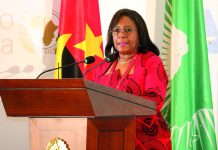
At the end of the meeting, the Minister of Finance, Vera Daves, told the press that the OGE proposal presents several assumptions, one of them related to GDP growth, with a forecast growth rate of 2.84 percent, based, exclusively, on the performance of the non-oil sector, which foresees some active policy measures that will grow by 4.62%, while the non-oil sector is expected to have a negative performance (a decrease) of 2.5%.
Of the 24.6 billion Kwanzas, fiscal expenditure is expected to be 59.3% and 40.7% of financial expenditure, respectively, predicting a balanced budget of around 0.02% of fiscal balance.
Interest expenses on debt representing around 4.56 billion Kwanzas and primary expenditure valued at 10.02 billion Kwanzas are also expected.
The functional distribution, with regard to debt (financial expenditure), is 20 percent of total expenditure for the social sector and 40.2 percent of tax expenditure.
Social expenditure, despite the growth in financial expenditure, was protected to avoid as much as possible with a forecast increase of one percent compared to the 2023 OGE, despite the share of the OGE allocated to financial expenditure having increased.
As risks, the minister pointed to the geopolitical environment that could change the price of raw materials, changing the price of oil that will have an impact from the perspective of executing the OGE, as well as exchange rate volatility.
The OGE proposal is based on assumptions related to oil production of one million and 60 thousand barrels per day and the reference price per barrel of 65 dollars to avoid stress scenarios in the event of any type of slippage in any indicator, be it in production or with regard to performance in the non-oil sector and thus have relative stability in the flow of tax revenue.
Economic projections for the year 2024 were prepared based on an average price per barrel of oil of USD 65.00 and an average daily oil production of 1.060 million barrels/day, with projected inflation set at 16.6 %.
Furthermore, GDP is expected to grow 2.8% in real terms, supported solely and exclusively by the non-oil sector, which is expected to grow 4.6%, while oil production is expected to record a drop of around 2. 6%, including gas production, projected to decrease the oil sector by 2.5%.
Recognizing the challenges facing the national economy, the Executive presents, in the OGE proposal for 2024, a broad package of temporary, permanent and structural measures, which will seek to embody the need to strengthen the income of families and workers and boost their access for people, more investment in the economy and companies and a more sustainable General State Budget.
The Executive, within the scope of OGE-2024, will continue to protect the most vulnerable, and therefore reaffirms its commitment to increasingly expand the Kwenda Program, aiming for greater coverage of families.
Regarding the real economy, the Executive is betting, among others, on increasing the production capacity and supply of goods and services, in a diversified and inclusive way, and on mitigating the risks of food insecurity and food self-sufficiency.
The investment aims to achieve the aspirations of reducing dependence on oil, enshrining in the PDN 2023-2027, the Policy to Support Production, Diversification of Exports and Substitution of Imports, to be implemented through various economic programs in the most varied sectors of the economy.
angop
For More News And Analysis About Angola Follow Africa-Press