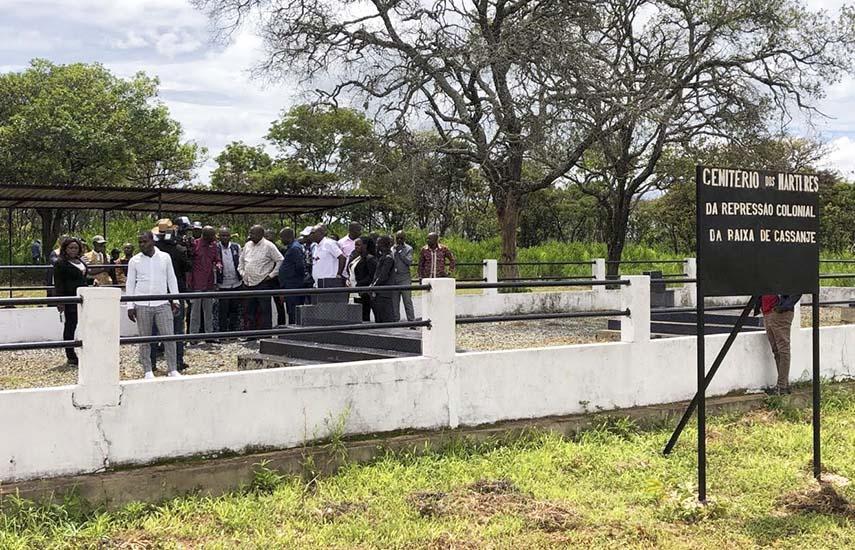
Africa-Press – Angola. Angola celebrated, January 4th, the Day of the Martyrs of Colonial Repression, in memory of the events of 1961, in the province of Malanje, when thousands of peasants at the time were savagely killed by the colonial regime.
The episode became known as the “Baixa de Cassanje Massacre”, due to the death of nearly six thousand Angolan farmers for protesting against the low prices of cotton, practiced by the Companhia Geral de Algodão “Cotonang” due to the mistreatment imposed by the Portuguese oppressor.
63 years later, the central event of the anniversary celebrations took place in the municipality of Xá-muteba, Lunda-Norte province, under the motto “With the spirit of the 4th of January, former combatants united for the development of Angola”.
History tells that the farmers’ only income, at the time, appeared at the end of each campaign, with the mandatory sale of cotton to the Cotonang company, which set reduced prices and often purchased first-class products at second-rate values.
In the former colonial administration, the Minimum General Tax (IGM) rose frequently, and there was a time when it went from 250 to 350 escudos.
A hired peasant, to pay the (IGM), had to sell at least 10 bags of 50 kilos of cotton or was forced to take on debt to pay it off in the next harvest.
According to historian João Reis, the 4th of January is extremely important, as it marks one of the first moments of the Angolan revolution against Portuguese colonization.
The academic laments the fact that the new generation does not know much about Colonial Repression Martyrs’ Day because “a lot is said about the date, little is transmitted about it”.
Therefore, it calls for the need to work with historians to transmit knowledge to the new generation about the importance and social impact of the events that occurred on the date in question.
Compensation controversy
Regarding the claims of some associations regarding compensation, from Portugal, resulting from the events of Baixa de Cassanje in 1961, sociologist José Ventura understands that this European country owes nothing to Angola, since the events are part of a process historical, political and economic of Portuguese expansionism.
The sociologist also states that, at Portugal level, opinions differ, with some believing and thinking that the country should look at this issue, in order to help colonized countries.
“Helping is one thing and giving back is another. Paying for the damages or for what their colonizing practices were”, he stressed.
José Ventura understands that Portugal can contribute its knowledge in several areas, such as technology and agriculture, since Angola maintains a fruitful relationship with this country.
According to the Information Bulletin of the Government of Angola, published at the time, the soldiers who fired in the early hours of the morning of January 4, 1961 had camped, since 5 pm on January 3, on Sunday, at the municipal headquarters of the Chela.
This act followed others, such as that of February 4, 1961, in which a group of brave Angolans, better organized, armed with machetes, attacked jails and other positions of the Portuguese Political Police (PIDE-DGS).
The survivors went underground and then into guerrilla warfare. A month later, between March 15th and 18th, another revolt broke out with attacks on the Café dos Dembos, Úcua, Negage and Nambuangongo farms.
Baixa de Cassanje is an immense geographical depression, with 80 thousand kilometers distributed between Malanje and Lundas.
The space comprises the villages of Cambo Sunginge, Zungue, Kanzage, Wholo dia Coxi, Santa Comba, Mulundo, Teca dia Kinda, Xandel, Moma, Long Milando and Massango (Forte República) in the municipalities of Cahombo, Marimba, Cunda Dia Baze and Quela.
For More News And Analysis About Angola Follow Africa-Press