Africa-Press – Angola. The Center has the capacity to accommodate 204 trainees in each training cycle and welcomes minors aged 14 to 17. Exceptionally, it admits young people aged 21, who are late in school
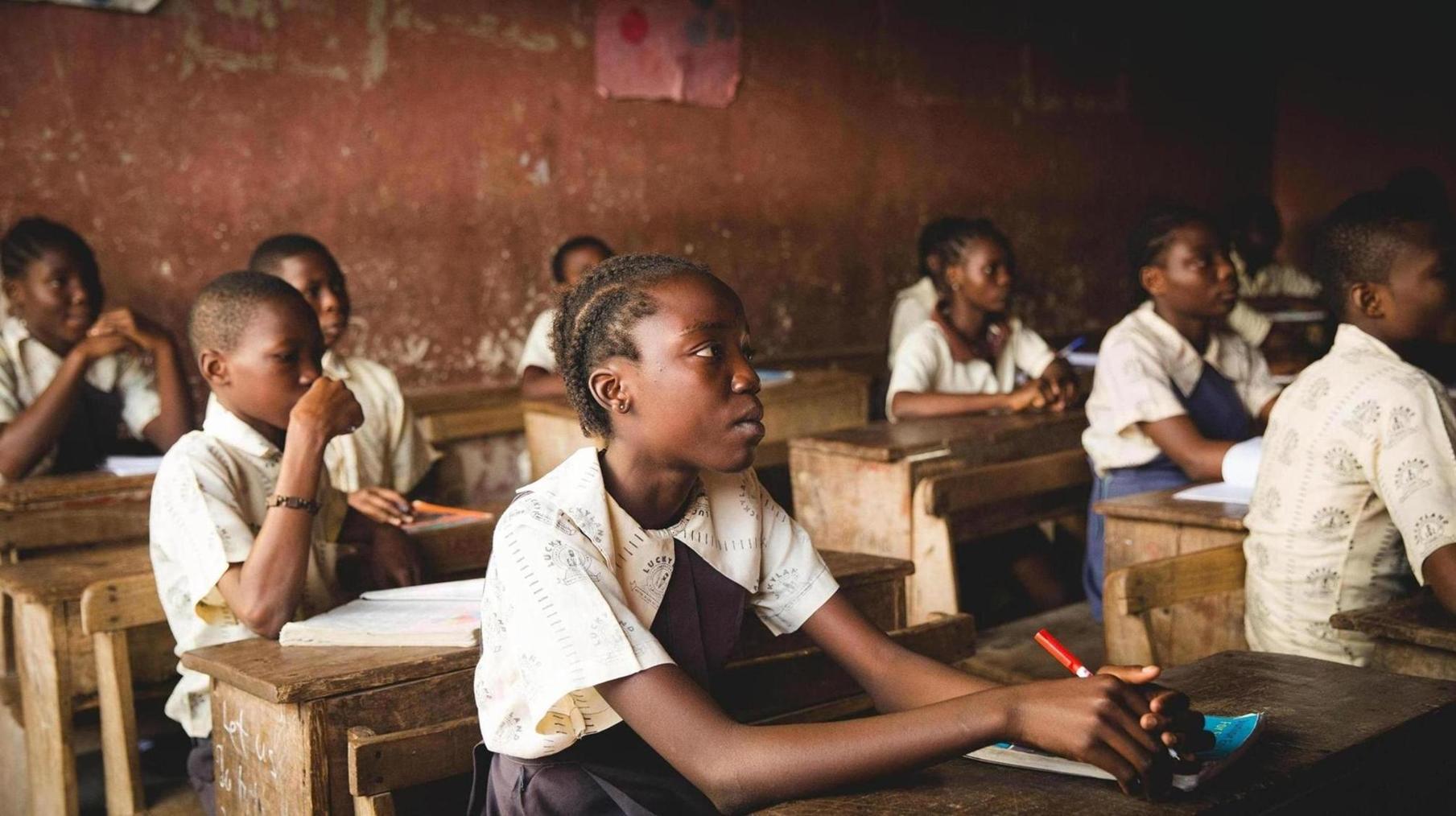
Faustina José, better known as Laura, is 15 years old, lives in the municipality of Capelongo and makes the daily journey from home to Cidadela Jovens de Sucesso da Matala and vice versa, using the bus from the center.
The Cidadela Jovens de Sucesso da Matala, in the province of Huíla, is part of the socio-professional reintegration project, developed by the Rural Arts and Crafts Training Schools, which receives minors aged between 14 and 17, having already trained more than two thousand young people and teenagers.
Every year, thousands of young people look for job opportunities and many are involved in professional internships.
Laura joined the vocational training center through her father, who teaches metalwork at the institution. She chose Carpentry and Agriculture courses, as they have been her great passion since childhood.
Having been at school for two years, Laura is a 8th grade student. After completing this cycle, she intends to open a carpentry shop to produce cabinets, chairs, tables, beds and benches, continuing her studies and becoming a renowned professional.
The girl lives with her father, grandmother and brothers. Her mother took up residence in Menongue, Cuando Cubango province, following a new relationship.
His father is a locksmith and his grandmother is a seller at the local market. Life has not been a bed of roses for Laura, so she had to change her focus from an early age, turning her goals and objectives towards learning professional technical professions and, consequently, getting a job.
Achieve the objectives
The bus from the center picks Laura up at around 6am, so she has to wake up at 5am, from Monday to Friday. The journey from Capelongo to Cidadela Jovens de Sucesso da Matala takes around two hours. Return home at the end of the day.
Laura told that she has always grown up focused and doesn’t think about dating, like the other girls in her neighborhood, as she still wants to achieve her goals.
For this reason, she advises other girls to stop dating and drinking alcohol, as they could put their future at risk.
Despite being a woman and learning a profession more practiced by men, she does not feel marginalized and explains that the most important thing in life is to have focus and determination. “There are no defined tasks for men or women, because both can do the same things and grow in life,” she encouraged.
Transformed life
Also in search of his dreams is young Eduardo Relenga, 21 years old, who is in 9th grade, the last year of school, enrolled in the Carpentry course, where he also studies IT and Agriculture.
The young man lives in Bairro 11 de Novembro, municipality of Matala, and lives with his parents and siblings. To go to the center, he also takes the bus.
Eduardo Relenga entered 2020, through neighbors who encouraged him. The passion for the profession was the motivation to enroll at the Matala school. The young man revealed that he really likes the institution’s environment, especially when he attends classes on professional courses, where he has learned a lot.
Eduardo Relenga admits that the school changed his life, because he started doing his own business, without depending on other people.
Normally, in his free time, Eduardo produces beds, benches, tables and chairs. With sales, he can satisfy his needs, earning up to 15 thousand kwanzas per product.
His ambition is to complete his studies, become increasingly qualified with state-of-the-art machines and invest in his business.
Useful to society
The young man admitted that before joining the center he was involved in bad ways, but, thanks to this program, today he is able to be more useful to society. Therefore, he advises other young people to believe in themselves to seek and achieve their dreams.
Mário Macundambo has been one of the school’s trainers for two years, specializing in Agriculture. Previously resident in the city of Lubango, he had to move to Matala because of work.
Over the years, he said, he has trained more than 500 young people. He considers that teaching is an easy task, because he uses the simplest methods and provides the simplest content so that students do not have difficulty learning.
The teacher asked young people and teenagers from Matala to join the Vocational Training Center to improve their living conditions.
Cidade Jovens de Sucesso da Matala, opened in 2020, only operates on a day school basis, as it does not have the means for students to remain at school throughout the day. They are collected in the morning, on buses, and distributed at the end of the day.
Secretary of State satisfied with the conditions
The Secretary of State for Labor and Social Security, Pedro Filipe, in a visit to the Cidadela Jovens de Sucesso in the municipality of Matala, Huíla province, said he was satisfied with the conditions of the classrooms, workshops and fields where boys and girls learn Agriculture.
Pedro Filipe recognized that teachers have complied with the guidelines given by the Executive, highlighting that the intention is to transform young people, so that, in the future, they can be competent professionals in different areas of knowledge.
“You need to study and work with discipline. Your behavior will better define the future of each of you. Be disciplined and take advantage of the opportunity”, he appealed.
The Rural Training and Trades Schools program was created by the Ministry of Public Administration, Labor and Social Security in 2008.
In the Rural Arts and Crafts Training Schools “Cidadela Jovens de Sucesso” it is not permitted to enroll girls in boarding schools, because the centers were designed exclusively for boys. Girls only attend school under a normal teaching regime.
The Executive has other projects that only accommodate girls, specifically, female training centers spread across several provinces of the country.
The costs of training and internment are borne by the Executive and other social partners.
Capacity for 204 trainees
The general director of Cidadela Jovens de Sucesso da Matala, Hélder Domingos, informed that the center has the capacity to accommodate 204 trainees in each training cycle, with six trainers to teach technical-professional courses and 12 academic teachers.
According to the person in charge, the center has 21-year-old young people who were admitted to the institution because they were behind in their academic training. “So, they were given the opportunity to train and receive professional kits, so that they could then enter the job market”, he informed.
The center has eight training rooms for practical and theoretical classes, in addition to laboratories and workshops for IT, Carpentry and Metalwork courses.
The space has three hectares for agricultural production, six greenhouses for vegetables and three poultry houses with capacity for 2,100 chickens.
The director of the institution confirmed that the school has two buses with the capacity to transport 32 trainees each, in order to facilitate the movement of students from home to the center and vice versa.
The school, he said, has received support from INEFOP (National Institute of Employment and Professional Training) to ensure its sustainability, despite having been designed to be self-sustaining.
The center, he continued, has some difficulties, due to the fact that training is free and daily expenses with food, transport, agricultural inputs and other materials for training and food production require a monthly expense of six million kwanzas.
Regarding consumables, he said, replacement is made through own production, such as corn, eggs, cereals and furniture, made by the students themselves, as well as beds, benches, chairs, among others.
He revealed that the region is more prone to the production of products such as reindeer potatoes, corn, garlic, beans and vegetables.
Water is also distributed through cisterns, but it turns out to be unsuitable for consumption and must be boiled before drinking.
As for electrical energy, it has been supported by generators and solar panels.
Hélder Domingos also pointed out some of the center’s difficulties with the distribution of drinking water and electricity.
The general director lamented the fact that some young people and teenagers are unable to enter school, due to the reduced number of classrooms. The selection criteria, he informed, is done through vocational tests, depending on the capacity or skills of each person.
Hélder Domingos has been director of the center since 2020. Since then, 43 young people have been trained in various specialties. This year, another 64 finalists receive their certificates.
Executive plans to build more centers
For the five-year period 2022-2027, the Executive intends to build 14 more training units, across the country, and requalify all arts and crafts pavilions, with the aim of increasing the training offer. It should be noted that 58 infrastructures of this kind require intervention.
The inclusion of young people in vulnerable situations in society and the job market continues to be one of the Executive’s major commitments, which consists of improving living conditions and guaranteeing a promising future for those who have little hope and opportunities.
With the Cidadela Jovens de Sucesso project, this reality has been increasingly realized, after a process of preparation and reintegration, which includes professional and academic training, for three years, becoming ready to face the job market, at the end of that period.
The network of Cidadela Jovens de Sucesso schools are training structures supervised by the National Institute of Employment and Professional Training (INEFOP), whose purpose is to provide technical-professional training and school education to the most disadvantaged young people, aiming at their integration into society.
In addition to the Cidadela Jovens de Sucesso da Matala, in Huíla, there are Bailundo, in Huambo, Kalakala and Cabíri, both in the province of Luanda, Sacassange (Moxico), Dinge (Cabinda), Caculama (Malanje) and Dr. Luther Rescova, located in the municipality of Alto Cauale, province of Uíge.
The centers are intended to house young people and teenagers aged between 14 and 17, with 6th grade completed. In these places, courses lasting three years are taught, such as Secretarial, Childhood Educator, Cutting and Sewing, Hospitality and Tourism, Agriculture, Automobile Mechanics, Florist, Plumbing, Electricity, Locksmithing, Food Processing and Conservation and IT.
In some regions of the country, INEFOP works with religious denominations and companies, with the aim of involving the whole of society to support this challenge, which consists of integrating young people in vulnerable situations.
In the signed protocols, INEFOP’s responsibilities consist of continuing to promote the normal functioning of the center, to guarantee the community an appropriate space to insert young people into society, with the necessary qualifications to be at par with the job market.
Jornal de Angola
For More News And Analysis About Angola Follow Africa-Press