Africa-Press – Angola. The problem of the lack of electricity from the public network affecting the Textaf textile factory, in Benguela, could be resolved this year, admits its general director, Vidal Bazanine.
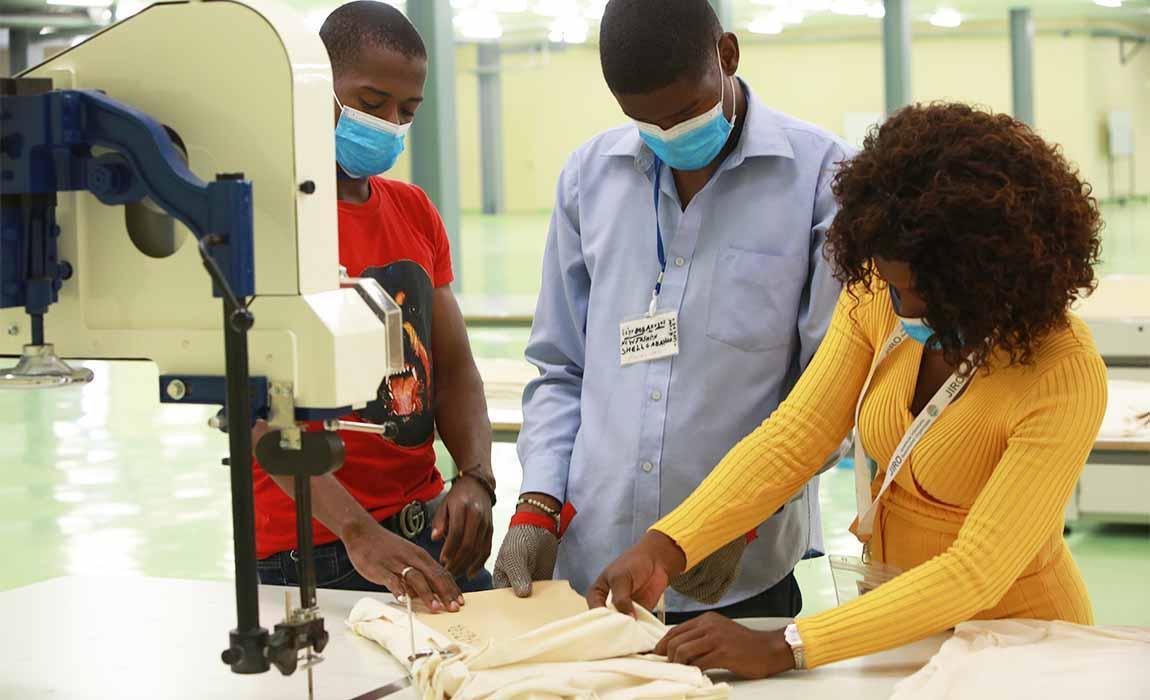
With an installed capacity for the annual production of seven million bath towels and fabrics, Textaf, formerly Africa Têxtil, located in the province of Benguela, is managed by the Zimbabwean group Baobab Cotton, for a period of 12 years.
The guarantee was given following a visit to verify the current state of operation of the manufacturing unit by a group of deputies of the National Assembly living in the province of Benguela.
According to Vidal Bazanine, a project to install a transformation station (PT) is already ready and underway, with a view to connecting electricity from the public network to the textile factory in Benguela.
“Today, we work with a generator, but all of this is forwarded to the competent bodies (…)”, guarantees the general director of Textaf, also complaining about operational difficulties.
The person in charge highlighted that at the moment we are waiting for the acquisition of the equipment, which has its arrival time in the country.
In fact, he explained that they are imported transformers that take time to manufacture, which is why the factory still works with energy from generators.
However, he pointed out that the expectation is that the problem will be overcome either this year or at least at the beginning of 2025, especially since orders for the transformation station have been placed.
With the supply of energy from the public grid, Vidal Bazanine foresees a significant reduction in operating costs, which will be an added value for the plan to increase the production of textile goods.
For the manager, it is a high cost for the company to operate with a generator, hence emphasizing the idea that energy from the public grid will facilitate the operation in terms of cost and even procedure.
The Angolan textile industry has three large fabric factories rehabilitated by the Government, namely Satec (Cuanza Norte), Textang II (in Luanda) and África Têxtil (in Benguela), all of which have been privatized.
Cotton production in Angola dates back to 1926. Until 1961, the annual harvest did not exceed 10 thousand tons of cotton fiber.
However, in 1973, it would reach a figure of around 86 thousand tons, with the country entering the list of the world’s largest producers of this crop that year.
For More News And Analysis About Angola Follow Africa-Press