By Adérito Ferreira
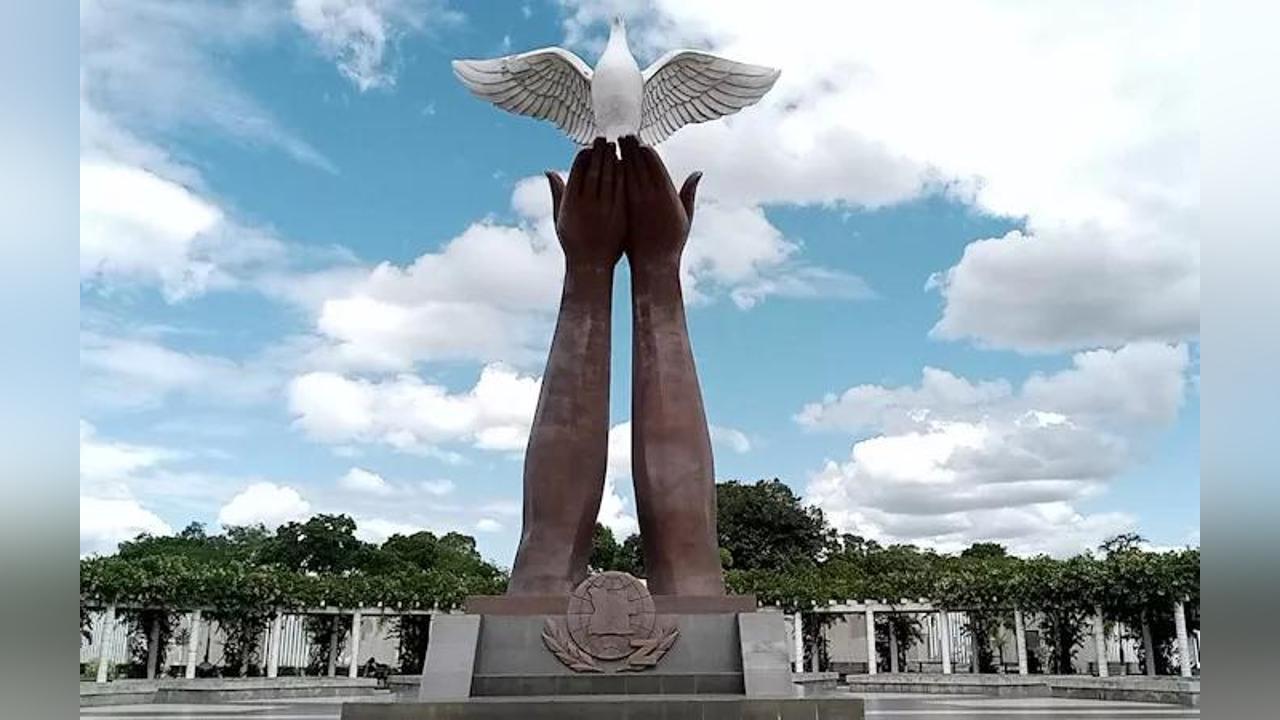
Africa-Press – Angola. Angola marks, on April 4, 22 years of effective peace, in a climate of healthy political coexistence and countless social and economic challenges that must be overcome for the necessary leap towards development.
Achieving this objective requires, however, the consolidation of the spirit of National Reconciliation within the framework of the process underway in the country and already recognized as a model on the continent.
It also appears vital to keep the National Reconstruction process on track, simultaneously with the recovery of infrastructure destroyed during the war.
Contrary to expectations when National Independence was achieved in 1975, an internal armed conflict ensued, which only ended almost 30 years later.
Peace, it must be said, resulted in a difficult “birth”, after a “gestation” period of 11 years of great suffering until the signing, on April 4, 2002, of the Memorandum of Understanding Complementary to the Protocol of Lusaka, between the Government and UNITA, ending the long period of war.
But before that, it was on May 31, 1991 that the Angolan Government, through President José Eduardo dos Santos, and UNITA, through Jonas Savimbi, initialed, in Estoril (Portugal), the Bicesse Agreements, which, however, quickly proved insufficient to bring definitive peace.
Even so, they are considered important for the changes taking place in the country, particularly in the area of democracy.
A fragile ceasefire still made it possible to hold the first multiparty elections, in September 1992, won by the MPLA, while its leader, José Eduardo dos Santos, at the time President of the Republic, was 1% away from obtaining an absolute majority and avoiding the second round.
With 49.57% of the votes validly cast against 40.07% for Jonas Savimb, the two candidates with the most votes should have contested the second round, were it not for the return to war.
Other ballots took place in 2008 (legislative), and in 2012, 2017 and 2022 (presidential and legislative).
The ineffectiveness of those agreements led to new rounds of negotiations, particularly those that culminated in the Lusaka Protocol, initialed on November 20, 1994, by the then Minister of Foreign Affairs, Venâncio de Moura, and the secretary general of UNITA. of the time, Eugénio Manuvakola.
Achievement of peace
The political-military scenario would only definitively improve eight years later, when the Government and UNITA signed, on April 4, 2002, the Memorandum of Understanding Complementary to the Lusaka Protocol, the date being established as “Day of Peace and National Reconciliation”, therefore, a national holiday.
Unlike previous attempts, this act had the merit of having been carried out by the Angolans themselves, specifically among the belligerent forces in the style of “Angolan solutions to Angolan problems”.
They will have internalized the ancient (Chinese) maxim according to which “in battles, whatever the results, the taste will always be bitter, even for the victors. Therefore, war must be the last solution and must only be fought when there is no other way out.”
Post-April 2002
Considered a “non-negotiable good of humanity”, the peace achieved 22 years ago constituted for Angolans the rebirth of hopes with no room for hesitation in the face of the noble and pressing duty of reconciliation between previously at odds brothers.
As the President of the Republic, João Lourenço, once said, since the attainment of Independence and for three consecutive decades, Angola has experienced the sad reality of an armed conflict between children of the same mother country, which left “extremely useful lessons”.
This, stressed the head of state, led Angolans to disarm their spirits and embark on the path of peace, reconciliation, harmony, understanding and peaceful coexistence among all, transforming the country into a space in which everyone can dedicate themselves to tasks of progress and development.
On another occasion, the nation’s highest leader stated that dialogue, tolerance and unity must remain prerequisites for the maintenance of effective peace among Angolans.
In this wake, the creation of the Reconciliation Commission in Memory of the Victims of Political Conflicts (CIVICOP) emerges as one of the most striking emblems of National Reconciliation.
This is an Executive initiative, launched in 2019, with the aim of alleviating the pain of bereaved families as a result of the conflicts that occurred in Angola, from November 11, 1975 to April 4, 2002.
The project includes the exhumation of bones, followed by scientific laboratory certification before they are delivered to families for dignified funerals.
Amnesty Law
Another relevant aspect, in the sphere of forgiveness, has to do with the approval, by the National Assembly, on December 15, 2022, of the Amnesty Law, a legislative initiative by the Holder of the Executive Power, as part of the celebrations of the 47th anniversary of National Independence.
The law determines amnesty for all common crimes, with prison sentences of up to eight years, committed by national or foreign citizens, in the period between November 12, 2015 and November 11, 2022.
Military crimes, punishable by prison sentences of up to eight years, with the exception of intentional crimes, committed with violence resulting in death, as well as money laundering, corruption and embezzlement, human and arms trafficking, have the same fate. and aid to illegal immigration.
Socioeconomic panorama
From another angle, but always on the path of social cohesion, the Executive has sought to combine in the present atmosphere of peace other tasks related to the country’s development, and, concomitantly, to improving the lives of citizens.
The ongoing process of economic diversification constitutes one of the exponents in the Government’s equations for the growth of production in the non-oil sector, ensuring balance and economic sustainability, with notable openness to the private sector.
In this aspect of the relaunch of economic activity, peace has allowed investments in infrastructure, with an impact on the energy, water, roads, ports, airports, railways, housing, health and telecommunications sectors.
Of this mosaic, energy production stands out, for the construction of the largest dam in the country, Caculo Cabaça, in Cambambe, Cuanza-Norte province, which began in 2017, with the capacity to generate two thousand 171 megawatts of electricity.
The dam’s energy production, as such, is scheduled for October 2026, being a project co-financed by the People’s Republic of China with participation from Germany.
Another project that directly benefits from peace and is expected to have a huge impact on economic activity and mainly to mitigate the effects of the drought in the south of the country is the Cafu Canal, as part of a broad program aimed at populations that are victims of the drought in Cunene, Namibe and Huíla.
It consists of a system for capturing and transferring water from the Cunene River to several villages, and distributing drinking water to 235 thousand inhabitants, and,
simultaneously, the availability of the precious liquid for 250 thousand heads of cattle, irrigation of 15 thousand hectares, creating 3,275 direct jobs.
Atlantic-Indian connection
Another element that is expected to become “giant” for the country’s industrial development is the Lobito Corridor, which connects Angola from West to East (from the Atlantic Ocean to Moxico), whose operation was awarded to the consortium Trafigura, Vecturis and Mota Engil, with an investment of around 400 million US dollars.
The consortium was entrusted with the operation, exploration and maintenance of rail freight transport as well as the maintenance of all existing infrastructure along the local and regional corridor, as, if connected to Zambia, it is possible to reach Beira (Mozambique) and Dar es Salaam (Tanzania) both in the Indian Ocean.
It is connected to the railway systems of the DRC and Zambia and, indirectly, to that of South Africa, forming part of a transcontinental network.
Inclusive growth
Another “anchor program” of the Executive to improve citizens’ lives is the Integrated Plan for Intervention in Municipalities (PIIM), with funding from the Sovereign Fund of Angola
PIIM aims to materialize Public Investment (PIP), Development Support Expenditure (DAD) and Basic Activities (Act), with priority given to actions of a social nature, in order to inhibit rural exodus and promote economic growth , social and regional most inclusive in the country.
According to the Executive, with this program, infrastructures such as schools, hospitals, roads and water and electricity distribution networks are being built and rehabilitated, which will guarantee the availability of basic services to citizens and better development of communities.
On the occasion of the most recent Message to the Nation, the President of the Republic mentioned a set of ongoing reforms in the State’s local administration to strengthen its organization and institutional capacity.
These reforms, highlighted the head of state, in October 2023, also aim to promote increasingly participatory governance and better prepared for the challenges of administrative decentralization resulting from the process of institutionalization of local authorities.
Ongoing programs
The current context of stability and security in the country has made the ground fertile for the execution of projects such as PLANAGRÃO, PROPRIV, PLANAPESCAS, PLANAPECUÁRIA and PLANATUR, within the scope of the Angola 2050 Long-Term Strategy, the National Development Plan 2023-2027 and the Government Program 2022-2027.
They are based on the relaunch of industry, agriculture, tourism, livestock and fish farming, as well as the promotion of employability and the improvement of the business environment, aiming to attract investment.
The cohabitation of these and other programs with PRODESI (Program to Support National Production, Export Diversification and Import Substitution) could lead Angola to re-experience previous levels, such as being the world’s leading exporter of bananas and the leading African exporter of beef.
Based on the credible source that provided this data, Angola may still revisit or surpass its status as second world exporter of fishmeal, second world sugar producer, third world coffee producer, fourth world cotton producer and second African sisal exporter.
However, for the country to be able to recover these and other performances, in addition to its recognized spirit of resilience, Angolans need to preserve their most valuable “asset”, peace.
ANGOP journalist
For More News And Analysis About Angola Follow Africa-Press