By Valentim de Carvalho,
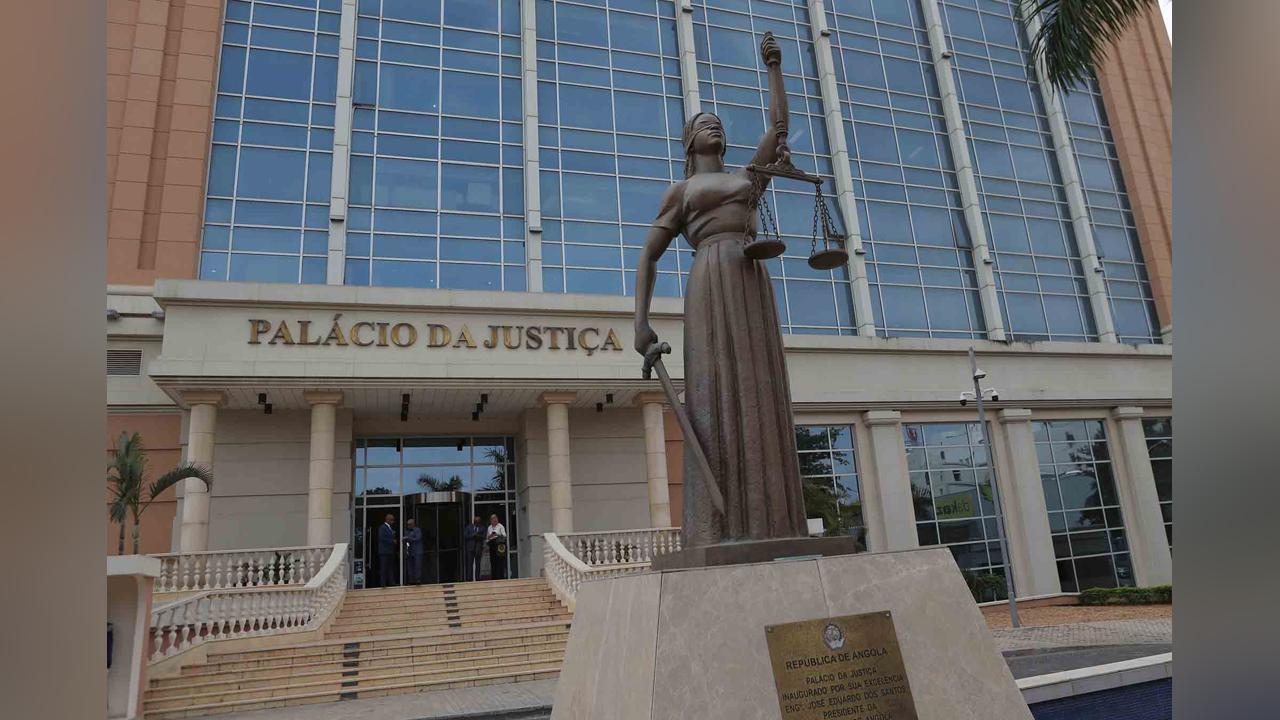
Africa-Press – Angola. In effective peace since April 2002, Angola has seen notable benefits in several sectors, with Justice being one of the areas that gained more visibility with a significant expansion of its infrastructures, to respond more adequately to daily challenges.
After the guns fell silent, the sector began to place itself at the center of attention, demanding redoubled efforts with a view to “constructing” a more comprehensive and healthy Justice.
With the continuous awakening of legal culture on a national scale, the challenge was raised regarding the need for improvements in the protection of citizens’ fundamental rights and guarantees within the scope of a more general focus on human capital.
In general, the advent of peace provided prospects for overcoming, in the most varied aspects, including a greater probability of different specialties of Law coming into operation and the growth in the number of qualified staff, which can contribute to the sustainability of the sector , aiming at its development.
In fact, efforts to improve the administration of Justice predate the peace of April 4, 2002, but, given the unfavorable situation inherited from the conflict phase, it is, in fact, in the post-war period that the need for greater expansion and effectiveness of services.
The process of establishing courts throughout the national territory began then, in parallel with the Reform of Justice and Law (RJD) with the return to the districts, the introduction of Courts of Appeal and the establishment of the role of “guarantee judge”. , to assume some of the functions previously performed by the Public Ministry.
The current situation requires that emphasis be placed on preventing and combating certain evils that seriously harm society, such as corruption and impunity, without, however, neglecting the existence of other crimes.
In this regard, it is imperative to remember the words of the head of state, João Lourenço, when taking office for his first term, in September 2017, that “no one is too rich or powerful to avoid being punished, nor is anyone too poor to the point of not being able to be protected”.
President João Lourenço’s Executive understands that Justice plays a central role in restoring the feeling of trust in State institutions, which is why it invested in law reform to give new impetus to the process of reviewing the country’s main legal diplomas.
This new dynamic has already made it possible to complete the review of the main instruments of criminal law with the approval, in 2020, of the new Angolan Penal Code (CPA) and the respective Criminal Procedure Code (CPP), replacing the colonial era diplomas that had been in force since national Independence.
Several other codes are being reviewed, while administrative measures aimed at reducing the number of pending cases are simultaneously approved.
The intention is to give due dignity to the judicial power, whose importance in the democratization process is indisputable.
Scope of reform
The Reform of Justice and Law underway in the country has also made it possible to approve legal diplomas to improve administrative and judicial organization, such as the Organic Law of the Supreme Court, the Law of Judicial and Administrative Secretariats and the Law of Courts of Appeal.
There was also the establishment of the Integrated Child and Adolescent Care Centers (CIACA), whose purpose is to ensure judicial protection when they are in conflict with the law or in contact with the justice system.
In a first phase, the provinces of Huíla, Moxico and Malanje were covered, in addition to Luanda.
The sector implemented, in the last judicial year, the districts of Quilengues (in the province of Huíla), Camacupa (Bié), Nzeto (Zaire), Icolo and Bengo and Cazenga, both in Luanda, as part of the continuation of the mission of placing the courts increasingly closer to citizens.
The inauguration of the Viana District Court, in the country’s capital, in February this year, is part of the plans already materialized.
Meanwhile, 359 guarantee judges were launched in the first phase, as well as 11 new judges for the Courts of Appeal of Luanda, Benguela and Lubango, totaling 71 magistrates in this specialty, at national level.
The entry into operation of the guarantee judge “marked a gigantic step towards the transparent distribution of a more neutral and balanced justice, suitable for modern States of Law and Democracy”, according to the president of the Supreme Court (TS) and the Superior Council of the Judiciary Judicial (CSMJ), Joel Leonardo.
Challenges
The digitalization of court services at national level and the implementation of the Uíge and Saurimo Courts of Appeal (Lunda-Sul) are some of the tasks to be carried out.
In his speech, at the opening of the Judicial Year 2024, on March 1st, Joel Leonardo recognized the challenges still ahead and defended greater speed and fairer action by the courts so that they produce a positive and concrete impact on the lives of citizens.
He highlighted the need to promote access to concretely material and egalitarian justice, which is always guided by respect for the dignity of the human person.
He referred to the duty of all courts in the country to speed up the processing of cases linked to the trafficking of fuel, diamonds and other natural resources, as well as the vandalization of public property.
These are processes that must be publicized in the media, as part of general positive prevention, he said.
There is a general consensus that, after 22 years of peace, there are still factors to be consolidated within the scope of the reform and modernization of the administration of Justice, with cooperation between the different bodies in the sector and society being important.
The peace of April 4, 2002 put an end to 27 years of military conflict, freeing Angolans from the direct bitterness of an atrocious war, so the path to follow in the most varied areas, towards the construction of peace, is permanent. social and economic situation in the country.
ANGOP journalist
For More News And Analysis About Angola Follow Africa-Press