Africa-Press – Angola. The General State Budget (OGE) for the 2026 fiscal year officially begins implementation on January 1, following its timely publication in the Official State Gazette on December 30, 2025, through Law No. 14/25.
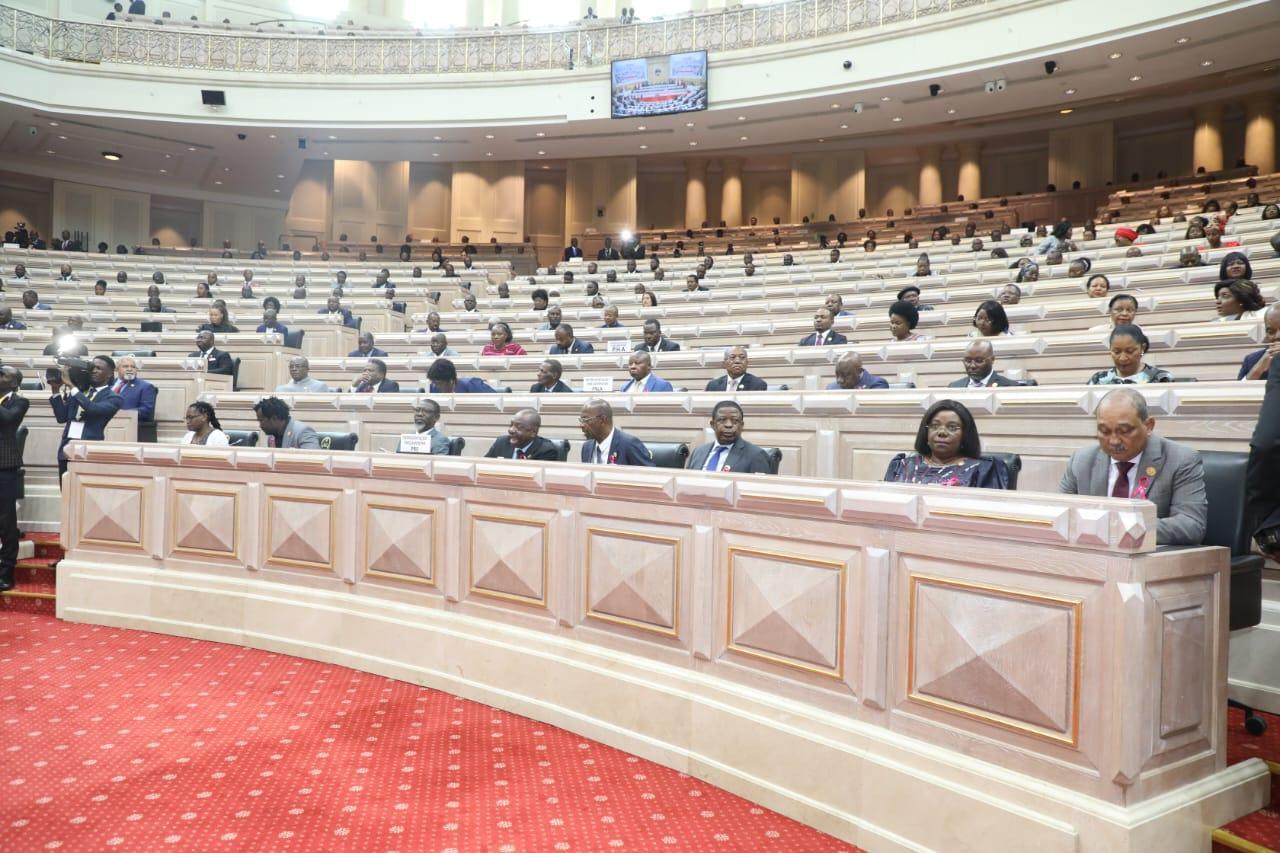
The State Budget, whose proposal was submitted to the National Assembly on October 31, 2025, was definitively approved on December 15, with 120 votes in favor (MPLA, PHA and the mixed PRS-FNLA group), 79 against (UNITA) and no abstentions.
Prepared based on an average oil barrel price of 61 US dollar and a production of 1.05 million barrels per day, the 2026 State Budget estimates public revenues and expenditures at 33.2 trillion kwanzas.
This projection reflects a decrease of 4.02% compared to the 2025 State Budget, approved with 34.6 trillion kwanzas.
Like the current budget, the 2026 State Budget reaffirms the commitment to food security, aiming to strengthen domestic production capacity and reduce dependence on imports of essential foods.
The Agricultural Production Promotion Program (PFPA) stands out, with an estimated allocation of 151.79 billion kwanzas.
Alongside this, the 2026 State Budget establishes a ceiling of 1.3 trillion kwanzas for the granting of sovereign guarantees intended to support private projects of national strategic interest.
This measure aims to boost the diversification of the economy, with particular emphasis on initiatives aimed at strengthening food security and increasing the country’s productive capacity.
As part of the financial incentive package to support businesses and boost private investment, the budget allocates 435 billion kwanzas for the regularization of certified commercial debts with state suppliers. The objective is to strengthen the financial credibility of the public sector, improve the business environment and stimulate national productive capacity.
For the year 2026, it is also estimated that negotiations will be concluded and made available a credit line valued at 15 billion kwanzas to support and promote the productive sector to bolster national productive capacity and stimulate job creation.
The fiscal year 2026 will also mark the beginning of the Youth Employment and Opportunities Project (PEOJ), aimed at unemployed young people aged 16 to 35.
This initiative has resources estimated at 10.1 billion kwanzas allocated to the Angolan National Employment Fund (FUNEA) to promote labor market integration, youth entrepreneurship and increased economic opportunities.
Priorities
The State Budget continues to prioritize the social sector, allocating almost half of primary spending to health, education, and housing, as well as expanding social programs and school feeding programs.
Among the measures included is the exemption from Income Tax (IRT) for workers earning up to 150,000 kwanzas, in order to protect the income of families and workers within this salary limit.
A salary increase of approximately 10% is also planned for public sector workers in Angola, a measure aimed at valuing public servants and adjusting salaries to the current economic context.
The instrument also prioritizes restoring the purchasing power of families and returning liquidity to companies to enable them to carry out their activities and create jobs, being a fundamental partner in helping the State reduces unemployment and levels of food insecurity in the country.
The 2026 State Budget provides, among other initiatives, for tax forgiveness on interest for all companies that, from November 2025 to June 2026, honor their responsibilities to the General Tax Administration (AGT).
This is an incentive for companies to have tax compliance and be able to participate in state public tenders.
Regarding public finances, the instrument proposes their continuous improvement to make them increasingly robust and sustainable.
Key Macroeconomic Indicators
The 2026 State Budget is notable for several reasons. Most importantly, it is the first budget in Angola’s history in which non-oil revenues exceed oil revenues. This signals progress towards a less oil-dependent economy.
Oil revenues are estimated at 7.50 trillion kwanzas and are expected to represent 5.49% of the GDP. This includes 5.15 trillion kwanzas from the National Agency of Petroleum, Gas, and Biofuels (ANPG) and 1.82 trillion kwanzas from the oil income tax.
Non-oil revenues are projected at 10.7 trillion kwanzas, equivalent to 7.8% of GDP. Of this amount, 7.4 trillion kwanzas correspond to non-oil taxes.
The legal tool also projects a 4.17% increase in real gross domestic product (GDP), supported by growth in the non-oil sector at a rate of 4.73%.
This performance clearly surpasses that of the oil sector (including oil and gas), which is estimated to grow by 1.07%.
These indicators highlight the dynamics of economic diversification and the strengthening contribution of non-oil sectors to national growth, however, the national inflation rate is estimated at 13.7% for 2026, which is a significant reduction compared to updated forecasts of 17.54% for the end of 2025.
This downward trajectory reflects the expectation of greater macroeconomic stability and the impact of measures adopted to control prices and consolidate finances.
Regarding expenses, debt servicing in 2026 is expected to be around 46%, which is 10% less than in 2025. Meanwhile, expenses on goods and services are projected to be 4.01 trillion kwanzas, reflecting a 6% decrease compared to the current fiscal year.
For More News And Analysis About Angola Follow Africa-Press