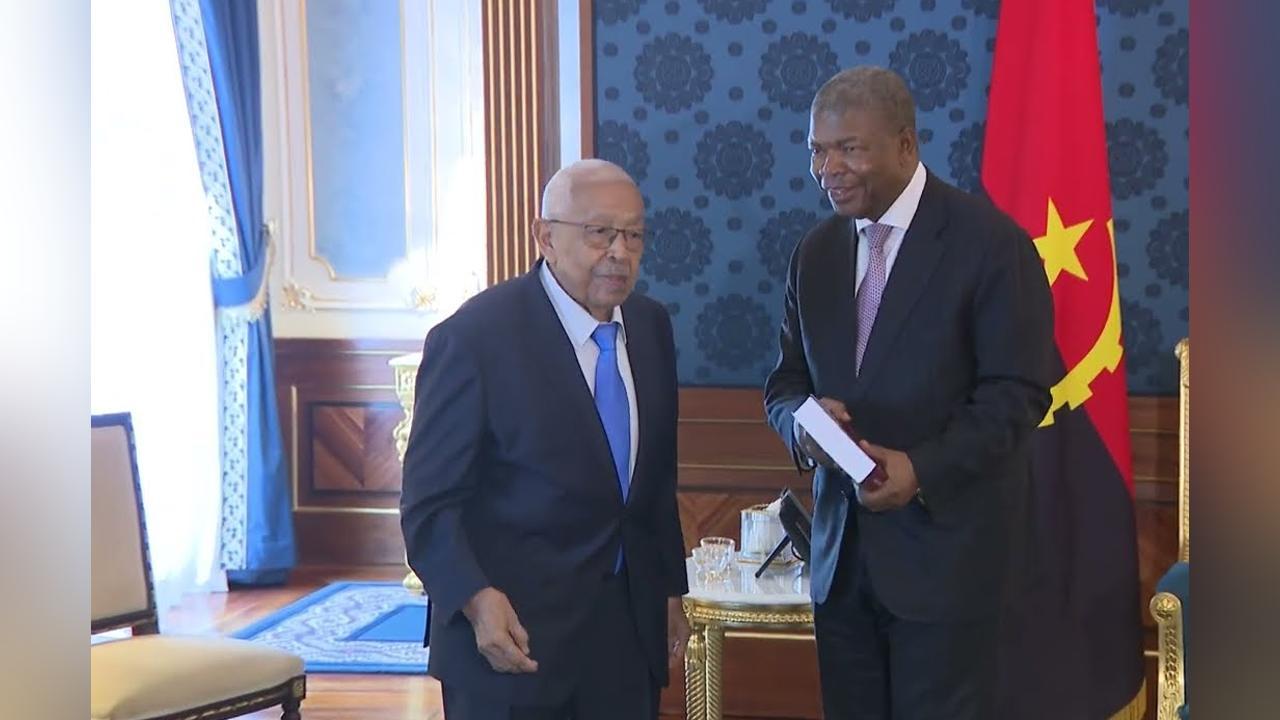
Africa-Press – Angola. Former Cape Verdean President Pedro Pires emphasized on Friday in Luanda that his visit to Angola aimed to strengthen institutional ties with Angolan president João Lourenço and discuss projects related to preserving the historical memory of Portuguese-speaking African countries.
Speaking at the end of a meeting with the Angolan president, Pires said that he had come to Angola to receive an award from Forbes Africa magazine. He took the opportunity to congratulate the Angolan president and present him with the first volume of his memoirs.
According to the former statesman, the meeting also allowed for discussion of an ongoing project on the history of the PALOP’s (Portuguese-speaking African Countries) liberation struggles, as well as an opportunity to thank Angola for its support in carrying out the initiative.
Pires highlighted Angola’s progress, underlining that the visit allowed him to see old friends and witness the country’s development in recent years.
He pointed out several aspects, including his positive impression of the new Luanda International Airport. He considered the airport a symbol of progress and the country’s capacity for future achievements.
“It’s good to see that the country is moving forward, which is positive for all of us,” he said.
Pires is recognized as one of the central figures in the political history of the archipelago, with a career marked by the struggle for independence and the consolidation of democracy.
He was born on April 29, 1934, on the island of Fogo. He joined the liberation movement led by Amílcar Cabral and played an active role in the PAIGC, as well as in the negotiations with Portugal that culminated in Cape Verde’s independence in 1975.
Following the proclamation of independence, he became Prime Minister, serving from 1975 to 1991. He led the country’s first government amid significant economic and social challenges.
During this period, he promoted development policies and played a key role in the transition to multi-party politics, which began in 1990.
Years later, he was elected president of the republic, a position he held from 2001 to 2011. During this period, he reinforced political stability, economic growth, and Cape Verde’s affirmation as a democratic model in Africa.
In recognition of his career, Pedro Pires received the Mo Ibrahim Prize for Good Governance in Africa in 2011, an award given to African leaders who demonstrate good governance.
Described as a moderate politician and advocate for peace, Pires is also seen as a promoter of human rights and international cooperation. He left a decisive legacy in the construction of the modern Cape Verdean state.
After leaving the presidency, he remained active in public life. He led the Amílcar Cabral Foundation and created the Pedro Pires Institute for Leadership. He also regularly participated in initiatives related to governance and African integration.
For More News And Analysis About Angola Follow Africa-Press