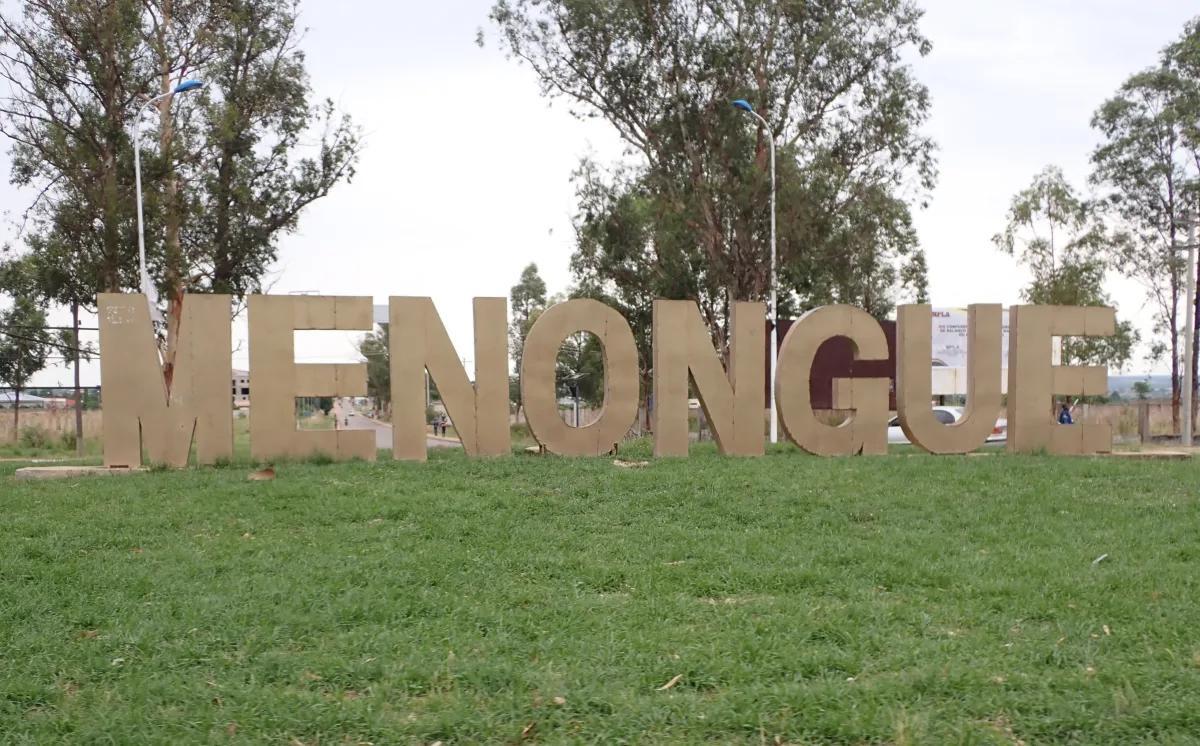
Africa-Press – Angola. The capital of Cuando Cubango (Menongue) celebrates today (21 October), 62 years since it was elevated to the category of city, with timid but sure steps, investing in participatory governance, towards sustainable development in the most varied sectors, to provide its residents with economic and social well-being.
Since its elevation to the category of city, it has benefited from several structuring projects with social impact, through the Integrated Plan for Intervention in Municipalities (PIIM), the Integrated Program for Local Development and Combating Poverty (PIDLCP), Eurobonds, the oil differential, among others, which raise the self-esteem and pride of the inhabitants of the four communes that make it up, namely the main commune of Menongue, Jamba Cueio, Missombo and Caiundo.
The distribution of drinking water in Menongue does not yet cover the majority of neighborhoods and towns on the outskirts, although a project is underway to increase the capacity to supply the precious liquid to all residents, within the scope of PIIM.
The supply of electricity to all neighborhoods is also a major concern, despite having, since December 2018, a thermal plant called “Kwebe”, with a capacity of 60 megawatts.
Also known as Lands of Mwene-Vunongue, the capital of Cuando Cubango has as natural and cultural heritage the islands of the river Cuebe, São Clemente, Eventos, Monte Minas (Cantombi), Lingue mountain and the tomb of King Mwene-Vunongue. This heritage includes the Cuebe waterfall, the old Missombo jails, Serpa-Pinto Fort, Statue of King Mwene-Vunongue and the museum of the former municipal administration.
Pride and satisfaction
The municipal administrator of Menongue, José Ernesto da Silva, said that, in recent years, the capital of Cuando Cubango has gained a dynamic profile with the increase in public investments, through the construction of various social infrastructures and some still in progress, to guarantee better living conditions for residents and catapult the socio-economic and sustainable development of the region.
José Ernesto da Silva said that the 62 years of the city of Menongue reflect the political, economic and social trajectory that the city is experiencing, constituting a source of pride and satisfaction for the local population, taking into account the gains in the most varied sectors.
“We have a municipality that is growing and developing in various sectors, especially in Education, Health, Energy and Water, Hotels and Tourism, Agriculture, Commerce, Housing, Transport, among others that are contributing to the dignity of its residents”, he said.
The administrator reported that the municipality of Menongue has 105 schools, of which 40 are primary schools, 47 are first cycle schools, three secondary technical institutes, two teacher training institutes and an equal number of professional technical institutes and second cycle secondary schools.
The Health sector has 41 health units, including one general and one municipal hospital, 29 health posts, nine health centers and two mother and child centers.
Ongoing projects
José Ernesto da Silva informed that within the framework of the Integrated Plan for Intervention in Municipalities (PIIM), Menongue benefited from 20 projects, of which 12 under the supervision of the Municipal Administration and eight under the responsibility of the Provincial Government, focusing on the sectors of Education, Health, Energy and Water, City Beautification and Gardening, Application of Traffic Lights and Lightning Rods, budgeted at more than 10 billion kwanzas.
In this regard, construction is underway on the official residence of the municipal administrator, three schools with seven classrooms each, two posts and a health center, with around 80 percent of physical execution.
“Both at the city level and on the outskirts, projects are underway to expand the water supply, household connections and rehabilitation of the water collection, treatment and distribution system, as well as the supply of electricity and lighting”, he highlighted.
José Ernesto da Silva assured that the aforementioned projects will benefit a universe of 130,000 homes and improve the quality of life of the population. “Despite the financial difficulties, the PIIM works are progressing at a good pace and several projects will be inaugurated this year”, he highlighted.
So far, the municipality has benefited from a health center and a vaccination sleeve in the Caiundo commune, within the framework of PIIM.
Within the scope of the Integrated Program for Local Development and Combating Poverty (PIDLCP), actions for this year are focused on the acquisition of agricultural instruments and inputs, construction and rehabilitation of water holes, school infrastructures and residences.
The delivery of kiosks and mills, the expansion of the school lunch program, the acquisition of medicines for community health centers and other actions to improve the basic conditions of rural populations are also planned.
Regarding the projects that should be financed through the Euro-bond line in the Education and Health sectors, he mentioned that only the project to expand the Pediatric Hospital was paid a part while the other projects never benefited from any payments and are paralyzed. These are school construction and rehabilitation projects in the neighborhoods of Terra Nova, Paz, Tomás, Pandera and the commune of Caiundo.
The aforementioned credit line also includes the completion of the health center in the Benfica neighborhood, a bridge over the Cuebe river to facilitate the circulation of the Moçâmedes Railway (CFM) train, the application of solar panels in the commune of Caiundo and the village of Cuelei, as well as the asphalting of some sections in the peripheral neighborhoods of the city of Menongue, namely Novo, Futungo, Pandera, Casa Militar and Chivonde.
Regarding the projects that are being financed by the oil differential, José Ernesto da Silva said that rehabilitation works are underway at the Angola Public Television (TPA) facilities, the official residence of the provincial governor and the residence of the SINSE delegate .
Requalification of the city of Menongue
The administrator of Menongue said that there is a master plan for the requalification of the city of Menongue, which needs to be updated depending on the current context. As for its materialization, it began with the infrastructure of the Tucuve housing areas.
The city of Menongue, he said, has three land reserves, namely Tucuve, Mupambala and Vioto, which need infrastructure to be distributed to residents.
The Tucuve land reserve has an area of 761 hectares for a total of 1,014 lots. In the town of Vioto there are around 630 hectares for 840 lots, while in Mupambala there are 817 hectares for the creation of around 1,089 lots. According to the administrator, a large part of this area was occupied without prior authorization from the Municipal Administration.
“We have some budgetary difficulties in carrying out the infrastructure of the aforementioned land reserves”, he acknowledged, adding that in previous economic years projects of this nature were registered but were not implemented due to lack of financial resources.
José Ernesto da Silva said that in the National Development Plan (PDN) 2023/2027 the aforementioned project was once again included and he believes that it will be implemented, in order to relieve the burden of residents living in the center of the city of Menongue and beyond, so that they have more dignity and social well-being.
The administrator said his ambition is to see the city of Menongue experiencing economic, social and cultural growth, with the construction of centralities, expansion of the water and electrification network, earthmoving of secondary and tertiary roads, to allow better movement of people and goods. .
Traffic resizing
José Ernesto da Silva highlighted the challenges of resizing road traffic in the city of Menongue, with the creation of new routes and taxi stops. To this end, the Municipal Administration invested in training 266 motorcycle taxi drivers on the road code and providing first aid in the event of accidents.
Vehicle licenses and professional cards were also granted to motorcycle taxi drivers. Regarding the application of traffic lights in the urban area, there is a project at the provincial government level that will include the construction of guardhouses at established stops and the replacement of vertical and horizontal traffic signals.
Inequality in development
According to several residents, the development of Menongue has not kept pace with population growth, which exceeded 320 thousand inhabitants. Unemployment, lack of business opportunities, drop in purchasing power, prostitution, theft, qualified robberies, decapitation of bodies, crimes of embezzlement, among others, paint an unflattering scenario for the city.
Garcia Salavo Manuel, resident of the Eurovia neighborhood, told that despite the problems that the city of Menongue is going through, there is notable growth in education, health, supply of energy and drinking water, roads, green spaces, housing, employment and business.
He called on the Executive to implement structural programs and projects in a sustainable way, to guarantee the well-being of communities, with emphasis on those found in the most remote areas of the capital of Cuando Cubango.
The interviewee said that it is possible that, within five years or less, the city of Menongue will have considerable development in the field of Manufacturing Industry, Employment, Education, Health, Housing, Roads, Sports and Cultural Centers, among others, despite the current crisis economic and financial situation that is plaguing the country.
“I believe in better days, so that we can compare in terms of infrastructure, social and economic development of the municipality of Menongue, with other more developed cities in the country, such as Luanda, Benguela, Lubango, Huambo and Moçâmedes”, he said .
Drinking water systems
Gilberto Maurício, resident of the Military neighborhood, understands that the local government must build drinking water supply systems to prevent populations living in more remote areas from traveling long distances in search of the precious liquid or fetching it from the river, where many They are sometimes attacked by alligators.
The jurist and university professor added that due to the reduced capacity of the current thermal plant, the Provincial Government must commit to completing the works on the new Menongue thermal plant, to boost investments in the Industrial sector.
Gilberto Maurício also defended the need for the Government to take care of the situation of young entrepreneurs who often demand help to develop their own businesses.
The city of Menongue is one of the few in the country divided by a river (Cuebe) and has a territorial extension of 23,565 square kilometers with a population density of more than 404,126 inhabitants. The State is the largest employer and many survive from wholesale and rural trade , service provision, agriculture, fishing and farming.
Bordered to the North by the municipality of Chitembo (Bié), to the East by the municipalities of Cuito Cuanavale and Nancova, to the South by the municipality of Cuangar and to the West by the municipalities of Cuanhama, Cuvelai and Cuchi.
Official party program
The 62nd anniversary celebrations of the city of Menongue are being marked by various activities, which include a musical-cultural show, an exhibition of agricultural products, arts and various products from all municipalities in Cuando Cubango, to showcase the province’s potential.
The program also includes a cleaning campaign, sporting activities, a radio debate on the municipality’s history, holding a forum to consult residents to collect contributions for the preparation of the Participatory Budget (OP) for the 2024 financial year, visits to the tomb of the first king Mwene Vunongue and other places of historical-cultural interest.
At the place where the marathon is taking place (in Campo da Banca), a carousel was set up and will also host a musical-cultural show with local musicians and musicians from various parts of the country, as well as the launch of fireworks.
jornaldeangola
For More News And Analysis About Angola Follow Africa-Press