Africa-Press – Angola. The province of Cabinda, the first within the scope of the Agricultural Value Chains Project, is implementing agricultural and livestock Field Schools within the family.
Called Agricultural Field Schools, it is a new experience in the province and already has 76 areas across the four municipalities, namely the main municipality of Cabinda, Cacongo, Buco-Zau and Belize.
Fifty-one Field Schools are programmed by the project, whose particularity, in addition to the production of food crops, corn, cassava, beans, macunde beans, peanuts, soybeans and sweet potatoes, also address the creation and production of small animals carriage, chicken, goat and pig.
The national coordinator of the Agricultural Value Chains Development Project for the province of Cabinda, José Fernandes, said that Field Schools are a Government methodology, through the Ministry of Agriculture and Forestry, aimed at adopting, throughout the national territory, technical assistance and providing rural extension services to family farmers, with voluntary participation.
To this end, he highlighted that Cabinda is the first province where Agro-Livestock Field Schools are being created.
́ ́ This project is being developed, based on the experiences and model that is being implemented, as it will be used to share, with the Ministry of Agriculture and Forestry, other provinces of the country ́ ́.
He indicated that, to ensure animal production, the local government and the private sector in the sector are prepared to promote these small animals, namely chickens, goats and pigs, with the operation of the so-called Animal Production Satellites, in the Chicken Production Centers at Fazenda Apolónia, goats at Fazenda HAL and pigs at Fazenda GB.
Therefore, since 2020/2021, these matrices (animals) that were distributed to local breeders were dependent on Luanda, and, from 2022, Cabinda became self-sufficient and produces chickens, goats and pigs locally to distribute to peasant families within the project.
José Fernandes, who did not advance the current production capabilities of animal production satellites in production centers, said that each peasant family has between 10 chickens, two to three pigs and three to five goats.
Importance of Field Schools
The National Coordinator of the Agricultural Value Chain Development Project for the province of Cabinda, José Fernandes, said that the Field Schools aim to show what the Government has about the project, financed by the African Development Bank (AfDB), under the management of Ministry of Agriculture and Forests of Angola.
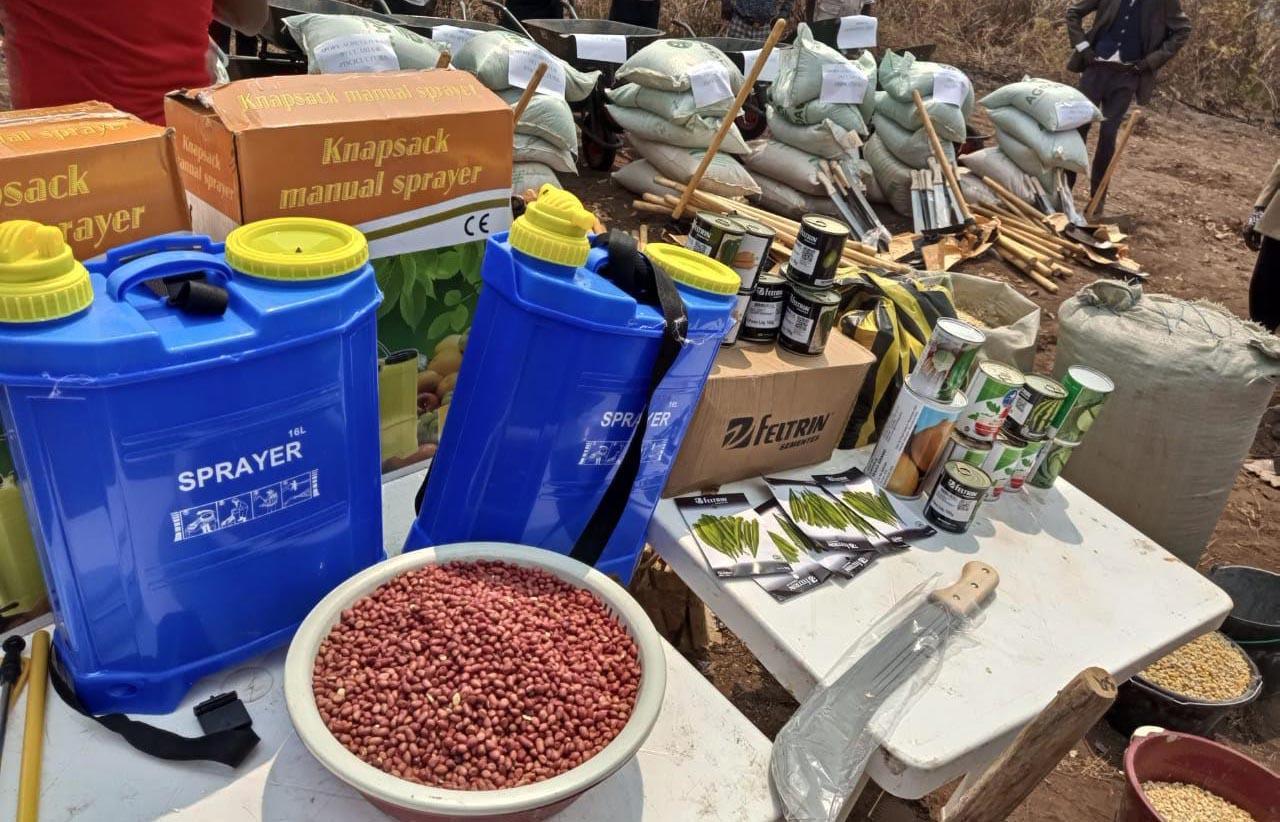
The objective is to show the technology that the ministry’s technicians have for local producers, in the case of the production of food crops of improved varieties such as corn, beans, sweet potatoes, soybeans, in addition to fertilizers.
In addition to this, in Cabinda the project prepared more than 10 thousand hectares of mechanized land throughout the province, where more than two thousand peasants are enrolled in field schools, the majority of whom are women.
He also highlighted that in Cabinda private companies in the sector participate in the preparation of land at the level of municipalities and communes, in addition to the distribution of motorcycle cultivators, with the capacity to prepare land of one and a half to two hectares that are distributed in rural schools. for families.
José Fernandes highlighted that the Ministry of Agriculture and Forestry and the provincial governments have adopted the Field Schools methodology as a technical assistance tool for rural extension for producers, where experiences and trials are exchanged on practices advised from a technical and in the traditional way in communities and evaluate the best technologies and production systems to be applied to increase production.
́ ́The main objective of this Field School (EC) project is to increase production and productivity, where the intention is to increase the yield per hectare in each area produced, where the family producer must have access to technology, technical assistance and rural extension.
He also said that a large part of the products consumed on Angolan tables throughout the country, around 80 percent, come from family farming and the rest from businesspeople in the sector.
The project technician highlighted the importance of technical assistance, both in agricultural and animal production in Cabinda, which has local technicians from the provincial secretariat of agriculture and fisheries who work in all municipal and communal headquarters and villages, providing full support in the project and in the implementation of programmed activities, which is an added value, ensuring that the project in Cabinda is sustainable.
For More News And Analysis About Angola Follow Africa-Press