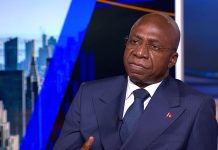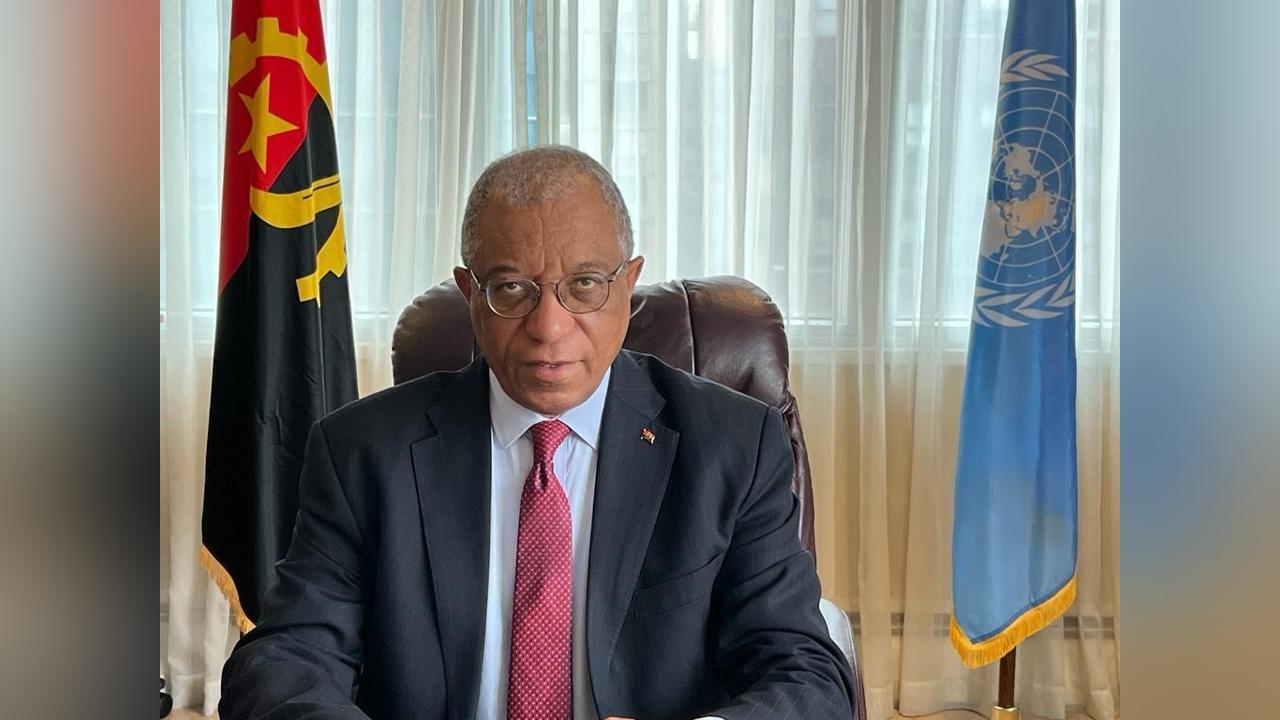
Africa-Press – Angola. Angola’s permanent representative to the United Nations, Francisco José da Cruz, said this Tuesday, in New York, that the end of the dictatorial political regime in Portugal was only possible due to the action of liberation movements in the colonies in Africa.
During a debate on “the legacy of the Carnation Revolution in Portuguese-speaking Nations”, the diplomat explained that the Portuguese military realized the injustice of the colonial war, as it made no sense at all, and thus decided to end it with a revolution, reports a press release.
In the ONUNEWS studios, Francisco da Cruz admitted that the transition and decolonization process was complex and difficult, having evolved under the effect of increasing pressure for self-determination and independence in the then colonies.
He recalled that only three months after the end of the Estado Novo, the Portuguese Government promulgated the “Decolonization Law”, under which Portugal recognized the right of people to self-determination, including the acceptance of the independence of the so-called “overseas territories” and ceased to be constitutionally part of Portuguese territory.
He said that after the visit to Portugal of the then UN Secretary General, Kurt Waldheim, on 4 August 1974, a communiqué was issued in which Portugal not only confirmed what was enshrined in the aforementioned law, but also specified the rights for each of the ex- African colonies under the terms of General Assembly resolution 1541.
On the other hand, he highlighted the friendship and cooperation relations with Portugal that have been strengthened over time, not only from the point of view of historical ties, but above all from a vision of the future, in defense of the interests of both countries in the international area.
He also defended the need to reinforce cooperation between the member states of the Community of Portuguese Speaking Countries (CPLP), aiming at the development of their respective countries, in an increasingly globalized and competitive world.
UN
The UN Secretary General, António Guterres, confirmed that it is necessary to do justice, and there would not have been April 25th without the struggle of the liberation movements of the colonies.
He said that “there is a very direct link between the struggle for democracy in Portugal that led to the 25th of April, and the struggle of African liberation movements, to achieve their independence”.
He clarified that there is no cause and effect relationship, but rather a profound interpretation of the process that was taking place in Portugal in the fight against the dictatorship and the fight for independence, led by the liberation movements of the former Portuguese colonies.
In addition to Angola, the permanent representatives of Brazil, Cape Verde, Mozambique, Portugal and Timor-Leste participated in the debate.
Also known as the April 25th Revolution, it refers to an event in the history of Portugal resulting from the Armed Forces Movement, which occurred on this day in 1974, which deposed the dictatorial regime in force since 1933.
The Carnation Revolution ended, at the same time, 48 years of fascist dictatorship and 13 years of war in the African colonies.
For More News And Analysis About Angola Follow Africa-Press