Africa-Press – Angola. Today, the National Electoral Commission (CNE) begins training national trainers for members of the polling stations, whose general framework foresees to engage more than 100 thousand members, at a time when a series of technical instruments such as the regulation on the draw to position the competing forces in the Ballot.
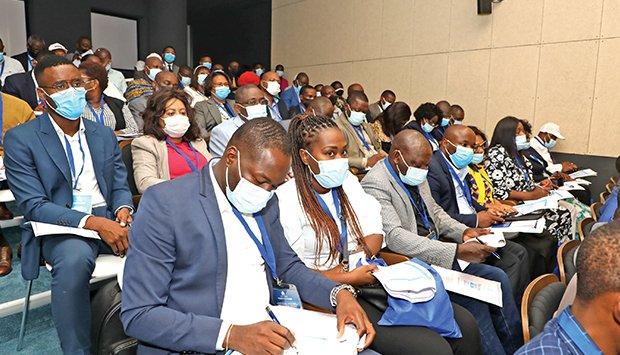
The training, lasting five days, takes place in the auditorium of the Medium Institute of Economics of Luanda-IMEL, from 8 am, indicates the note to which Jornal de Angola had access. In this order, the plenary of the National Electoral Commission (CNE) approved, last Friday, the definitive mapping of the General Elections Polling Stations, having determined the creation of 13,238 assemblies, made up of 26,488 polling stations.
In the country, there will be 13,212 Polling Stations, made up of 26,443 polling stations, while abroad there will be 26 Polling Stations, with 45 polling stations. In general, the assemblies will receive, in the country, 14,376,831 voters, and 22,560 abroad, making a total of 14,399,391 voters included in the database of the Computer File of Senior Citizens (FICM).
The CNE plans to recruit 105,952 members of the polling stations, according to the institution’s technical decision, taken at Friday’s plenary meeting. The regulation for the drawing of the placement of candidacies on the ballot paper was also approved, as well as the regulation for the distribution of the Antenna Times grid on radio and television for the electoral campaign, under the terms of the Organic Law of General Elections.
Subsequently, the plenary also approved the procedures for the use of Antenna Times. The competing political forces will be notified by the CNE, after acknowledging the receipt of the approved candidacies, through the Constitutional Court (TC), which, due to recent events, is dealing with the procedures related to the validation process.
Last Saturday, the Constitutional Court published the definitive lists of political forces competing for consultations, which can be accessed via the Internet and in its showcase. At the moment, the demonstrations, resulting from the parties’ commitment to mass acts and other political-electoral activities, are suspended, due to the observance of national mourning for the death of the former President of the Republic, José Eduardo dos Santos, which took place last Friday. fair.
The National Electoral Commission (CNE) guaranteed that the process abroad is properly organized, and involves more than 10 countries and around 20 cities. Of these, there are countries such as Namibia, Zambia, the Democratic Republic of Congo (DRC), South Africa, Germany, Belgium, Brazil, France, Great Britain, the Netherlands and Portugal.
To serve voters in these countries and cities, the CNE is implementing a training action to equip agents in the field of diplomatic and consular representations with technical-electoral capacity. The training should generally be concluded by the end of this month, according to CNE spokesman Lucas Quilundo, citing the goals set by the institution, in light of the organization of the electoral process.
Within the framework of the fifth General Elections in the country, the institutions that compete directly and indirectly for the holding of the election started a series of activities with a view to the massive and orderly participation of all those involved. Thus, campaigns were launched to raise awareness and train Electoral Education Agents.
CEAST Calls For Transparency In The Electoral Process
The Justice and Peace Commission of the Episcopal Conference of Angola and São Tomé (CEAST) appealed, in Luena, for transparency and electoral justice, during the election on 24 August.
The appeal was made at the end of the Regional Conference on “the challenges of building the Angolan nation: past, present and future”, which had delegates from the provinces of Moxico, Lunda-Norte, Lunda-Sul, Cuando Cu-bango and Bié.
According to the recommendations of the delegates who participated in the conference held by the Justice and Peace Commission of CEAST, it is necessary that the electoral process is able to give greater credibility to the political event and its results. On the other hand, the delegates recommended a review of the country’s current economic system, with a view to putting the concerns and needs of communities at the center, as well as contemplating a fair distribution of wealth.
They also discouraged the “abusive” extraction of natural resources in the region, mainly wood, without providing social returns to the population.
Conference delegates recommended the country’s religious entities to act with a greater sense of justice and concern for the most vulnerable people.
The Regional Conference on “the challenges of building the Angolan nation: past, present and future”, reflected on the political and social situation of the country, with the aim of building a common vision for a new Angola.
During two days, participants addressed “the paths to sustainable peace” and “the challenges for sustainable development in a developing Angola”, as well as “the challenges of culture in an Angola under reconstruction”.
For More News And Analysis About Angola Follow Africa-Press