Africa-Press – Angola. The Congolese political party Union for Democracy and Social Progress (UDPS) released on Tuesday a statement expressing its “great sadness at the death of former Angolan Vice President and MPLA Political Bureau member Fernando da Piedade Dias dos Santos ‘Nandor.'”
In the statement, the UDPS offered “our most sincere condolences to the MPLA, the family of the deceased, and all Angolans.”
The statement emphasizes that the former vice president served his country with dedication and contributed significantly to the struggle for an end to the war in Angola and the country’s development.
“We share in the pain of this great loss and stand with the Angolan people. May the soul of Vice-President Nandó rest in peace,” the statement reads.
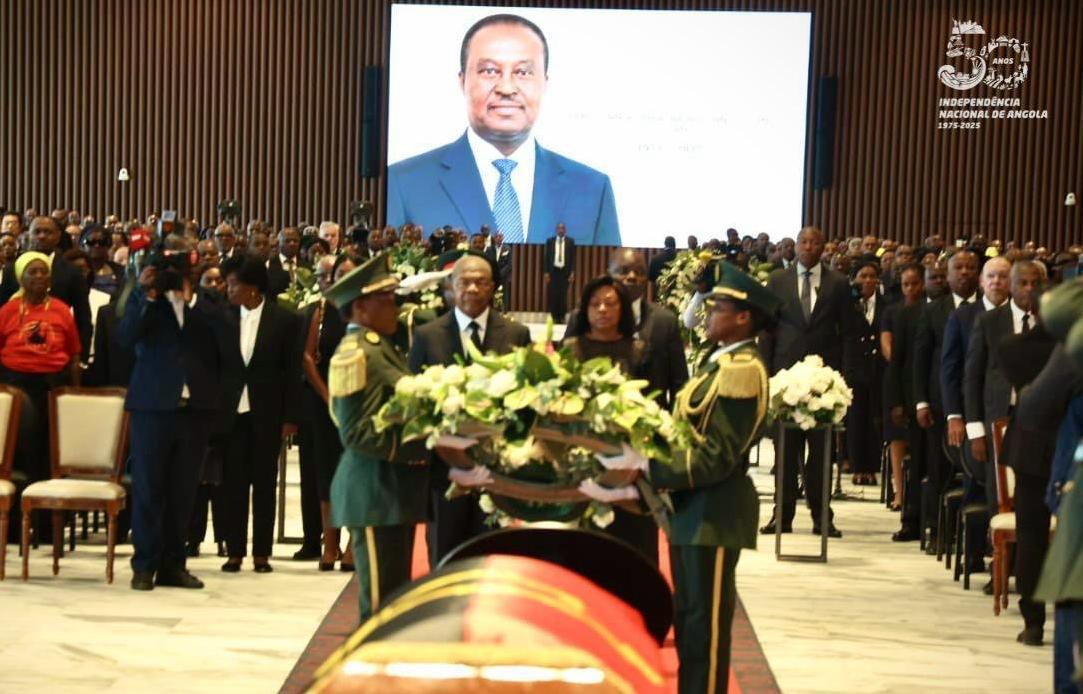
Fernando da Piedade Dias dos Santos “Nandó” died on the 18th of this month in Luanda. His remains were buried on Monday (22nd) at the Alto das Cruzes Cemetery in Luanda.
Throughout his political career, Nandó held high-level government positions, most notably as vice president and president of the National Assembly. He left a remarkable legacy in consolidating the country’s democratic institutions.
Born on March 5, 1950, he joined the MPLA in 1971. After Angola gained independence in 1975, he began his career in the People’s Police Corps of Angola (CPPA). He became a division chief in 1978.
Between 1982 and 1995, he was part of the group that founded the Ministry of the Interior, where he held several important positions.
He held several positions, including Minister of the Interior, Head of the Sectoral Political Directorate of Internal Order, Head of the Political Department of the National Directorate of the People’s Police, National Director of Personnel and Staff, Deputy National Political Director, Deputy Minister of the Interior, Deputy Minister of State Security, Head of the Information Services, and Commander-General of the National Police.
In December 2002, he became Prime Minister, a position he held until 2008 in accordance with the then-current Constitution.
Following the approval of the new constitution in 2010, which abolished the position of prime minister, he was appointed vice president of the Republic of Angola. He held this position until 2012.
He served as Speaker of the National Assembly from 2008 to 2010 and again from 2012 to 2022, consolidating his political influence and legislative leadership.
For More News And Analysis About Angola Follow Africa-Press