Africa-Press – Angola. The Economic Commission of the Council of Ministers approved, this Friday, short and medium term measures, aimed at dealing with the reduction in budget revenue that the country is facing.
The final communiqué of the session informs that the measures are contained in a memorandum that provides for the reduction of public expenditure and the enhancement of revenue.
The action, continues the document, aims to ensure debt sustainability, reverse the budget deficit, boost economic diversification and ensure the resilience of the national economy.
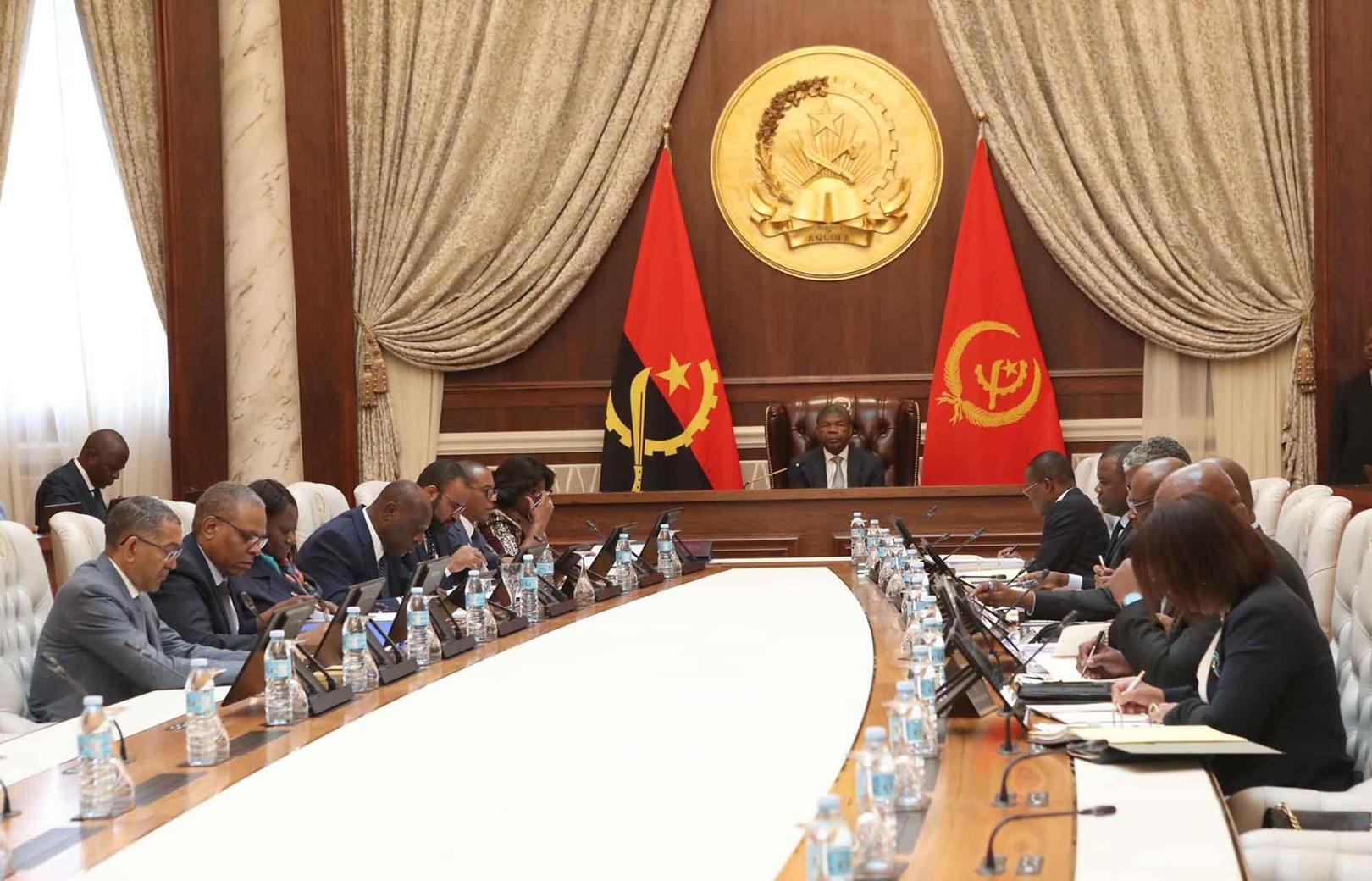
At the meeting, chaired by the President of the Republic, João Lourenço, the Angolan Executive’s economic team also adopted short-term measures aimed at stimulating the economy and boosting its growth potential.
The communiqué, released at the end of the session, refers that with these measures the Executive intends to share, with economic agents, the priorities of food production and safety.
The measures are also aimed at protecting and creating jobs, as well as increasing the competitiveness of “Made in Angola” products.
The focus of these measures is also on reducing the cost of living, particularly with the purchase of food.
long term strategy
The Economic Commission approved the Long-Term Strategy, Angola 2050, the central instrument of the National Planning System, which represents a paradigm shift in relation to the previous strategy.
According to the document, the replacement of the strategy is due to the delay in the results achieved previously due to internal and external factors, the need to align with the new international commitments assumed by the country.
transport sector
In the field of transport, the Economic Commission approved a Presidential Decree that defines the uses of the perimeter of the State Land Reserve adjacent to the António Agostinho Neto International Airport.
The measure aims to ensure the functionality, sustainability, economic and social development of that airport infrastructure, as well as the adjacent areas.
In the same sector (transport), the Presidential Dispatch created the Multisectoral Commission for the Development of the Airport City of Icolo e Bengo, coordinated by the Minister of State and Economic Coordination.
Within the scope of the said Multisectoral Commission, it is the responsibility of the Minister of State and Economic Coordination, among other tasks, to carry out preliminary studies, draw up a model for administrative, urban, real estate and operational management.
In this Friday’s session, the Economic Commission became aware of an Executive Decree that approves the Regulation of the Technical Support Group to the Multisectoral Commission for the Development of the Airport City of Icolo e Bengo, abbreviated as GI-DCAIB.
finance sector
Regarding the finance sector, the economic team endorsed the National Treasury’s financial programming for the third quarter of 2023, a document that contains projections of inflows and outflows of financial resources in the period in question.
The said document also contains aspects related to revenue, with direct and indirect impact on treasury, as well as an approach to the risks of its execution.
In the same domain, the State General Budget (OGE) execution reports were approved, referring to the III and IV quarters of 2022, as well as the State General Budget Execution Report, referring to the I quarter of 2023.
The aforementioned documents present the execution of the OGE reflected in the budget, financial and equity balance sheets and in the statement of their variations.
The Economic Commission received information on the evolution of the Gross Domestic Product (GDP) for the first quarter of 2023.
The document assesses the behavior of the aforementioned economic indicator during the reference period.
According to the statement, GDP performance was affected by the contraction of the oil segment, including gas, despite the positive performance of the non-oil sector, including transport, diamonds and metallic minerals, electricity and water.
The Economic Commission of the Council of Ministers is responsible for dealing with the Executive’s macroeconomic agenda and ensuring that macroeconomic management is carried out in harmony with the objectives and economic priorities of the Governance Program of the President of the Republic.
For More News And Analysis About Angola Follow Africa-Press