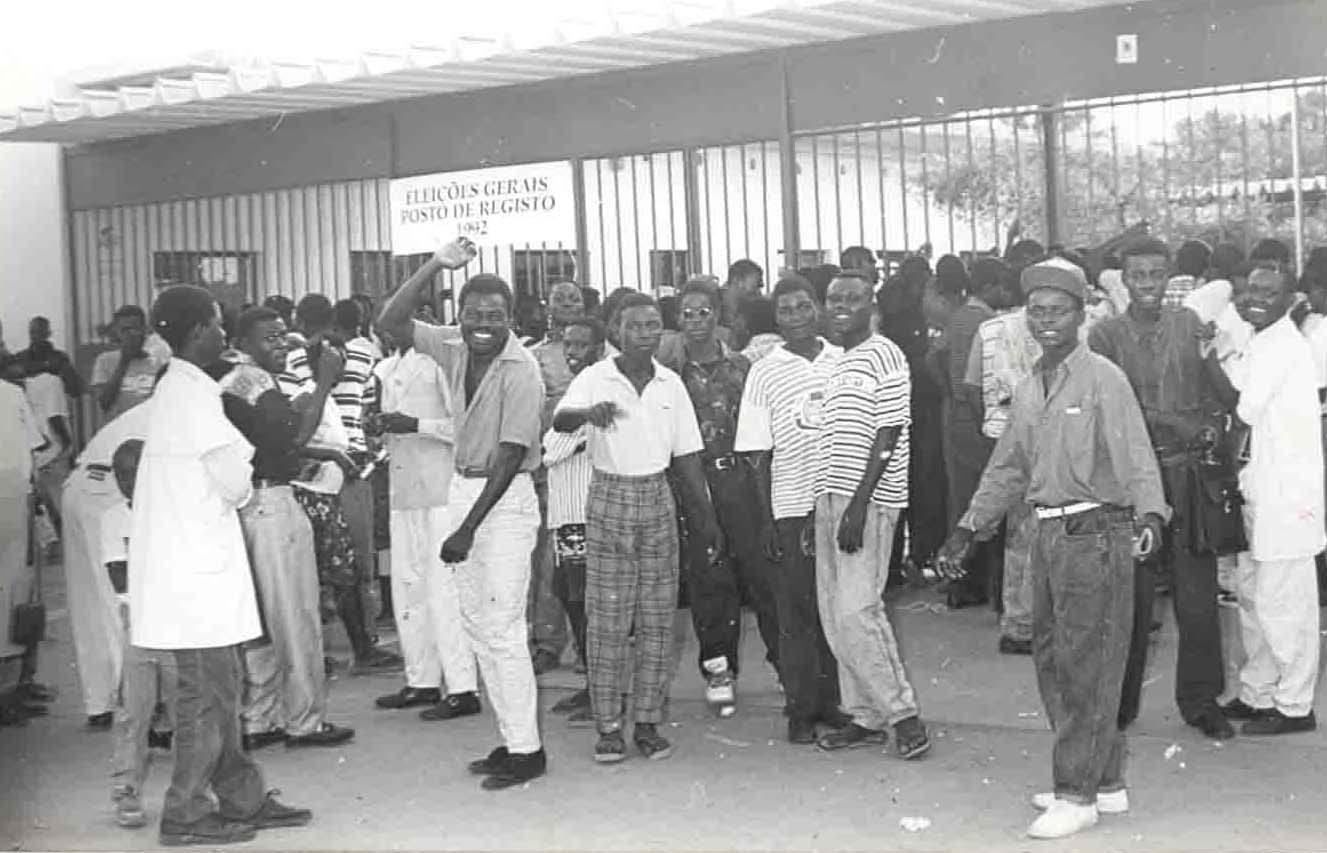
Africa-Press – Angola. Angola celebrates 31 years since the unprecedented moment when, for the first time in its history, millions of voters, over 18 years old, went to the polls to choose the President of the Republic and the 220 representatives in the National Assembly.
The electoral election, which confirmed the MPLA as the winner of the legislative elections, took place from 29 to 30 September 1992, while a tenuous ceasefire was being enjoyed in a war that dated back to the periods before and after independence, achieved on 11 November 1992. 1975.
The population going en masse to polling stations spread across the country, among 4.8 million registered voters, meant that the participation rate exceeded 90 percent.
The accession even fueled the idea that, with the pacification of Angola, with the elections and, consequently, with democratic normalization, Angolans would have definitively healed the wounds opened over the years of anti-colonial struggle and post-war war. -independence.
However, many skeptical minds were suspicious of UNITA’s ‘honesty’ regarding the demobilization, cantonment and delivery of weapons by its armed forces, crucial for the formation of the single army and compliance, in fact, with the suspension of hostilities, which had been in force since 15 May 1991.
Drama after results
The ‘start of the spark’ occurred with the announcement of the results, on October 17, 1992, made by the British Margaret Anstee, special representative of the Secretary-General of the United Nations in Angola, having declared the elections “free and fair”.
The communication rekindled the hidden ‘gunpowder’ of the entire component set up by the UN to verify and monitor compliance with the ceasefire.
According to the results of the ballot, the MPLA obtained 53.74% of the votes in the legislative elections, ahead of UNITA, with 34.10%, which alleged fraud and rejected the results, giving way to another 10 years of war, the consequences of which were the destruction of infrastructure, the increase in displaced people, family mourning, among others.
The return of the armed conflict made it impossible, a priori, to hold the necessary second round of the presidential elections, since José Eduardo dos Santos, at the time President of the Republic and of the MPLA (in power), was 1% short of the absolute majority, when adding 49.57% against 40.07% for Jonas Savimbi, from UNITA.
The resurgence of the war also annulled compliance with the Bicesse Accords, which had the ceasefire as the ‘core’ of the entire process, along with other premises.
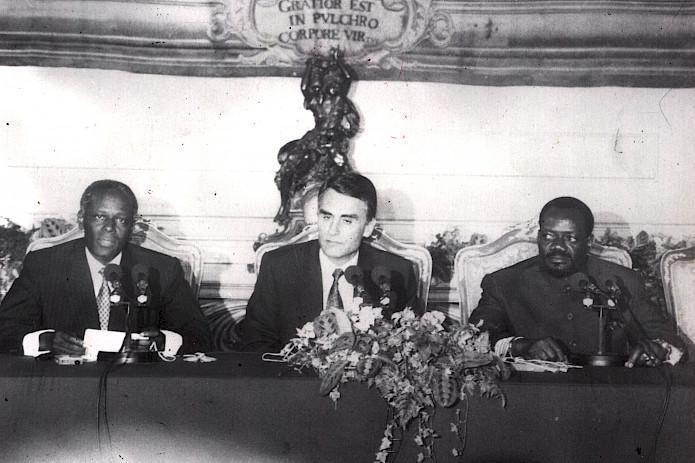
The Bicesse Agreements were initialed on May 31, 1991, in Estoril (Portugal), by President José Eduardo dos Santos and Jonas Savimbi.
Legacies of Bicesse
Under the mediation of the Portuguese Government, the failed agreements, however, had the merit of serving as a foundation for the establishment of a multi-party democratic regime favorable, years later, to peaceful coexistence between Angolan citizens, regardless of their convictions and political options.
To ensure that the vote is carried out, the National Electoral Council (CNE) was created, an “autonomous and differentiated body from the Executive”, as recently highlighted by Caetano de Sousa, the institution’s first president.
At a recent event in which he was honored, held under the theme ‘The Genesis, Experience and Structuring Principles of the Angolan Electoral Process’, Caetano de Sousa highlighted, as antecedents, the Alvor and Bicesse Agreements, as well as the Estoril Protocol.
According to the president of the CNE in 1992, those events, along with others, culminated in the first Constitutional Reform that included party plurality.
He had minimized the fact that it was the Executive’s task (in the past and present) to release funds for organizing elections to the then CNE, currently the National Electoral Commission, as, in his view, this merely reflects a relationship of collaboration and interdependence between both the parts.
He added, at the time, that Article 144 of the current Organic Law on General Elections recognizes the legitimacy and electoral authority for the exercise and technical and operational powers of the CNE.
For the person responsible at the time, the completion of the first elections was unquestionably due to the dedication of Angolan citizens committed to learning from practice and from the course of the process itself.
In this spirit, provincial electoral councils were formed in the 18 provinces, municipal electoral councils in the 164 municipalities, in addition to the National Scrutiny Center, based in the country’s capital, Luanda.
Despite all the harmful consequences of the events of 1992, the Bicesse Accords also left behind the creation, in 1991, of the Angolan Armed Forces (FAA), the result of the unification of the two armies, namely: FAPLA (from the Government) and FALA (from the Government) from UNITA).
Always with the Bicesse Accords as a ‘guiding thread’, and a few years after the signing of the Lusaka Protocol in 1994, the Government of National Unity and Reconciliation (GURN) was born, integrating elements from all political forces with seats in Parliament, including UNITA, which remained armed and in conflict with the unified FAA.
The definitive peace, which was slow to emerge, arrived only a decade later, in 2002, after the death, in combat, of Jonas Savimbi.
After the ‘bitterness’ caused by the events of 1992, and now with the ‘sweet taste’ of peace and stability, Angolans once again went to the polls, freely and regularly, in 2008, 2012, 2017 and 2022, with MPLA victories, however, from UNITA’s perspective, all “fraudulent”.
Numbers and protagonists
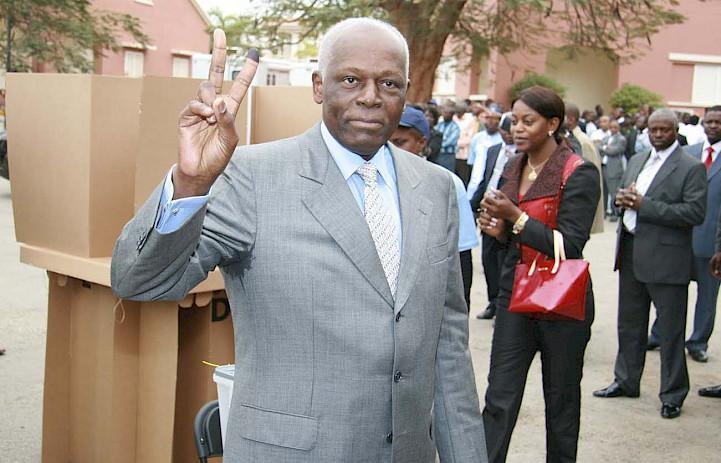
José Eduardo dos Santos, president of the MPLA (ruling party since National Independence), as well as of Angola, and Jonas Savimbi, leader of UNITA, were the main candidates for victory in the electoral election, which was achieved, unsurprisingly, reflecting 49.57% and 40.07% of votes obtained, respectively.
In the presidential elections, both competed with Alberto Neto, from the PDA (2.16%); Holden Roberto, from FNLA (2.11%); Honorato Lando, from PDLA (1.92%); Luís dos Passos, from PRD (1.47%); Bengui João, from PSD (0.97%); Simão Cacete, from AD-Coligação (0.67%); Daniel Chipenda, supported by PNDA (0.52%); Anália de Victória Pereira, from PLD (0.29%); and Rui de Victória Pereira, from PRA (0.23%).
In the legislatures, the MPLA (129 deputies) and UNITA (70 deputies) competed for votes with PRS (6), FNLA (5), PLD (3), PRD (1), FDA (1), PAJOCA (1), PDP-ANA (1), PNDA (1), PSD (1) and AD – Coalition (1).
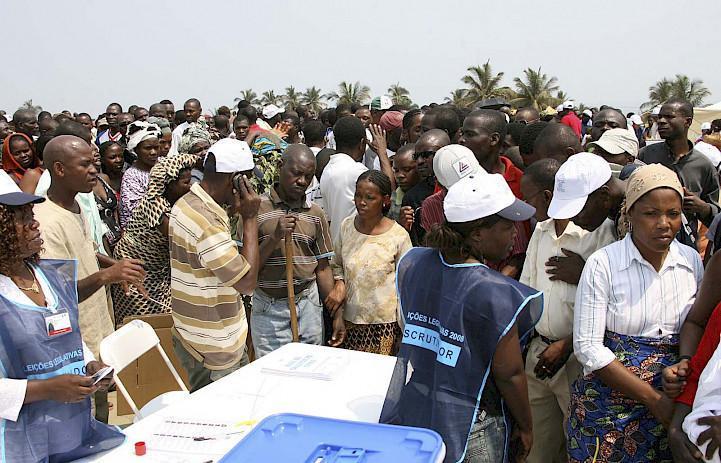
Direct and secret suffrage was exercised by at least 4.8 million voters in polling stations spread throughout the national territory.
To conduct the electoral process, the United Nations and its then secretary-general, the Egyptian Boutros Boutros-Ghali, were represented by the British Margaret Anstee, assisted by a Troika of Observers formed by the ambassadors of Portugal, the USA and Russia.
The carrying out of the ballot was taken over by the National Electoral Council (CNE), whose president was Caetano de Sousa, while the role of general director of elections was carried out by Onofre dos Santos, both of whom are currently retired judge-advisers of the Constitutional Court.
Creation of related structures
Dedicated, among other tasks, to the political control of the ceasefire, the CCPM was subordinated to the Joint Commission for the Training of the Armed Forces (CCFA) and the Joint Verification and Inspection Commission (CMVF) of the ceasefire, whose composition included representatives of the Government and UNITA, mediators from the United Nations, as well as observers from Portugal, Russia and the USA.
The search for peace included the establishment, by the United Nations Security Council, of the United Nations Verification Mission in Angola (UNAVEM).
The operationalization of the mission was carried out through UNAVEM I – from January 1989 to May 1991 – to verify the total withdrawal of Cuban troops from Angola, UNAVEM II – from June 1991 to February 1995 – with the aim of verify the peace agreements between the Angolan Government and UNITA and UNAVEM III – February 1995 – with the duty to monitor the period of restoration of peace, after the signing of the Lusaka Protocol, which took place on November 20, 1994.
This protocol was, however, insufficient to effectively achieve peace, until, on April 4, 2002, the signing of the Memorandum of Understanding Complementary to the Lusaka Protocol, between the Government and UNITA, putting an end to the hard-fought war by Angolans.
This (understanding) resulted in the true political and military stabilization of the country, as well as in the opening and normalization of a multi-party democratic regime that has provided Angolans with the possibility, every five years, by secret vote, to elect their rulers and deputies.
angop
For More News And Analysis About Angola Follow Africa-Press