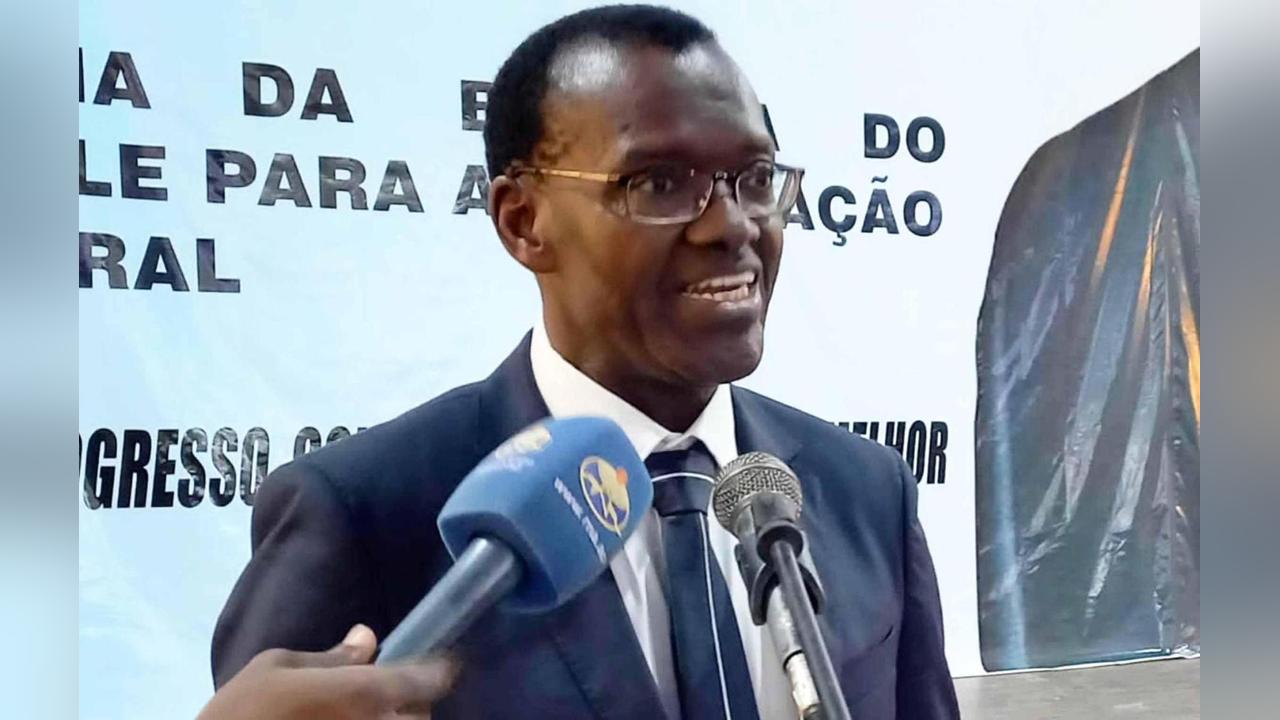
Africa-Press – Angola. Retired general Clemente Cuanjuca defended this Thursday in Ndalatando, Cuanza Norte province, greater promotion and dissemination of the historic Battle of Cuíto Cuanavale, fought on March 23, 1988, against the apartheid regime , with a view to transmitting knowledge to younger generations
The former Secretary of State for Former Combatants and Veterans of the Homeland defended this point of view when speaking at the conference on “The importance of the Battle of Cuito Cuanavale in the liberation of Southern Africa”.
The activity promoted by the National Secretariat of JMPLA, is part of the organization’s patriotic journey program called “JMPLA meeting the Angolan youth”, and served to salute the date, in Cuanza Norte.
Clemente Cuanjuca said it was necessary for young people to know the history of the Battle of Cuito Cuanavale, to understand the path taken, the sacrifices made and, above all, how to plan the country’s development in the context of Southern Africa.
Therefore, he considered it imperative to carry out continuous cycles of lectures in schools and universities, inserting the theme in school textbooks, for the dissemination of these and other relevant aspects of the history of Angola, in particular, the Battle of Cuíto Cuanavale.
For him, the end of the battle marked a decisive turning point in the war in Angola, and opened the door to the end of the apartheid racial segregation regime, which was then in force in South Africa, to the independence of Namibia and Zimbabwe.
It also put an end to the aggressions of the South African forces against the countries of Southern Africa, namely, Mozambique, Malawi, Swaziland and Lesotho.
He stressed that this battle represented the fulfillment of the strategic thinking of Agostinho Neto, the first President of Angola, who said that in Namibia, South Africa and Zimbabwe was the continuation of the struggle of the Angolan people.
He discussed the events that marked the country, from the proclamation of National Independence on November 11, 1975 to the outcome of the Battle of Cuito Cuanavale.
After that, he asked the young people to honor and dignify the sacrifice made by the freedom fighters of Angola and Southern Africa, through the preservation of peace and contribution to the development of Angola.
He stressed that the old generation consented to sacrifices to achieve independence and peace, therefore, the time has come for the new generation to consent to them for the development of the country.
Addressing those present, the first National Secretary of JMPLA, Crispiniano dos Santos, appealed to young people to forget the contradictions of the past brought by the then national liberation movements (MPLA, FNLA and UNITA), in order to walk together to develop Angola.
He defended the need to value those who consented to sacrifices for the liberation of the country and Southern Africa.
On his turn, the governor of Cuanza Norte, Pedro Makita Júlia, invited to the event, thanked the youth arm of the MPLA, for the initiative of holding the conference, which allowed reliving the history of the country.
He called for Angolans to unite around the development of Angola, regardless of their ideologies.
The Battle of Cuito Cuanavale, which took place between November 15, 1987 and March 23, 1988, in the town of Cuito Cuanavale, province of Cuando Cubango, is considered the largest military confrontation and the most prolonged that took place on the African continent, since the Second World War.
In that battle, they confronted the Angolan army (FAPLA) against the armed wing of UNITA (FALA) and the South African army.
It is also considered the second largest battle of terrain of the 20th century, surpassed only by the Battle of Kursk, which took place during World War II between the forces of Nazi Germany and the Soviet Union on the Eastern Front.
The conference was attended by members of the Government of Cuanza Norte, religious entities, traditional authorities, former combatants and students.
For More News And Analysis About Angola Follow Africa-Press