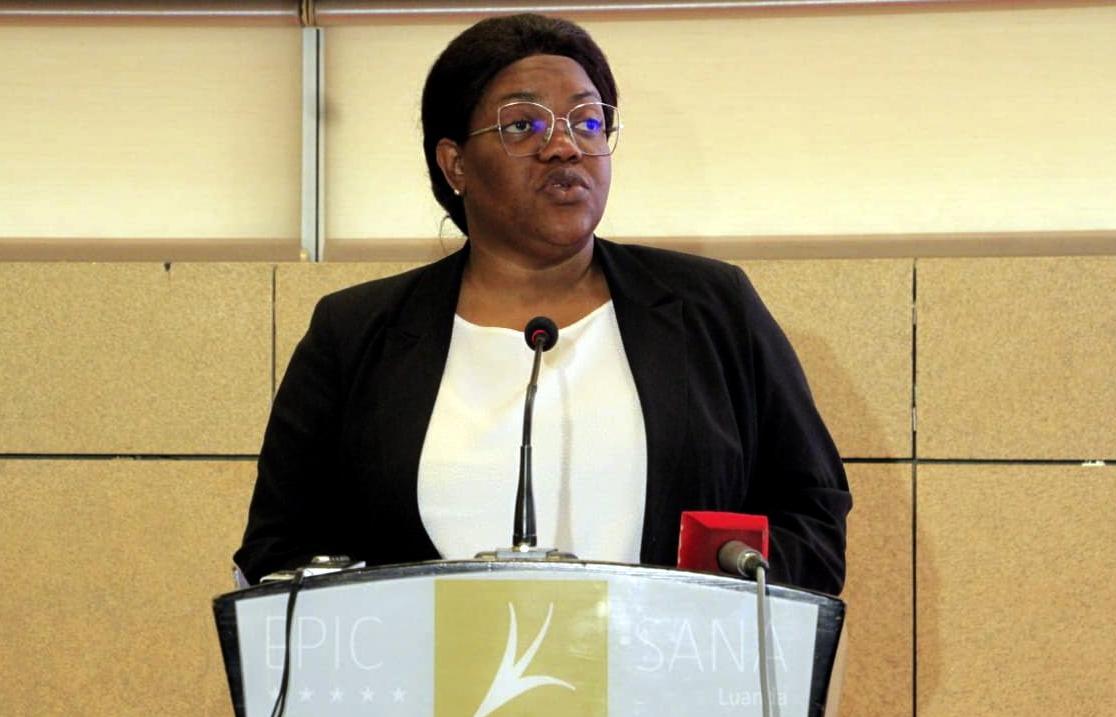
Africa-Press – Angola. The Secretary of State for Climate Action and Sustainable Development, Paula Francisco, defended the need for a greater relationship between climate finance funds and banking, to finance more sustainable businesses in the country.
Speaking at the opening of the 1st conference on sustainability in banking, promoted by the Angolan Association of Banks (ABANC), the Secretary of State underlined the relationship between climate finance funds and banking, which she considered fundamental to boost the transition to an economy of low carbon.
According to the person in charge, the relationship could promote environmental sustainability, boost innovation and the development of sustainable solutions.
Paula Francisco underlined that the collaboration between climate finance funds and banking also boost innovation because climate funds encourage research and development of clean technologies and sustainable solutions.
He reinforced that banks can support these initiatives by providing funding for the implementation and commercialization of these solutions, boosting technological advancement and the adoption of more sustainable business practices.
According to the Secretary of State, if this marriage takes place, significant financial resources can be mobilized and directed towards projects and initiatives that will help to mitigate the effects of climate change.
The Secretary of State said she was optimistic about the paradigm shift in banking in Angola, as there are positive actions and initiatives on the part of some financial institutions that are aligned with sustainability, as well as ESG (environmental, social and governance) criteria.
He also said that it is essential to continue to invest in financial education programs that include aspects related to sustainability, informing customers about responsible investment options, sustainable loans and other financial practices that have a positive impact on the environment and society.
Paula Francisco recognized that sustainability and socio-environmental responsibility are fundamental for the success and relevance of any sector, including banking.
“By adopting these practices, we are not only protecting the environment and promoting social equity, but also ensuring a prosperous future for future generations”, he reinforced.
Regarding the theme of the conference, he made it known that sustainability and sustainable development in their Environmental, Social, Economic and Governance (ESG) variables, “are fundamental elements to assess the performance of financial institutions in relation to sustainable practices and responsibility Institutional.
He stressed that in the Angolan context, banking has undergone significant changes and that, through the regulator Banco Nacional de Angola (BNA), reforms have been implemented to strengthen financial stability and promote compliance.
On the one hand, the person in charge said that the ESG is closely related to the 17 Sustainable Development Goals – ODS, since they are linked to fundamental business practices for the sustainable development of the organization as part of society.
On the other hand, the SDGs go beyond actions within an institution, as they are global commitments between the most diverse actors, such as governments, civil society and the private sector itself.
“The main connection between these two concepts lies in the fact that companies have a relevant social function and must increasingly make this position felt, in the face of today’s main global challenges”, he added.
He also referred that the Angolan Government recognizes the country’s vulnerability to climate change and is aware of the impacts it has been suffering and the tendency for them to worsen.
“The country has registered, among other effects, recurrent cycles of droughts and floods that have been affecting the different regions of the country in different ways, with consequences at an environmental, social and economic level and with more incidence in the regions located to the south”, stressed.
He stressed that the country’s main instrument used by the Government of Angola, so far, for the management and conservation of the environment, is the National Environment Fund (FNA) – a body supervised by the Ministry of the Environment.
Additionally, continued the Secretary of State, there are other instruments and funds capitalized via the State budget that support climate projects and programs.
In this regard, he said that the Economic Commission of the Council of Ministers recently approved the operational framework for the financing of sustainable projects, a document that establishes the guidelines of the Angolan State in the international debt market.
He stressed that with the aforementioned operational framework, the country will have access to other investment funds tending to come from international financial institutions that are increasingly willing to finance projects, within the scope of the Sustainable Development Goals (SDGs).
For More News And Analysis About Angola Follow Africa-Press