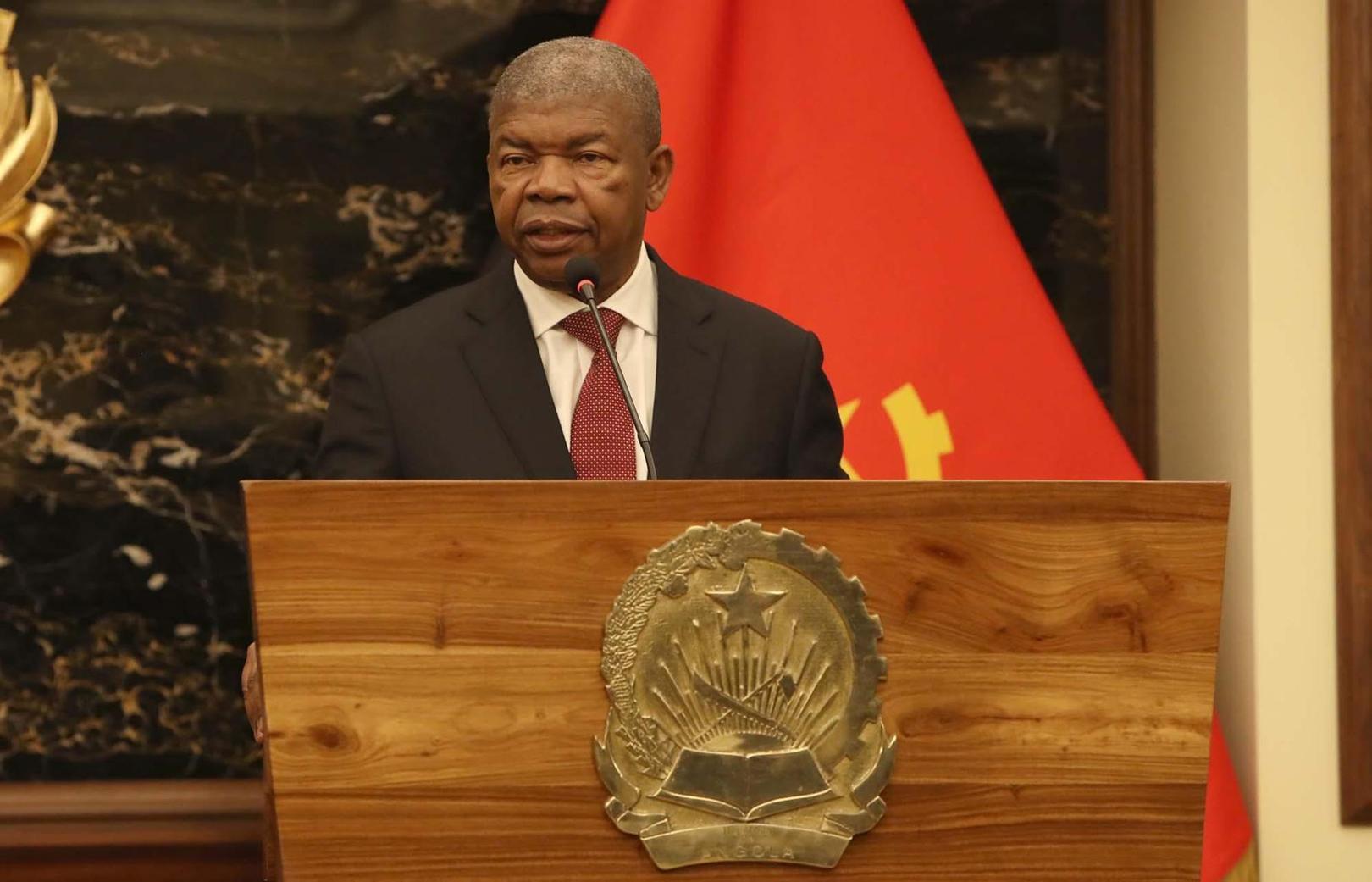
Africa-Press – Angola. The Angolan government is making a “great effort” to overcome some difficulties resulting from the economy’s exposure to external shocks, aggravated by the consequences of the COVID-19 pandemic that seriously affected the population’s living conditions, said Monday , in Luanda, the President of the Republic, João Lourenço.
“We believe in the success of the measures adopted by the Government”, said the Angolan statesman, while speaking at the opening ceremony of official talks between ministerial delegations from Angola and Cuba, within the framework of the three-day State visit that the Cuban President, Miguel Díaz- Canel, performs Angola.
For President João Lourenço, Angola and Cuba have common concerns related to the fight against poverty and economic and social development.
“I believe that this convergence of objectives puts us in a privileged position to understand each other and think of common strategies that will help us to jointly overcome all the challenges related to issues of development, progress and the well-being of our populations, to that our governments face on a daily basis”, he expressed.
In João Lourenço’s view, it is important to think of practical mechanisms that facilitate exchange between both countries at all levels, with emphasis on free trade, complementarity in the use of available resources, transfer of technical, technological and scientific knowledge and the prioritization in terms of implementing industrialization projects for nations, based on the sustainable use of raw materials and other available resources.
In his speech, the Angolan head of state recognized the struggle that Cuba is waging on a daily basis in the face of the embargo to which it has been subject for decades, “but which, despite this, has revealed an impressive level of resilience and capacity to find solutions that guarantee the survival of of the Cuban people and the preservation of independence”.
He noted that the Angolan Government, in line with the position of a large part of the international community, defends the lifting of the economic blockade to which this country has been subject for decades.
“We believe that without the embargo, Cuba and the Cuban people will define for themselves the political and economic model that satisfies the aspirations of freedom, justice and economic and social development and will maintain commercial exchanges and relations of economic cooperation with all countries on the basis of of the reciprocity of advantages”, he underlined.
World peace
In this regard, the Angolan President advocated that peace, the common objective pursued by all nations on the planet, has not yet been achieved.
He noted that it is the sad reality that persists in Africa, the Middle East, Asia and, more recently, in Europe, with the outbreak of war between Russia and Ukraine that has generated an unprecedented food and energy crisis and with serious consequences for the economies and well-being of peoples.
In his view, this last conflict has shown the fragility of the institutions created to guarantee world peace and security and their impotence to ensure respect and fulfillment of the peoples’ right to Independence, to the preservation of sovereignty and territorial integrity, as consecrated by the International Law and the Charter of the United Nations.
In this wake, João Lourenço defended the urgent need for reforms in the United Nations Security Council with the entry of new actors as permanent members of this body whose composition no longer reflects the reality of the world in this 21st century.
“In view of this evidence and also in view of the unlikely military victory of any of the contenders, in order to avoid the escalation of the Russo-Ukrainian conflict beyond the borders of the belligerents, a pragmatic and realistic approach to the crisis becomes urgent, in order to find a solution definitive solution that safeguards peace and universal security”, defended the Angolan statesman.
cooperation relations
Angola and Cuba maintain excellent cooperation relations in various areas such as security, education, health, transport, public works, construction, oil, sports, culture, tourism and agriculture.
The two States established diplomatic relations on November 15, 1975, four days after Angola’s independence, and a year later they signed the General Cooperation Agreement, which gave rise to the Bilateral Commission.
For More News And Analysis About Angola Follow Africa-Press