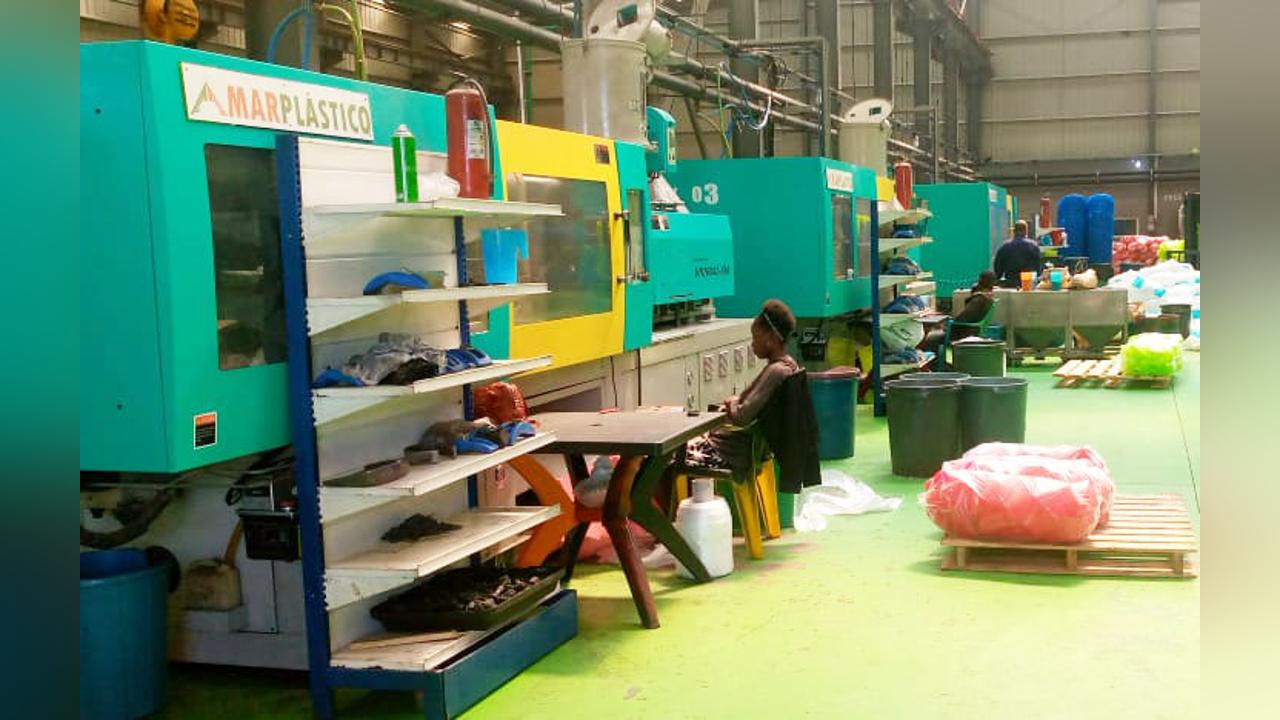
Africa-Press – Angola. The number of industrial units grew from 352, in 2021, to 411 in the following year, representing a growth of 16.76 percent, with emphasis on bakeries and mills.
Of the controlled industries, 297 are in operation, 40 paralyzed mainly due to lack of raw material, and 74 in the implementation phase in Huíla province, in the coming years. In all, 59 new applications for licensing were filed.
In Lubango, the director of the Provincial Office for the Integrated Economic Development of Huíla, Manuel Quilende referred to a “reasonable” growth and the trend is for more small industries to appear, a sector that has generated 478 new jobs, in 2022.
He stressed that the medium and large industrial sector still encounter difficulties in the energy and water production factor, causing higher production costs, due to the use of alternative sources, low income, low production and low employability in the sector.
He defended the installation of Transformation stations (PT) and water transport channels in the areas with the highest concentration of the respective industrial units so that they can have access to the respective factors and thus reduce expenses, increase production and more competitive prices.
Manuel Quilende advanced that in order to attract investments, they are requesting space from the administrations to invest in different areas of activity, from agriculture, livestock, agro-industry, tourism, livestock, among others.
“When we have all the available spaces, we will register and map all the areas and the Government’s task will be to subsequently make them available to potential investors interested in investing, through a solution for energy, water and access roads, which is its responsibility”, he explained.
Projects of industrial poles in the portfolio of the supervising ministry
These are the Matala Poles, with 170 hectares, in the Munquequete area and Jamba with 400 hectares, in the commune of Dongo.
Manuel Quilende said that interest had already been expressed by the Planning and Statistics Study Office (GEPE) to register on behalf of the portfolio of the Ministry of Industry and Commerce and provide support in the infrastructure of the two spaces.
“These are projects that we present to be inscribed in the province’s project portfolio, but it was directed to the portfolio of projects of the supervising ministry. We only have the reserved spaces that lack basic infrastructure,” he said.
He made it known that the Industrial Development Institute of Angola, which has the competence to control and manage the industrial centers in Angola, is already monitoring the process.
In terms of size and production capacity, the Provincial Office for the Integrated Economic Development of Huíla controls more than 70 medium-sized industries and the rest, the majority, are small.
For More News And Analysis About Angola Follow Africa-Press