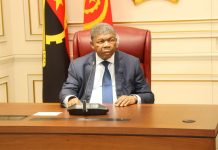
Africa-Press – Angola. The approach of the first Panel “Young people, actors in promoting the culture of peace and social transformations on the continent/High Level Dialogue”, marked the first day of the 3rd Luanda Biennale, with statesmen and African figures as speakers, including the President of the Republic, João Lourenço.
After the opening ceremony, the presidents of Angola, João Lourenço, of Cape Verde, José Maria Neves, of São Tomé and Príncipe, Carlos Vila Nova, of the African Union Commission, Moussa Faki Mahamat, interacted with young people from various countries Africans on topics related to peace, education, environment, economic development and technology.
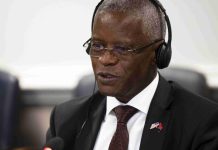
For almost three hours, a panel of speakers, which also included the former presidents of Mozambique, Joaquim Chissano, of Nigeria, Olusegun Obasanjo, of Malawi, Joyce Banda, and the advisor of the African Union, Kgalema Motlanthe, clarified the concerns of the young people related to the aforementioned subjects.
When answering a question about Angola’s contribution to the reduction of polluting gases, the President of the Republic, João Lourenço, announced the start, next year, of a Green Hydrogen exploration project in the town of Barra do Dande, capital of Bengo .
The Head of State explained that the project will be developed by Sonangol, the Ministry of Mineral Resources, Oil and Gas and a German company, with the aim of serving the domestic market and exporting green energy to Europe and other consumers around the world.
In his approach, João Lourenço said that, with the same purpose, Angola will sign, at the COP 28 Summit, taking place this month in Dubai, an initiative that exists on the need to decarbonize oil and gas.
He said that, in addition to this UN initiative, there are others from international institutions that Angola will join, so that its oil and gas industry will, in the near future, have the capacity to measure carbon hydroxide emissions and reduce the as possible, carbon dioxide and methane gas emissions.
For his part, the Head of State of São Tomé and Príncipe, Carlos Vila Nova, considered the training of young Africans to be promoters of peace essential.
In his view, it is necessary to strengthen the capacity of young people, both individually and in youth organizational structures, so that they can more easily contribute to a better world, “ensuring this culture of peace”.
The President of Cape Verde, José Maria Neves, defended that Africa must provide more opportunities for the continent’s young people, in order to contribute to the development and transformation of talents.
For the President, it is essential to democratize access to education, ensure the transformation of education to acquire knowledge in the most diverse areas, so that every young African can have the necessary tools to grow on the continent and contribute to development.
The former president of Malawi, Joice Banda, considered that the inclusion of young people in the peace process is inevitable, pointing to former independent revolutionary leaders as an example to follow.
The former President of Mozambique and adviser to the African Union, Joaquim Chissano, stated that technology does not work on its own, which is why he defends the focus on training men and women.
The President of the African Union Commission, Moussa Faki Mahamat, advocated a greater focus on education to prevent conflicts and acts of violence on the continent.
He considered it essential to invest in the education of men and women as a means for peace and development, aiming to put the weapons to rest by 2030.
Opening ceremony
Upon his arrival at the Intercontinental Hotel, the venue for the event, the President of the Republic, João Lourenço, was received by the Minister of State for Social Area, Dalva Ringote, and subsequently visited the exhibition by national artist Fineza Teta, before speaking at the inaugural day of the Pan-African Forum for the Culture of Peace and non-violence.
João Lourenço was flanked by the First Lady of the Republic, Ana Dias Lourenço, and both walked through the corridor where paintings made with acrylic paints, sculptures and other types of pieces that predominate in Angolan and African culture are on display. The Head of State entered the Intercontinental Hotel to the sound of marimba and traditional national dance.
In his opening speech, President João Lourenço stated that the creation and consolidation of a culture of peace in Africa must be a fundamental step towards establishing the climate and essential conditions for African peoples and nations to dedicate themselves, with all his ingenuity, to the tasks of promoting progress and development.
For the Statesman, only through this path will nations be able to face and overcome the challenge of combating poverty, which is, after all, the continent’s biggest problem and what makes them vulnerable to the greed and arbitrariness that are underlying them.
The biggest challenge, he said, is the need to correctly define development strategies and programs based on the use of available resources, creating dynamics to boost exchange at all levels, commercial exchanges, taking advantage of the technical and scientific knowledge of each of the countries and regions, with a view to creating factors that generate growth.
He admitted that he is perfectly aware of the complexity of the task, however, Africa must not give up on carrying it forward, because “we must guarantee a promising and prosperous future for future generations, who will be responsible for continuing the work that has been started”.
“We must also undertake a gigantic effort to protect our markets from external shocks and strengthen them on the basis of national development programs that are based on the unavoidable need to diversify the economy, in order to make it more resilient by taking advantage of the entrepreneurial spirit of our people”, he continued.
At the international level, he stated that the end of the conflict in the Middle East involves the creation of the Palestinian State
In the afternoon, the Biennale was filled with the approach of the II Panel “Technology and education as tools to achieve gender equality”, whose speakers were the Minister of Telecommunications, Information Technologies and Social Communication, Mário Augusto da Silva Oliveira, the Director of Heavenly Culture, World Peace, Restoration of Light (HWPL), Regan Durkin, Representative of UN Women based in Cote d’Ivoire, Antónia Ngabala Sodonon, and the President of The William Tucker 1624, Vicent Tucker.
Audiences
As part of this important event, President of the Republic, João Lourenço, held courtesy meetings on Wednesday night with his counterpart from São Tomé and Príncipe, Carlos Vila Nova, and with the president of the African Union Commission, Moussa Faki Mahamat.
Likewise, President João Lourenço received the deputy director general of UNESCO, Xing Qu, and the vice-president of AfreximBank, Benedict Okey Oramah.
He also met with the former statesmen of Nigeria, Olusegun Obasanjo, and of Mozambique, Joaquim Chissano, and with artists from the Resiliart group.
The 3rd Biennale continues on Thursday with the panels “The role of women in peace, security and development processes”, “The process of transforming educational systems: innovative practices and financing in the African context”, “The challenges and opportunities of integration of the African continent and prospects for economic growth” and “climate change, ethical challenges, impact, adaptation and vulnerability ”.
For More News And Analysis About Angola Follow Africa-Press