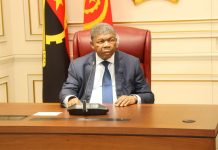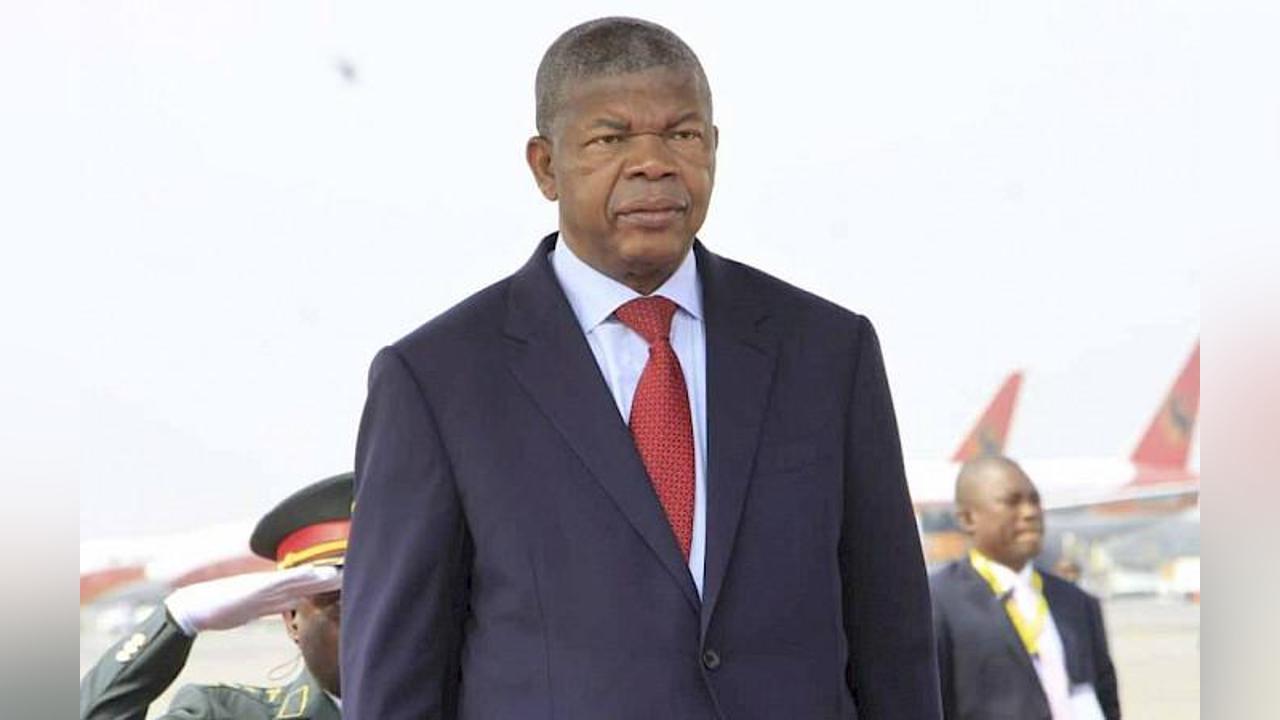
Africa-Press – Angola. The President of the Republic, João Lourenço, arrived in Kinshasa, this Saturday morning, to attend the investiture of Félix Tshisekedi as Head of State of the Democratic Republic of Congo (DRC).
Félix Tshisekedi was re-elected for a second five-year term, in the presidential elections of 20 and 21 December last, with 73.34% of the votes, according to data from the Independent National Electoral Commission (CENI).
From the overall results, Tshisekedi was seconded by Moïse Katumbi, former governor of Katanga (18.08%), Martin Fayulu, leader of the opposition (5.33%) and Adolphe Muzito (1.12%).
The approximately 20 other candidates, including Denis Mukwege, winner of the Nobel Peace Prize, did not reach 1% of the vote.
Felix Tshisekedi came to power in January 2019 after winning the elections on December 30, 2018, succeeding Joseph Kabila.
The 2018 election is considered historic because it was the first time in the history of the country, independent from Belgium since 1960, that a peaceful political transition occurred, through right and universal suffrage.
According to DRC protocol authorities, several heads of state and government or their representatives are expected to witness the ceremony.
The United States of America and the European Union must send emissaries.
The Angolan statesman, as CIRGL president, has paid special attention to issues related to political and military stability with initiatives to pacify the eastern region and normalize relations with neighboring Rwanda.
He managed to get the Democratic Congolese and Rwandan Presidents, Paul Kagame, to resolve a border dispute between Catuna and Gatuna.
João Lourenço mediated at a Tripartite summit between Angola, the DRC and Rwanda, the adoption of an agreement for the Pacification of the Eastern Region of the DRC, known as the Luanda Roadmap.
The Angolan Head of State presides over the International Conference of the Great Lakes Region (CIRGL), of which the DRC is a member.
The two countries are also members of the Southern African Development Communities (SADC) and Economic Community of Central African States (CEEAC).
With Angola, the DRC borders to the south and west for a length of around two thousand 500 kilometers.
The neighboring country has an outlet to the Atlantic Ocean between the Angolan provinces of Cabinda and Zaire, and is then also connected via the Benguela railway.
Angola and the DRC share oil exploration near the mouth of the Zaire River, and cooperate in the fields of defense and security,
Bilateral cooperation between Angola and the DRC has its legal framework based on the General Agreement on Economic, Scientific-Technical and Cultural Cooperation, signed on October 17, 1978, following the official visit to the then Zaíre, in Kinshasa, by President António Agostinho Neto.
Since then, several legal instruments and bilateral agreements have been signed that regulate relations and cooperation between the two countries in different sectors, such as road, rail, air, sea and river transport, science and technology, commercial, among others.
Independent from Belgium since July 30, 1960, the DRC covers an area of 2,344,858 square kilometers and has an estimated population of 94 million,660 thousand inhabitants, according to data from the World Bank, from 2022.
The gross domestic product (GDP) is calculated at 77.486 billion dollars and per capita at 843 USD.
For More News And Analysis About Angola Follow Africa-Press