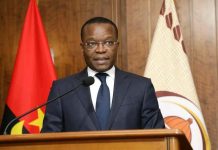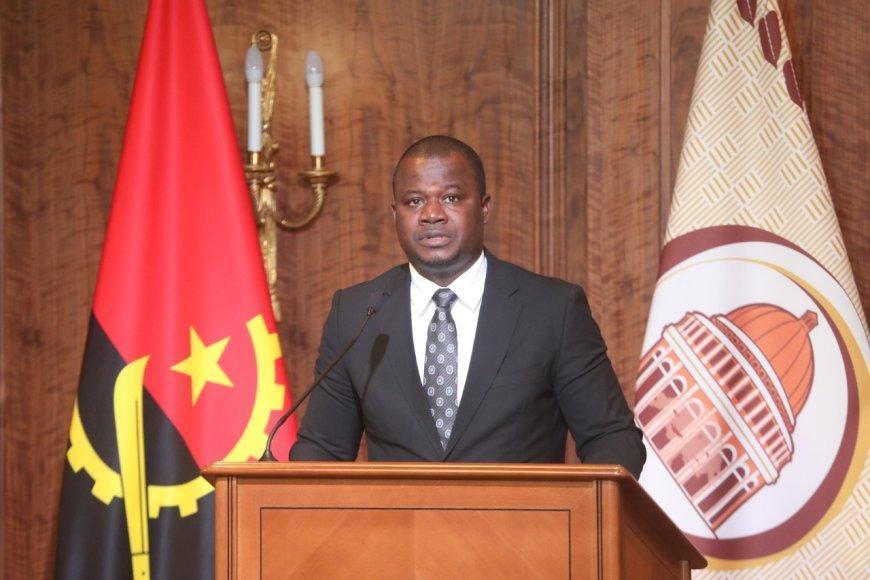
Africa-Press – Angola. The Minister of State and Chief of Staff of the President of the Republic, Dionísio da Fonseca, Monday highlighted the importance of holding regular general elections in Angola, as a way of consolidating the Rule of Law and Democracy.
Speaking at the inauguration ceremony of the House Museum of Elections, in the Margareth Anstee building, in Luanda, he said that the feat represents a sample of this dynamic, with repercussions on the various electoral elections held in the country.
According to the Minister of State, the House Museum of Elections presents itself as the memory of all those who, over the years, have contributed to the holding of the elections, allowing the democratic rule of law to continue to be built with the participation of everyone.
He noted that the House Museum of Elections also constitutes a space for study and research on the process of consolidating the democratic rule of law in Angola.
He called on scholars and researchers to access the space, to get to know what the process of holding elections in the country has been like.
For his part, the president of the National Electoral Commission (CNE), Manuel Pereira da Silva, highlighted that the Casa Museu das Eleições represents a testimony to Angola’s democratic journey, that is, a space dedicated to memory, citizenship and democratic education.
According to the head of the CNE, the space reflects decades of collective effort, achievements, challenges and lessons learned since the first general elections, in 1992, until the present day, covering a period of 33 years.
“Each piece on display, each recorded testimony, each audio or video file represents a fundamental link in the connection between the past and the future of our democracy”, he explained.
For Silva Neto, democracy is not limited to the electoral act, it requires memory, reflection, knowledge and, above all, informed participation
He said it was in this spirit that the House Museum of Elections was born, conceived not as a static monument to the past, but as a living laboratory of citizenship, open to students, teachers, researchers, electoral agents and other interested parties.
The House Museum of Elections was designed to preserve, enhance and disseminate the historical memory of the electoral processes carried out in Angola.
The new museum brings together documentary and photographic collections, in addition to equipment that portrays the evolution of democracy, the exercise of citizenship and the institutional strengthening of the CNE.
Angola held its first general elections in 1992, following the Bicesse Accords, signed on May 31, 1991, in Portugal.
The 1992 elections were marked by voter turnout of around 91 percent. The elections of 2008, 2012, 2017 and 2022 followed.
Source: ANGOP
For More News And Analysis About Angola Follow Africa-Press