Africa-Press – Angola. The Minister of State for Economic Coordination, José de Lima Massano, reported, this Wednesday, in Luanda, that, as part of the preparation of the OGE for 2024, 330 billion kwanzas were made available for the country’s textile sector.
With the aim of boosting the sector, the minister highlighted that this value will bring benefits and facilities for increasing production, as well as taking care of the integration and production of cotton.
José de Lima Massano, who was speaking to the press at the end of the meeting with textile operators at the Textang II facilities, in the municipality of Cazenga, said that cotton continues to be imported.
“The Angolan Executive is making a commitment to be self-sufficient in cotton production by 2027, based on a restructuring that will allow, at the beginning of 2025, to have sufficient logistics for internal production”, he asserted.
He added that there is a set of needs that can be supported, through banks, throughout the production chain.
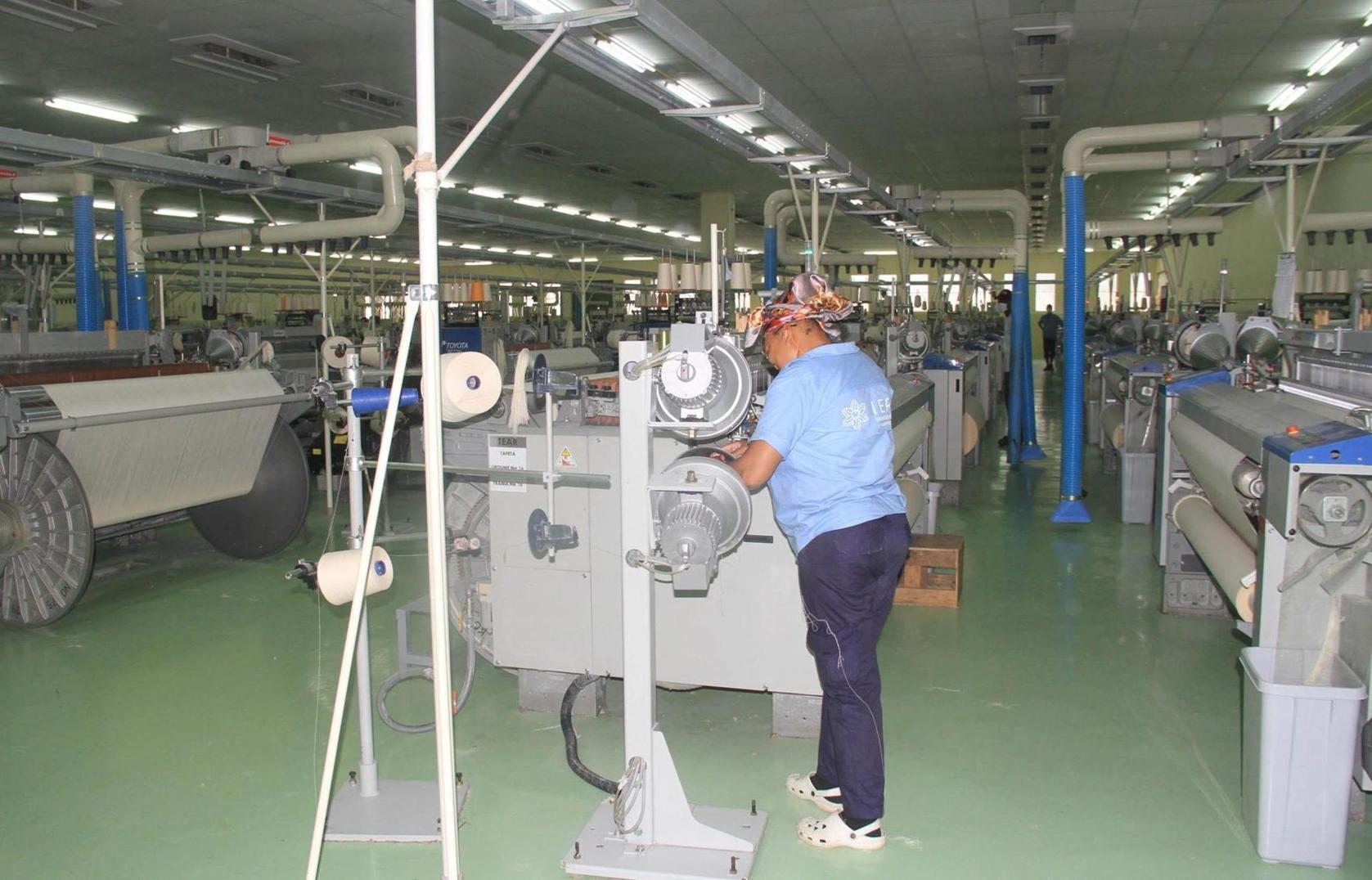
According to the Minister of State for Economic Coordination, Textang II has begun to generate its first fruits, despite having a production capacity of 10 percent and enormous potential.
The president of the Board of Directors (PCA) of the ALCAAL- Textang II group, Jorge Amaral, made it known that there is a plan to plant cotton on a large scale, over the next four years, so that the textile industry is self-sufficient.
During this process, he pointed out, cotton will be imported to cover the factories’ needs.
He highlighted that the main objective will be self-sufficiency in cotton produced in Angola, as there are 30 thousand hectares available for this purpose.
He explained that there are already cotton plantations in Baixa de Cassanje, Malanje province, and gradually in other areas of the country.
The president of the Association of the Textile and Clothing Industry of Angola, Luís Contreiras, understands that it is necessary and urgent to boost the textile sector so that, by 2027, more than 200 thousand jobs are generated and 400 million pieces produced are reached annually.
He explained that the textile and clothing sector, worldwide, employs a lot of people, with high production capacity.
For More News And Analysis About Angola Follow Africa-Press