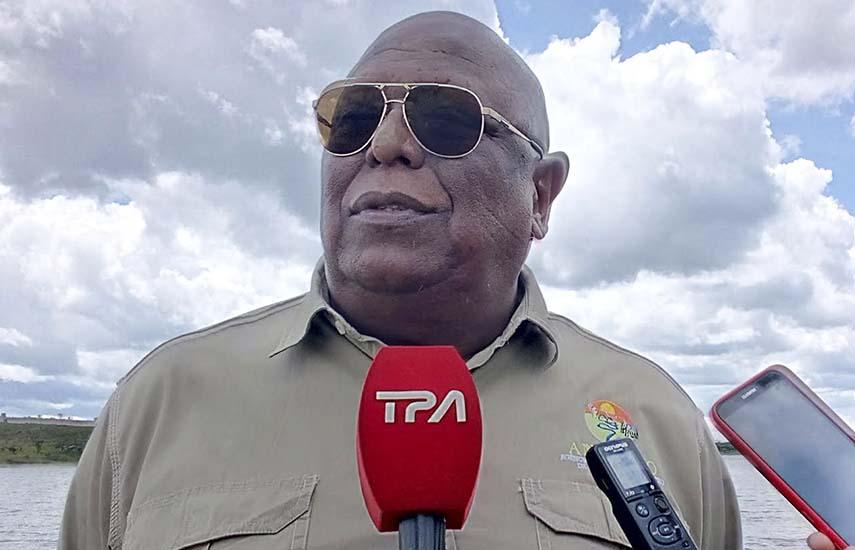
Africa-Press – Angola. The Minister of Culture and Tourism, Filipe Zau, highlighted, Saturday, the role of traditional authorities in the reconstitution of national history, as they have tales and oral reports about the historical facts of Angola and Angolans.
The minister, who was speaking on the sidelines of a two-day visit to Huambo, expressed the need for the contribution of the sobas, who received, orally, more data transmitted by their ancestors.
According to the official, there are many historical facts about the country and the Angolan people yet to be heard and written, while some aspects of the national history were narrated in a simple way.
“Therefore, the role of traditional authorities is important, as they have oral reports that can serve as memories for the reconstitution of the true history of Angola”, he stressed.
To this end, he said that the National Historical Archive, in addition to documents, will also collect testimonies from traditional authorities, as not everything is yet written.
In this line of thought, he appealed to historians, in partnership with the Government, to work in the collection of data and historical information together with the holders of customary power, and, consequently, to develop the necessary scientific studies, with a view to consolidating the national historical and cultural identity.
He highlighted the tourist potential of Pedras Candumbo, due to the natural beauty and historical role played during the anti-colonial struggle in the 20th century.
He recalled that the war against colonialism that took place at the Candumbo stones, in the distant year of 1902, was fundamental in the defense of the autonomy of the people of the center and south of the country, which culminated in the proclamation of National Independence, on 11 November from 1975.
During his working day in Huambo, the minister visited Pedras Candumbo, located in the municipality of Chicala-cholohanga.
The natural monument of the stones of Candumbo, with crevices, caves and a cave with about 300 meters of length of a monstrous granite mass, was the scene of titanic struggles of the chief N’Dala, against the Portuguese colonizers; this mass is the superb natural fort of Pedras do Kandumbo.
The site, located 25 kilometers from the center of Huambo, towards Bié, was elevated, in 2016, to the category of National Heritage, by the Ministry of Culture, given the important role assumed during the incursions of the Portuguese during the colonial occupation. .
Tourism
In addition to the natural monument of Pedras Candumbo, the minister also visited some tourist resorts in the province of Huambo, where he highlighted the importance of the sector in the process of diversifying the economy, as it allows for the promotion of employability, especially for young people, and the creation of more sources of revenue collection for the State.
For this reason, he defended the strengthening, more and more, of the partnership between the tourist agents and the Angolan Government, in the creation of policies consistent with the dynamization of this segment of the economic sector.
Still on his second day of work in Huambo, the Minister of Culture and Tourism also visited Cine São João and Ruacaná, which are inoperative due to their high state of degradation, as a result of the effects of the armed conflict that took place in the country. until 2002.
For More News And Analysis About Angola Follow Africa-Press