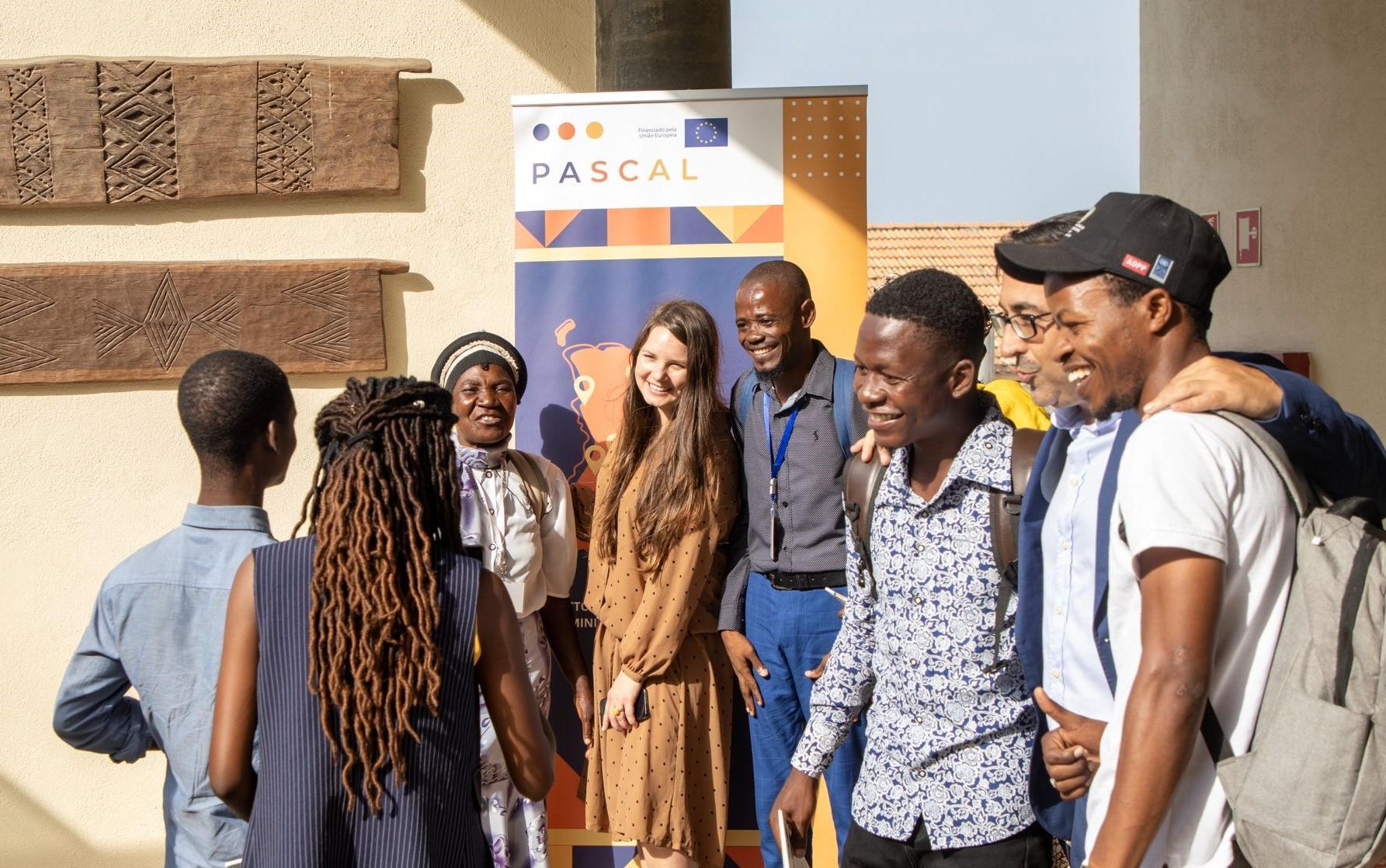
Africa-Press – Angola. The Pascal Project has confirmed itself as a decisive tool for achieving the strategic objectives of governance and local development in Angola, the Secretary of State for Territorial Administration, Teresa Quivienguele said, in Luanda.
In her speech, at the closing session of the European Union (EU) initiative, in collaboration with the Government, she highlighted that its implementation coincided with a period of deepening public policies, focused on civic participation, community dialogue, institutional coordination and the consolidation of municipal management.
According to the reports presented, the Angolan government official noted that the project reinforced practices that are now part of the culture of municipal administrations, highlighting spaces for dialogue and consultation, mechanisms for civic engagement, the involvement of civil society and the appreciation of citizens in defining local priorities.
She emphasized that the project was marked by an intense and collaborative work process, characterized by the permanent analysis of challenges, search for solutions, risk mitigation and adaptation to municipal realities.
Teresa Quivienguele stated that the project made it possible to identify new talents and involve local actors who contributed with diverse experiences and knowledge.
“This path, described as essential for the construction of solid results, made it possible to achieve the previously established goals”, she highlighted.
According to the government official, the motto “participate to develop” guided the intervention and reinforced the spaces for dialogue and consultation.
Among the governance axes of the current government cycle, Teresa Quivienguele highlighted the promotion of balanced development of the territory, administrative deconcentration and decentralization and the municipalization of state action, with the aim of expanding and strengthening citizen participation.
She highlighted that the country has made progress in improving the quality of public services provided by State Local Administration bodies, encouraging the active participation of citizens.
According to the Secretary of State, the Community Consultation Councils at provincial and municipal levels continue to play an essential consultative role in the economic and social development of territories.
“Created by law and distributed throughout the country, around 23 thousand residents’ committees and more than 10 thousand residents’ councils are in operation, promoting community organization and direct cooperation with municipal administrations, especially in defining the priorities of the municipality’s budget”, she pointed out.
The Forum of Municipalities and Cities of Angola, he said, held annually, remains a collegiate advisory body to the President of the Republic, ensuring permanent dialogue between the Central Executive and local bodies and reinforcing citizen participation in local governance.
The participatory budget, he highlighted, regulated by Presidential Decree 235/19, is already a consolidated reality in the country, currently extending to the 326 municipalities of the new political-administrative division, both in terms of municipal administration and the budget managed directly by the communities.
Within the scope of administrative modernization, he also highlighted the Municipality Portal, a digital platform that allows you to request services, obtain documents, pay fees and monitor administrative processes in a quick and transparent manner.
“The progressive implementation of the tool has reinforced electronic governance and the financial autonomy of municipalities”, she pointed out.
In this institutional environment, the Pascal Project developed and ends its cycle with results considered satisfactory, she reiterated.
It reaffirmed its commitment to maintaining and maximizing the impacts achieved, through better governance practices, more dynamic participatory spaces, greater institutional capacity and expanded opportunities for citizen participation.
The lessons and recommendations resulting from the intervention will serve as the basis for a new cooperation project between Angola and the European Union, aimed at continuously strengthening local governance and civic participation.
In turn, the ambassador of the European Union (EU) in Angola, Rosário Bento Pais, highlighted the Pascal Project as an important participation and citizenship initiative.
“Therefore, I see this project as very enriching for the development of Angola, for the strengthening of democracy and all rules of national law”, she highlighted.
According to the diplomat, it was a project that provided a great opportunity to establish a basis for institutional and non-institutional dialogue between the government, municipal governance, young people, women, citizens and civil society in general.
The ambassador of the Kingdom of Spain in Angola, Manuel Maria Lejarreta, considered that the project financed by the European Union in Angola contributed significantly to the strengthening of public administration, decentralization and citizen participation in the country.
According to the diplomat, the project articulated “many things”, including the action agreement of the Government, civil society, the National Assembly and, above all, local administrations, also promoting “a way of creating a more modern and efficient public administration”.
The experience accumulated by Spain in decentralization processes was highlighted as a relevant contribution in collaboration with Angola. “It was a great pleasure to be able to collaborate with Angolan friends on this project, which was financed by the European Union”, he highlighted.
Among the main challenges, he highlighted the work to empower Angolan civil society, described as “very emerging”, and the need to bring together the different partners involved.
On Friday the topics “Institutional Dialogue and Improvement of the Legislative Framework” and “Inclusion and Citizen Participation” were discussed.
Source: ANGOP
For More News And Analysis About Angola Follow Africa-Press