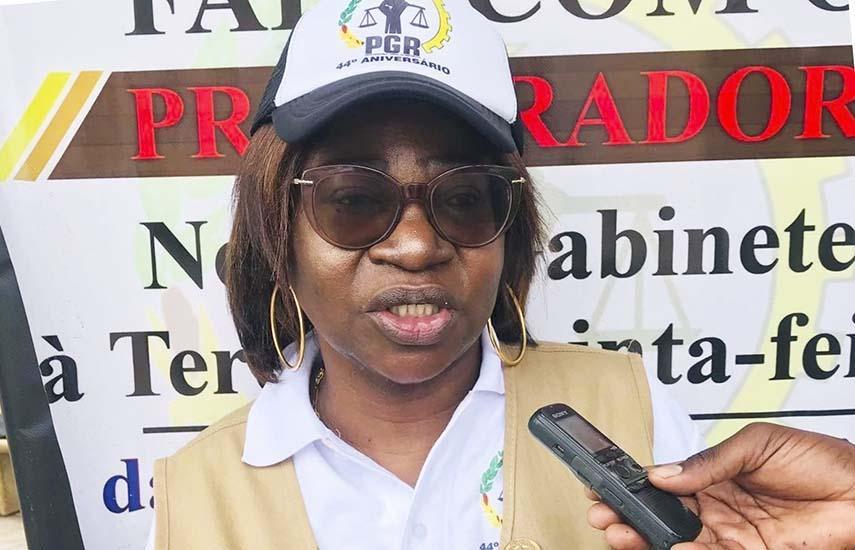
Africa-Press – Angola. The Deputy Attorney General of the Republic, Francisca Rasgado, defended the need to strengthen individual and joint measures to prevent and combat crimes of sexual abuse of minors, through legislation.
This measure arises from the growing wave of violations of minors that has been registered across the country, as well as the need to discourage such practice.
The magistrate defended this position on the sidelines of a lecture on “The customary practices that constitute crimes”, promoted by the Municipal Administration of Quela, which aimed to raise the legal awareness of citizens.
He stressed that although customary crimes are punishable by law, it is urgent to adopt other measures so that citizens do not commit them, since they affect not only the State, but the family and society in general, in addition to hurting morals. of the victim.
He considered that sexual abuse has greatly affected children and adolescents in Malanje, whose situation has become a public health problem, having therefore reiterated the worsening of penalties as a way to stop these occurrences.
On the other hand, Francisca Rasgado appealed to citizens, especially the traditional authorities, to denounce acts of rape and other crimes, with a view to holding the perpetrators accountable.
Without giving details, he announced the existence of a considerable number of cases of crimes of a sexual nature, in progress.
In turn, the municipal administrator of Quela, Aguiar Quitumba, thanked the PGR for its initiative in promoting the lecture, which served to enlighten residents, especially young people, about the consequences of sexual violations.
When delivering the lecture, the Attorney General of the Republic, Pedro Brandão said that in many cases, crimes of rape are the result of the cultures of certain peoples, especially in rural communities, hence the need to redouble attention in this aspect to avoid occurrences.
He stressed that the Constitution of the Republic of Angola provides for the existence and recognizes the authority of traditional power represented by chiefs and regedores, whose disciplinary rules of coexistence are transmitted orally and experienced by custom.
The lecture was addressed to traditional authorities, members of civil society, civil servants, National Police personnel and citizens.
For More News And Analysis About Angola Follow Africa-Press