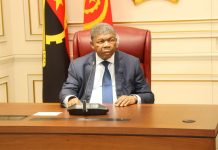
Africa-Press – Angola. The President of the Republic, João Lourenço, has once again considered gradualism as the safest and most advisable way to carry out the municipal elections in the country.
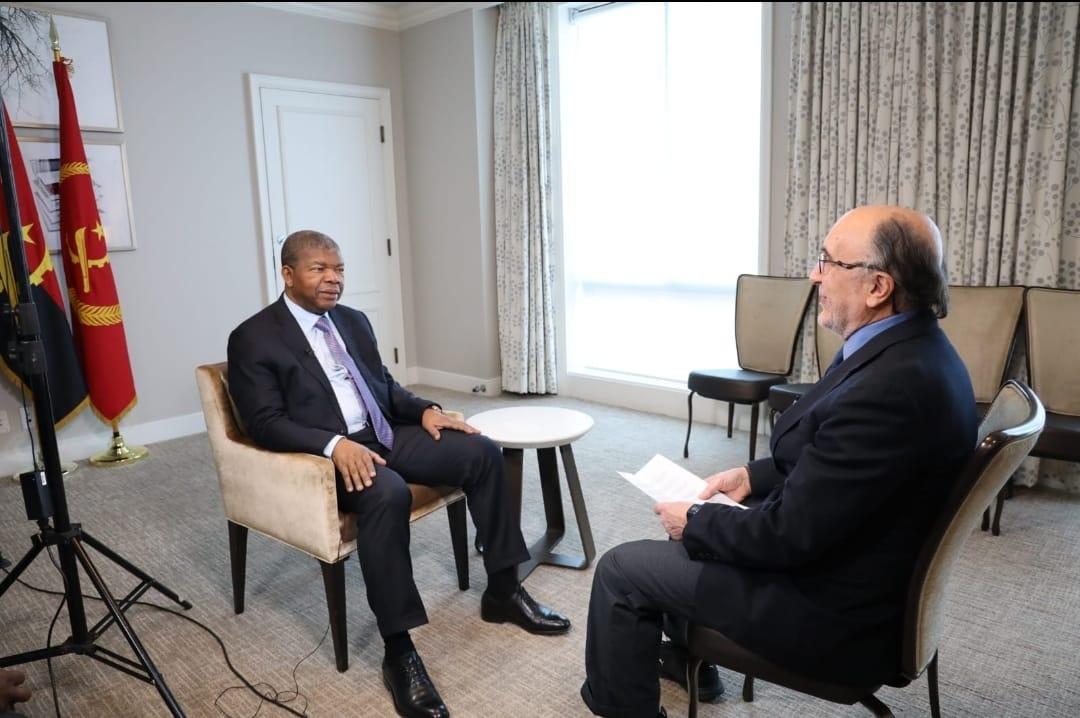
In an interview with the Voice of America (VOA) radio station in Washington, the Head of State pointed out the need for gradualism, as it is a novelty, as he said.
“In Angola, there have never been municipal elections”, he underlined, arguing that it would be safer to start with a certain number of municipalities and gradually advance across the country as a whole.
In this regard, the Head of State said that the final decision will be up to Parliament, after approval of the municipal legislative package.
With regard to US private investment in Angola, President João Lourenço highlighted the areas of energy, agriculture, mineral processing, tourism and transport.
Read the interview in full:
Voz de América (VOA): In addition to that agreement that we know of, worth two billion dollars, I would like to ask you what Angola is interested in having the United States invest in? And in the short term? What can be expected from this relationship in economic terms?
President of the Republic (PR)- I will start by talking about the Summit in general. In our opinion, it was a very good summit. We African countries leave here satisfied. We believe that the objective for which President Joe Biden held this summit was achieved, insofar as American financing was guaranteed, public financing for the infrastructures that the continent needs, but also export credits for American companies that want to make private investment in Africa. And with numbers! So, it wasn’t just talk on the air, very abstract, it was very concrete in the numbers of how much will go towards public investment in public infrastructures, how much will it give in the coming years for export credit to American companies themselves.
On the other hand, we consider it to have been a gain, a political gain, let’s call it that, due to the fact that President Joe Biden has committed himself that what he announced will happen, the entry of the African Union as a permanent member of the G20, that on the one hand, but, on the other hand, also the possibility of our continent and Latin America being represented in the Security Council of the United Nations as permanent members. Incidentally, a complaint that we African, Latin American and Asian countries have been making for over 40 years. In this aspect, we must say that it was very productive and we are now going to see the ways of implementing all of this.
Regarding our interest in American private investment, in what areas? In practically all of them, in addition to those where they have been for decades, which is in the oil sector. So, in addition, we intend to see American private investment in the energy transition – investing in renewable energy sources and in agriculture, in the transformation of our minerals.
We want to industrialize our countries, we don’t want to continue to be mere exporters of raw materials, and there was that commitment on the part of the Americans. They will help in that regard.
We want to see American companies get into tourism. They are already starting, especially in conservation tourism. It is an American company that won the tender for the management of the Iona Park, and this understanding will also be extended to the Luengu-Luiana park, in Cuando Cubango.
Regarding the transport sector, specifically in the management of ports, airports, and other large infrastructures that we want to grant concessions, we do not want the State to manage these large infrastructures. So overall, that’s it, we are happy with the summit.
VOA: You mentioned the G20 issue. By the way, there has been news that you, Mr. President, would have been one of the African leaders who pressured President Joe Biden to accept the integration of the African Union into the G20. Does this have any basis?
PR – It’s all of us, we all exerted that pressure, so there’s no one here who stood out in that pressure that was made in order to do justice. We consider this to be a matter of justice, we understand that Africa cannot be left out of the equation in solving the great problems that afflict the Universe. Africa can contribute more, contribute ideas, contribute its own economy. We can offer much more to the world than what we have been offering these days.
VOA: I noticed that in the meeting you held with the US Secretary of State, in which the Defense Secretary was also present, you said that Angola is interested in some acquisitions in the United States. He said that the Defense Department is in liaison with the State Department to assess this request from Angola. What was the Secretary of Defense referring to?
PR – We want to see the United States of America participate in our military reequipment program. As you know, even today our Armed Forces have only the so-called Soviet technique. We understand that the time has come to take the leap to rearming our Armed Forces also with NATO equipment and to look to the United States itself as an ideal partner to help us make this transition. So, to be clear, this is what he was referring to.
VOA: The President has played a very important role in the mediation between Rwanda and the Democratic Republic of Congo, because of the conflict in the East of Democratic Congo. Right now, who has to do more to stabilize Congo, Rwanda or Congo?
PR – For stabilization in the Democratic Republic of Congo we all have to do more. And when I say all of us, I mean the two regions, namely the Great Lakes Region and the East African Region. Therefore, the geographic location of the DRC and particularly the conflict zone, which is in the east or northeast of the DRC, is at a point where the two regions are part of each other. Hence the involvement of the two.
We are working together. That is why we talk about Understandings of Luanda, Understandings of Nairobi, but we are in perfect harmony. There are no incidents of any kind, there is no overlapping of tasks and we are doing everything to ensure that everyone does their part and together we can achieve peace.
VOA: Are you optimistic?
PR – Yes, we are, we are optimistic. Right here in Washington DC, Angola, Kenya, Rwanda, Burundi, Tanzania, Uganda, South Sudan we found ourselves – joined by the DRC itself, which the day before was absent, for calendar reasons it could not be, but Angola and Burundi were left with the responsibility of conveying to President Félix Tshisekedi what we had addressed the day before, and I must say that we are optimistic.
From the Luanda Roadmap, what has been accomplished so far is the cessation of hostilities on the indicated day, November 25th, but we are in a position to take the next steps, which are the cantonment, disarmament and then the more political part, which will be the reintegration of the Congolese members of the M23 – because they are nationals, they are Congolese – in Congolese society.
VOA: Recently the President spoke of the possible revision of the Constitution. Subsequently, there has been news about what this entails and does not entail. The question I would like to ask is is the President willing to set aside, rule out, shall we say, a change to the presidential term limit?
PR – When we talk about the possibility – see what I’m saying: possibility, not necessity -, about the possibility of any constitutional revision, we are not necessarily talking about the possibility of changing the number of mandates that the Head of State in office can or should have, we are not necessarily talking about that, and the proof of that is that, in 2021, we revised our Constitution and, at that time, nobody ever mentioned that possibility, because when there is a constitutional revision, someone has to present a specific proposal and say what you want the Constitution to change.
So, if in 2021 there was no such claim, why would people think that, if the Constitution is changed again, it is because there is an intention to change the number of terms of office of the President of the Republic?
I think this is a false problem. We never refer to it. We have always said that the Constitution and the law are to be fulfilled, and therefore we will comply.
VOA: There has been an increase, on the part of your government, of the so-called simplified contracting, the direct contract, I believe that is how it is said…
PR – It’s not the same thing. Simplified hiring is not a direct fit. Direct adjustment is to arrive and say: “you are the one who will do this work”. Simplified Hiring is something that is provided for by law. It is a form of hiring, it is one of the types of hiring provided for by law.
VOA: There have been accusations by the opposition, I’m sure you’re aware of that, that you’re using that to favor a new elite, create a new elite that will support you. The activist Rafael Marques even said here in Washington DC that there is what he called “the sponsorship system” through that system of direct adjustment. What does the President answer?
PR – I deny these statements. Therefore, we are not waiting for favors from anyone. If they have elements that point in this direction then expose them on the table. We are willing to listen to them.
VOA: The accusations of businesswoman Isabel dos Santos who personally accuses you of stalking and using the PGR to persecute her family….There was recently an arrest warrant that was issued by the PGR, she said that this is part of a selective investigation. How do you react to these accusations?
PR – Well, I think she has to answer, before the Justice that “is chasing her”, in quotes, as she says. And Justice does not persecute anyone without reason. Therefore, if Justice is behind it, it is because it will be justified and what it has to do is prove that Justice is wrong. She has nothing to gain from pointing the finger at politicians. She has to answer, before the Justice, with the allegations she has. She must do it in court. This is how it is all over the world and in Angola it cannot be different.
VOA: What is the electoral system for municipal elections that the President prefers, in terms of gradualism or another system? And how do you see the municipal elections? Before or after this new “proposed” administrative division?
PR – With regard to local elections, my party, therefore the MPLA, defends, at least so far, the need for gradualism, because it is something new. In Angola, there have never been municipal elections. We understand that it is much safer to start with a certain number of municipalities and move forward. The opposition does not think so. That’s it, she is free to think as she wants, and that’s why this matter is under discussion in Parliament.
Therefore, it is Parliament who will decide, in the end, whether the implementation of municipalities will be gradual or if it will be done all at once. Parliament is sovereign. The parties are there and it is there in Parliament that they must discuss this issue. And it is from the discussion that the light comes, as they say.
We know that there can be no municipal elections until the municipal legislative package is completed. We defend a rule of law and in the rule of law the rule of law must be defended. Therefore, without law, municipal elections cannot be held. And, sometimes, one gets the idea that, until now, local elections have not been held due to a lack of political will by the President or the MPLA party. This is not true, because I was the one who took the initiative to, for the first time, speak about the need for municipalities, in the Council of the Republic and, as soon as that happened, we started preparing the proposed laws – there are several laws, isn’t it one law, there are several laws – which were introduced in the National Assembly and which, for the most part, have all been approved.
Therefore, whoever took the initiative, whoever announced it, immediately took the initiative to produce the proposals and send them to the National Assembly. The National Assembly, obviously, with the support of the MPLA, approved all of them, with the exception of one that was not approved because it encountered difficulties, just for that reason. So, at the level of Parliament, these difficulties must be overcome.
VOA: Does the President reject the accusation that the law that has yet to be approved is being deliberately delayed so that the autarchies are not carried out?
PR – I certainly reject that point of view. Now regarding the other part of your question, if what will happen first are the municipal elections or the political division administered, one thing does not preclude the other. That is, the administrative division does not come to replace the local authorities. So the two things will coexist. It needs to be clear, because sometimes there is the idea that “well, now they have launched this new political-administrative division, they are going to increase the number of municipalities and that is to forget the municipal elections”. Not!
They are two different powers. Municipal power is one power, and state power is another. The new administrative political division has to do with the power of the State, with the way of administering the State. Which will happen first, I don’t know. It can either be one thing or the other, or both happen at the same time. But one does not interfere with the other.
VOA: Angolan journalists have been making accusations that there is a campaign of persecution by Police agents and also by the security apparatus and cite as an example of persecution the fact that the houses and the Union of Journalists were robbed with the sole objective to steal computers. Does the President have anything to say about this charge?
PR- The Union of Journalists says that its facilities were robbed twice, I believe it is necessary that the competent authorities, in this case the Police, do the proper investigation to find out who are responsible. Those responsible for this reprehensible action intend nothing more than to hold the Government accountable. But, we have been the greatest defender of journalists, we defend freedom of the press, freedom of expression and it doesn’t make sense that the Government commits a mistake as big as this. Therefore, this is how the union announced the holding of a large public demonstration in condemnation of these acts of assaults on the union’s premises. We understand that this manifestation is welcome. Therefore, it is their right, they must, yes ma’am, manifest itself so that the need for the State to assume its responsibilities to investigate is felt, which should already be done. I believe the police are working on the matter. Therefore, condemn those who have to condemn themselves, even without knowing who is responsible.
VOA: In the fight against corruption, what is the value of the assets already recovered and what is the destination being given to those funds?
PR – Well, these funds reinforce our economy, for sure. They entered the State’s coffers, being in the State’s coffers, they strengthen our economy. Well, we estimate at around four billion dollars, between financial resources and physical assets, but there is still much more to recover. The fight didn’t stop there.
VOA: In October, I believe, Angola voted in favor of a UN resolution condemning the annexation of four Ukrainian provinces. Does this condemnation and your visits to Washington DC indicate a cooling of your relationship with Moscow or a change in political orientation?
PR – Well, it must be clear that we are a sovereign country, and a sovereign country defines its foreign policy. Therefore, as a sovereign country, we understand that we should condemn the annexation of those four regions of Ukraine, because Angola is one of the countries that went through the longest period of war in the history of all peoples. We’ve had 27 years of armed conflict, so we know what a war is.
We were victims of external aggression, that is, of a military invasion, by the apartheid regime. At the time, it was the then Soviet Union that provided us with armament, equipment, artillery, planes, tanks, etc. forcing them to sign the already known New York Accords, which led to their withdrawal from our territory, the release of Nelson Mandela, independence of Namibia. And I say this why? To say that, if we fight against the invaders, we understand that all other peoples also have the same right to do so.
We do not understand how those who helped us to do this at the time could have annexed four regions from the neighboring country. We voted in favor of this resolution which condemns the conscious, sovereign annexation of these four regions. We weren’t forced to do it by anyone, by absolutely anyone. We understood that the most correct posture would be that one and so it happened.
VOA: There are those who fear that with the approach of the United States, a cold war could arise in Africa. Does the President share this concern?
PR – The concept of a Cold War on a single continent, in my opinion, does not exist. The Cold War is either there or there isn’t, it’s global. Either you live the Cold War and it has a global dimension, or you don’t live the Cold War. There are no cold wars over continents. Therefore, this concept of a Cold War in Africa does not exist.
We are in a globalized world, where there is room for everyone, it cannot be said that the continent should be hostage to a single power. There is a false fear of Chinese dominance in the African continent. And I say false fear because the Chinese presence that we know, in Africa, is mainly that of public investment credits, in which Chinese companies supported by Chinese banks, public or private, mostly public, go to Africa to carry out infrastructure works. public structures. We do not know of large Chinese private investment in the African continent.
China’s domination of Africa would happen if there were large Chinese private investment in Africa, and that doesn’t exist. What exists are the execution of public infrastructure contracts that end up being the property of African states that are indebted to China and have to honor their commitment and pay the debt.
VOA: Has China accepted proposals to reformulate the payment of these Angolan debts or not?
PR – Accepted at least once, I think it was in 2019. It wasn’t isolated, it wasn’t just her. It is a process that involved the main international financial institutions: the World Bank, the International Monetary Fund, the Paris Club. And China, as a member of these institutions, also ended up joining. There was no way to stop doing it.
For More News And Analysis About Angola Follow Africa-Press