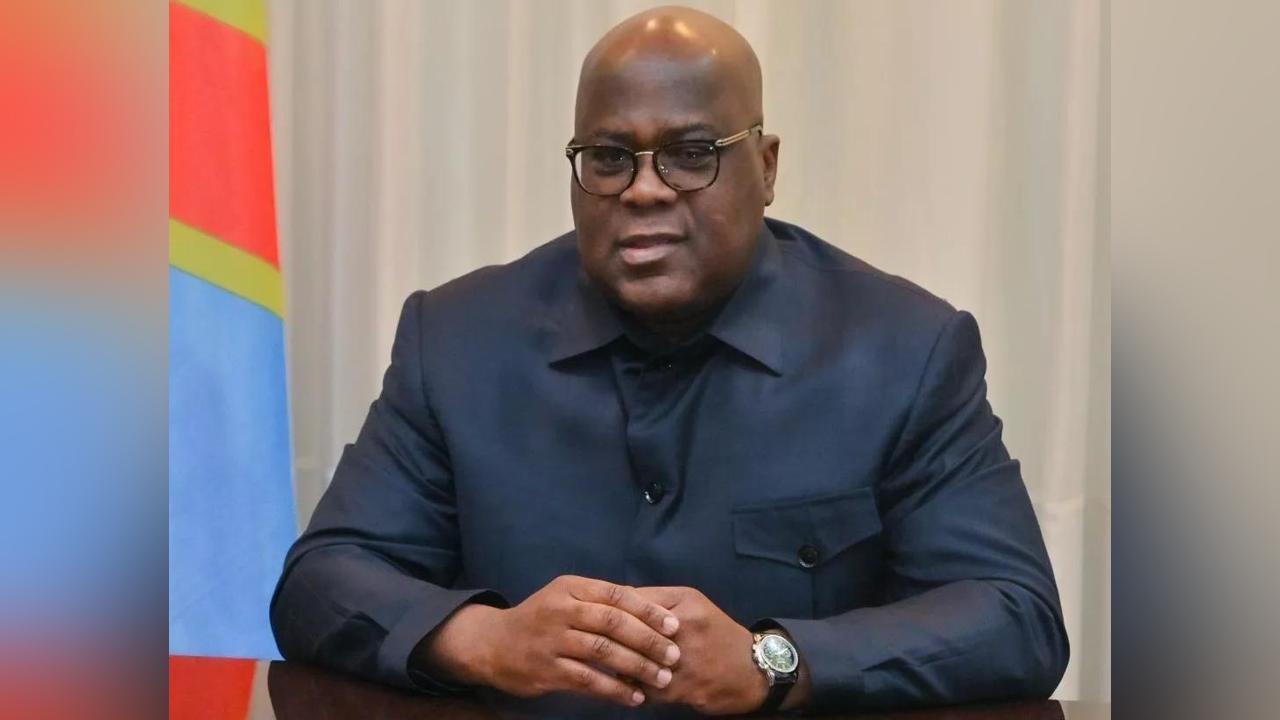
Africa-Press – Angola. The President of the Democratic Republic of Congo (DRC), Félix Tshisekedi, assured, this Tuesday, in Luanda, that he accepts a meeting with his Rwandan counterpart, Paul Kagame, to resolve the situation of instability in eastern DRC.
The information was provided by the Angolan Minister of Foreign Affairs, Teté António, at the end of a meeting between the Presidents of Angola, João Lourenço, and the DRC, Félix Tshisekedi.
According to the minister, President João Lourenço met with his DRC counterpart as a mediator appointed by the African Union (AU) to deal with the situation in eastern DRC.
Teté António informed that Angola was responsible for taking the subsequent “steps” to hold the meeting, without any reference to dates.
On the sidelines of the 37th Summit of the African Union (AU), held this month, in Addis Ababa (Ethiopia), João Lourenço met separately with Félix Tshissekedi and Paul Kagame, considering that there was a setback in the pacification process in the east of the DRC , marked by the return of hostilities.
João Lourenço’s mediation between DRC and Rwanda resulted in the adoption of the Roadmap for the Pacification of the Eastern Region of DRC, an agreement known as the “Luanda Roadmap”.
Political-diplomatic consultations between João Lourenço and Tshisekedi have been regular, mainly on issues relating to bilateral cooperation, the pacification of eastern DRC and the easing of tension with Rwanda, accused of supporting Congolese rebel groups.
With Angola, the DRC shares a border of around 2,500 kilometers to the south and west. The neighboring country has an outlet to the Atlantic Ocean between the Angolan provinces of Cabinda and Zaire, and is also connected to Angola via the Benguela Railway.
Angola and DRC share oil exploration near the mouth of the Zaire River and cooperate in the fields of defense and security.
Bilateral cooperation between Angola and the DRC has its legal framework based on the General Agreement on Economic, Scientific-Technical and Cultural Cooperation, signed on October 17, 1978, following the official visit to the then Republic of Zaire by the first President of Angola , António Agostinho Neto.
Since then, several legal instruments and bilateral agreements have been signed that regulate relations and cooperation between the two countries in different sectors, such as road, rail, air, sea and river transport, science and technology, commercial, among others.
Independent from Belgium since June 30, 1960, the DRC covers an area of 2,344,858 square kilometers and has an estimated population of 94 million and 660 thousand inhabitants, according to data from the World Bank, from 2022.
For More News And Analysis About Angola Follow Africa-Press