Africa-Press – Angola. Queen Nhakatolo Ana Bela Ngamba Kaumba suggested, this Monday, in Luanda, the change of the name Cassai Zambeze to Moxico Leste or Oeste, within the scope of the ongoing Political-Administrative Division (DPA) in the country.
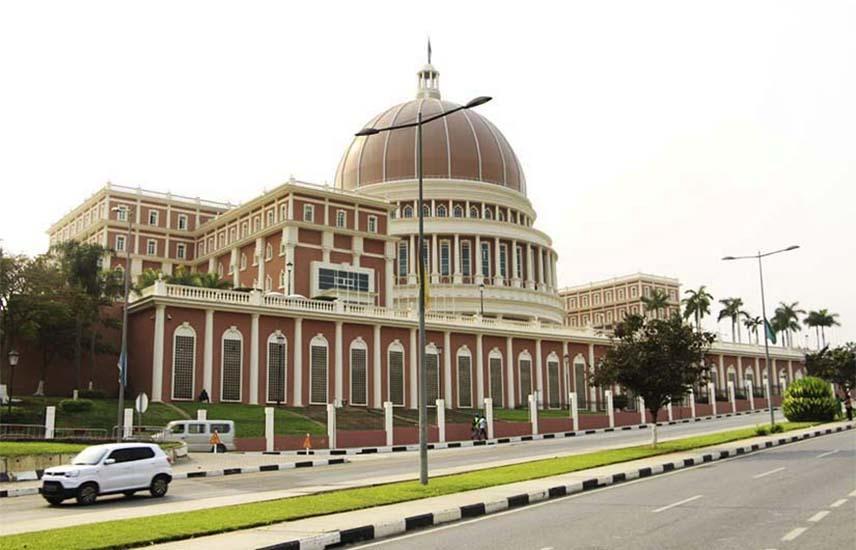
The sovereign, who was speaking to the press at the end of a meeting with the first vice-president of the National Assembly, Américo Cunonoca, said that she was mandated by the population of Moxico, who do not take part in the attribution of the name Cassai Zambezi in the future division of the province.
“The fundamental element that brought us here to the National Assembly is the problem of the name that is intended to be given to the future province of Moxico, which we do not agree with”, said the sovereign, suggesting that the future province be called Moxico Leste or Moxico Oeste.
She emphasized that she expressed this objection, which is not just hers, but that of the entire population of Moxico, to her interlocutor and believes that the AN, as the people’s representative, will take this concern into account.
The elderly woman agrees with the political-administrative division project because the territory of Moxico is very vast.
By the way, the first vice-president of the National Assembly, Américo Cunonoca, assured that the 220 deputies will meet to find the best term that satisfies the population’s concerns regarding the new political-administrative division of the province of Moxico.
According to the deputy, the biggest concern of traditional authorities is the name because, historically, the local population has an element of identity in the word Moxico, “so they bring a new proposal on the name of the future province”.
The first vice-president of the AN pointed out that Queen Nhakatolo conveyed to him the concern of the population, who do not agree with the designation that the Executive proposes to Parliament for the name intended for the new province.
“Our responsibility as deputies is to listen to the concerns of traditional authorities and, at the level of the different commissions, to discuss the viable term in coordination with the Executive”, said the deputy, who considers the matter to be of extreme importance for the population of Moxico.
Américo Cunonoca congratulated the traditional authorities of Moxico for having met first with the local government, with the ministers of Culture, Territorial Administration and, finally, with the National Assembly.
Queen Nhakatolo Ana Bela Ngamba Kaumba was accompanied by representatives of the Lunda, Chokwe and Luvale ethnic groups at the National Assembly.
The 80-year-old sovereign, born in the commune of Cavungo, municipality of Alto Zambeze, replaced Queen Nhakatolo Tchilombo, who died last year due to illness.
Before her appointment to replace Nhakatolo Tchilombo, Ana Bela Ngamba Kaumba held the position of governor of the same kingdom, in the commune of Lumbala Kakengue.
Nyakatolo, is a royal title of nobility given to the sovereign (the line of succession is always female and matrilineal) of the Luvales-Luenas peoples when she assumes power.
The royal title originates from the traditions of the now extinct Lunda Kingdom, which existed in south-central Africa.
New DPA Law Proposal
The proposed law for the new Political-Administrative Division (DPA), initiated by the Executive, is already in the National Assembly, after being considered by the Council of Ministers and the Council of the Republic.
If approved, Angola will have 325 municipalities and 20 provinces, in the first phase, compared to the current 164 municipalities and 18 provinces.
The two new provinces will result from the division of Moxico and Cuando Cubango into two each, passing to Moxico, Kassai Zambezi, Cuando and Cubango.
Moxico will have its headquarters in Luena and Cassai Zambeze in Cazombo, while Cuando in Menongue and Cubango in Mavinga.
The Minister of Territorial Administration, Dionísio da Fonseca, recently said that, in the current context, there are communes and urban districts that are ineffective in resolving the populations’ problems, which is why this Executive measure is justified, in order to better provide response to satisfying the needs of the population.
angop
For More News And Analysis About Angola Follow Africa-Press