Africa-Press – Angola. Walking along the paths of agriculture. In Ambaca, we heard, from the “men of the field”, their performance, cries, challenges and difficulties. In between, a long conversation with the acting administrator, Domingos Cabuco Dala, focused, above all, on state support for peasants, translated into contributions and agricultural inputs, as well as the almost unavoidable problem of access roads to the fields.
In the first of this series of reports, the reader is taken to the agricultural production of cooperatives and the family sector, at a time when the Ambaca authorities have registered just over 160 agricultural farms. Of this number, only 60 have effective exploitation, far from the availability of arable land and abundant water in this territory, which extends over more than three thousand and eighty square kilometers.
Crops such as cassava, reindeer and sweet potatoes, yams, rice, corn, beans, peanuts, bananas, sugar cane and vegetables make Ambaca a particularly attractive territory for potential investors, as we can see from the considerable movement of vehicles, some of high displacement, going deep into the forest.
Along the road between Samba Caju and Camabatela, detours are clearly visible that lead, as we were told profusely, to several properties in different areas located in the communes of Bindo, Luinga, Máua and Tango.
In Ambaca, work is underway to progressively increase cultivation areas in all agricultural seasons. The numbers that municipal authorities shared, are clear proof of this. During the 2023/2024 campaign, 300 hectares of mechanized land were prepared for distribution to associations, peasant cooperatives and individual producers, in line with the government strategy to increase the production of food goods.
These numbers should rise to 400 hectares in the current campaign, as explained by the acting municipal administrator of Ambaca, Domingos Cabuco Dala, our cicerone, confirming the permanent commitment to making Ambaca an increasingly unavoidable player in the food chain of the province of Cuanza- North, in particular, and Angola, in general, capitalizing on its privileged climatic situation.
“This year we plan to increase the number of mechanized hectares to 400 tons, allowing more peasant families to increase production levels”, says Domingos Cabuco Dala, indicating that the regular distribution of machetes, hoes and other work instruments is guaranteed, which only in the last campaign they totaled 10 thousand.
Entrepreneurs, whether nationals or foreigners available to intervene in what is established by the Planagrão, will have institutional accommodation from the Ambaca authorities, starting with the facilities in granting land, climate, water, which guarantee the production of rice, corn, soybeans and even of wheat, as guaranteed by the acting administrator.
Quantity of numbers
The data on the harvests obtained in the last agricultural season, which were presented to us in Camabatela by the Director of Agriculture, leave little room for doubt about what is being done to take advantage of the enormous potential of a particularly attractive region, such as Ambaca.
In the cassava sector alone, of which Ambaca is a major producer, more than 34,500 tons were harvested and in sweet potatoes, more than 6,332 tons. During this period, the market also received more than 1,473 tons of corn, 1,000 tons of bananas and 430 tons of peanuts (ginguba) from cooperatives, associations and individual producers.
But that’s not all. More than 390 tons of butter beans, another 497 tons of vegetables, 704 tons of macunde beans and 583 tons of reindeer potatoes also left Ambaca’s agricultural fields during this period.
The director of Agriculture confirms the data previously presented by the deputy municipal administrator of Ambaca. “In the previous agricultural campaign, 232 hectares were prepared and more than 8,000 families in 32 villages were involved”, explained Olídio Lucas, indicating that these numbers should increase slightly this year.
“Our perspective is to increase to 300 hectares and 10,000 families in 27 villages, during the current agricultural campaign”, highlighted the agricultural engineer, before highlighting the continuous state support for producers, translated into the distribution of machetes, hoes, files, among others. work instruments.
At our insistence, the head of Agriculture said that the producers also received one and a half tons of peanut seeds and six tons of butter beans and catarina. These accounts also included lettuce, cabbage, onion, carrot, eggplant, okra, pepper, cucumber, watermelon, melon and tomato seeds.
Farmers are, however, faced with serious difficulties in accessing production fields. The situation is increasingly seen as one of the main factors hindering agricultural activity in the country. “A real headache” for producers, as Olídio Lucas considers, who states that “many products spoil in the field and those that reach the market are purchased at bargain prices”.
He highlights, however, the support that administrative authorities have been providing to facilitate the transport of products from agricultural fields. “Even if still limited, this is, in fact, an important incentive for farmers to continue to progressively increase their production levels”, he notes.
Fairs promote rural products
Whoever manages the municipality does not waste a single opportunity to showcase Ambaca’s agricultural potential, with various promotional initiatives. The most recent on record was the agricultural fair, which brought together over 100 farmers in Camabatela, which translated into business worth over six million kwanzas, according to what we found out.
Eager to conquer the market, producers brought from their agricultural fields, in several communities in Tango, Máua, Luinga, Bindo and Camabatela itself, what they know how to do best, such as bananas, reindeer and sweet potatoes, yams, cassava, beans, okra , onion, avocado, palm oil, citrus fruits, sugar cane and others.
The director of Agriculture in Ambaca, Olídio Lucas, gave figures of what is being done, specifically, in the context of combating poverty, indicating that during the last year, for example, more than 2,000 chickens were distributed to various communities in Luinga.
He added that in the same commune (Luinga) and also in Tango, Bindo and Máua, farmers received 12 thousand Arabica coffee seedlings, six tons of butter bean seeds, catarina and one and a half tons of peanuts. “In the communes of Luinga and Máua, 52 hectares were prepared for peasant families”, he said.
Promotional events for Ambaca’s agricultural products are already a brand. Every week, in the town of Camabatela, farmers from different communities display their various rural goods, which are purchased by people who arrive from other places, especially from neighboring provinces, as we saw.
Runoff, an old dilemma
At the Hotel Mufongo – pass the advertising – in Camabatela, PRESS brought together three heads of cooperatives, to speak, in their justice, about their challenges, expectations and difficulties, to feed the Cuanza-Norte market, in particular, and the country, on a broader level.
Here, as in Libolo, in Cuanza-Sul, where we were at the end of last year, the difficulties are linked, above all, to the high state of degradation of the access roads to the agricultural fields, which makes it impossible to transport products to the centers of consumption.
As explained to us, there are significant quantities of vegetables, which end up deteriorating in the fields, something that becomes more serious during large floods, such as those that regularly occur in the North of Angola.
The representative in Ambaca of the company Agribambi, which works about 25 kilometers from Camabatela, Jacinto Bambi, is at this time a very worried man, seeing a lot of bananas and vegetables, especially, deteriorating in the fields.
He states that last year alone, losses in horticultural crops were very close to four tons. “We lost almost four tons of cabbage, in terms of tomatoes and onions we took practically nothing because of the rains”, laments the agricultural manager.
Jacinto Bambi shows, however, moderate optimism, by showing some numbers. “We are in a position to place more than three tons of bananas on the market, we have already deforested 50 hectares for coffee production and this year we can harvest between three and four tons”, he highlights.
He considers Agribambi’s production “acceptable”, but insists on the “key” of improving roads, for the flow of production, at a time of enormous challenges for “farmers”, in line with the Government’s strategy for increasing supply of food goods.
The perspective, as explained by Jacinto Bambi, is to reach 25 tons of vegetables, especially cabbage, lettuce, tomatoes, eggplant and carrots, to meet demand in the local market and also in neighboring provinces such as Uíge. “Yes, we can flood the market, but the issue of roads must be looked at more carefully, to prevent products from spoiling in the fields”, he said.
From the Ana Kulumbi Benji cooperative, created in 2015, in the commune of Máua, came the same cry: access roads to agricultural spaces continue to be an obstacle yet to be overcome.
Its manager, Jerónimo Benji, says that the connections to the fields are, in fact, “chopped”, which never merited any intervention, becoming increasingly degraded, especially during heavy rains, such as those currently occurring.
With 95 employees, “AnaKulumbiBenji” is therefore unable to sell everything it produces. However, it has “some hope” in granting bank credit, with which it hopes to increase production levels on the approximately 850 hectares, of which only 375 are being fully explored.
The head of the cooperative showed numbers, reflecting some optimism, despite the persistence of a situation with the potential to take away – it is good to say – some breath from farmers.
Last year, for example, the corn harvest reached 5,000 tons, while banana numbers were significantly more modest, standing at just two tons. Coffee, a high-yield crop, is also being developed over a vast area.
Regarding corn, there are concerns about its low price on the market, but Jerónimo Benji reveals that there are some partnerships for its acquisition.
David João Cahango is responsible for the cooperative with the same name. It is approximately twelve kilometers from the municipal headquarters of Ambaca. Unlike other cooperatives, here the concern is the invasion of spaces by people “encouraged” by someone, who did not want to identify.
These days, David Cahango’s hair stands on end, he’s so worried about the situation. He says that the “invaders” placed a bulldozer on the farm and are taking the wooden logs to Uíge, which they oppose, saying that they have already sent a complaint to official entities, to reverse the situation, such as the Administration of Ambaca and the Institute of Forest Development (IDF), before advancing to the General Inspectorate of State Administration, IGAE.
“I have already explained the situation to the Ambaca Municipal Administration, Forestry Development Institute (IDF) and I will ask IGAE to intervene”, clarified the leader of the cooperative with 70 members, who have 304 hectares in production.
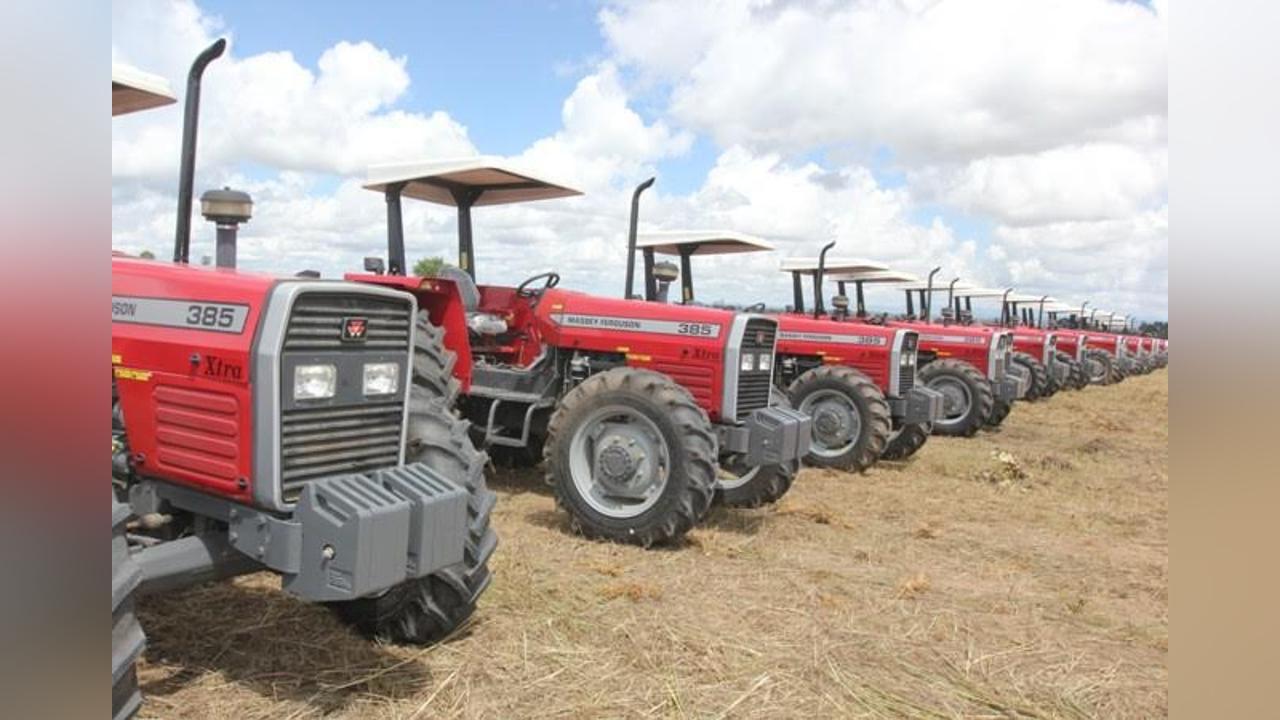
This official said that his cooperative received a tractor, with which he prepared 27 hectares, 10 of which were destined for corn production and others for cassava. Part of the 10 hectares were distributed to 240 women, a significant gain, in a community also very focused on banana and ginguba production.
In addition to the preparation of agricultural fields and support programs for ex-soldiers and peasant associations in white bean, catarino and peanut seeds, for the current campaign, in Ambaca, the commitment of farmers is taking, as we have heard, great pressure on the administration regarding the rehabilitation of access roads for all communities.
Today, the question that arises is how this will be done with the urgency that is required. There is, in Ambaca – this is noticeable when you talk to the farmers and the authorities themselves – a huge challenge in bringing products from the fields to the markets.
Some initiatives are taken to make the lives of Ambaca farmers less painful, with intervention on some roads, such as those giving access to the areas of Luinga, Tango, Longa and Cahima, with a history of large productions of sweet potatoes and reindeer.
The description given to us, about the critical state, to say the least, of the “roads” – the quotation marks are relevant, because they are broken – was enough for us to “Olympically” reject the farmers’ invitation to get to the cultivation fields.. That could be a huge driving challenge and a harrowing experience. Germano Caiombo, our companion on the path of agriculture, would thus save the Mitsubishi L 200 from wear and tear.
Social reintegration of former military personnel and families
The (possible) x-ray that is carried out on former military personnel is inevitable, as it is one of the areas to which the Government gives special importance, in the wake of their social insertion and their respective families. There are specific programs, which include the provision of agricultural kits, seeds and fertilizers, to name just a few of the most significant. And, in Ambaca, it couldn’t be any different.
Here, we are talking about hoes, machetes, sprayers, shovels, electric pumps and other means of work. Something very visible, the authorities, just as they do with peasant families, also prepare agricultural land for ex-soldiers and families.
All of this is done within the framework of the Integrated Program for Rural Development and Combating Poverty, today one of the hallmarks of the main axes of public policies for improving the living conditions of the population.
And, in Ambaca, there are relevant figures that were shared, in the incursion it made to one of the most prosperous agricultural regions in Northern Angola.
In the neighborhoods of Gombe, Salavadya Mbaxi, Tandala and Jucula, Máua commune, and Dala Kingungo, Calaiada, Casseco, Kihumba and Rei, Jinga Luamba Munuma and in Luinga, another commune, 180 hectares were prepared for agriculture.
This number also includes the localities of Chiquita, Uote A and B, Kissonde and Luamba, in Tango and Cazanga, Kibendo, Cole, Kissunga I and II, in Bindo, as well as Cazongo and Movimba, in Camabatela, the municipal seat. Data we had access to in Camabatela reveals that more than 13 million kwanzas, from the Integrated Program for Rural Development and Combating Poverty, will have been invested in these actions.
But that’s not all. There are also, in Ambaca, notable records on the acquisition of agricultural inputs, such as machetes, hoes and files, as well as inputs , especially cassava seeds, sweet potatoes and reindeer, corn, beans, peanuts, rice, tomatoes, vegetables, lemon trees , orange trees, coffee and palm trees.
To all this are added hoses for irrigation, motor pumps and grinding mills, as well as goats for the communities of Máua and Bindo.
Inside cooperatives
We also gathered data from seven former military cooperatives, whose contribution to agriculture in Ambaca is very important in those parts of the province of Cuanza-Norte.
One, Diedessa, with twenty ex-soldiers, in the Tango commune, prepared sixty hectares for the production of cassava, sweet potatoes, beans and ginguba, among other products. Another cooperative is also established in the municipality of Tango with twelve members, occupying an area of 1,650 hectares. This is AnaLuamba Cathamba, which prepared some plots for possible planting of some crops such as cassava, sweet potatoes, beans and ginguba.
Another, called “Vida Nova”, in Kihezo, formed by twenty members, focused on sweet potatoes, cassava and vegetables such as cabbage, cabbage, onions, carrots and garlic, having, at this time, fully worked more than 200 hectares.
In the commune of Bingo, there is the cooperative “Ana Cahango”, which with just nineteen members dedicated a “large extension” of its 60 hectares to the production of cassava, sweet potatoes, bread and table bananas. The other part is being prepared to receive other cultures.
In Máua, another commune of Ambaca, the cooperative “Kudiquexina”, formed by 25 ex-soldiers, invested “heavily” in sweet potatoes and ginguba, in part of its 580 hectares. In the town of Cangundo Kilalo, there is the cooperative “Calucalelo”, which with its 118 members currently has mainly sweet potatoes, cassava, corn, ginguba and beans on land.
In Cacimbo, the “Inglês” cooperative, which occupies an area of sixty-seven hectares, has advanced to planting tomatoes, large cabbage, cabbage, pepper, carrots and other products. These products are already on the market and were harvested in the months November and December.
As if unrelated to market difficulties, fundamentally due to the lack of an effective road network, with minimal conditions to enable the flow of products in a timely manner, considerable food items generally come out of these agricultural properties.
And this year, as we have been told repeatedly in the Ambaca Administration, it will be no different. At the Camabatela municipal market, for example, the variety of vegetables and fruits confirm the persistence of people who make the countryside their “life”.
Every morning, seeing many people armed with work tools, heading to the fields, has long since become commonplace.
Not even rain, at this time of year, scares away thousands of peasants from farming in the municipality of Ambaca. Everyone wants to take from the earth the best it has, its daily bread.
Jornal de Angola
For More News And Analysis About Angola Follow Africa-Press