Africa-Press – Cape verde. Cape Verde is taking important steps towards energy transition. However, obstacles persist in translating the available natural resources into the production and consumption of clean energy. Among them is the reduction of dependencies and large investments to be made.
Cape Verde is a country with abundant resources for the production of renewable energies. It has sun, wind and sea. Even so, it still depends, in about 80%, on fossil fuels for energy production.
This reality puts the country in a position of vulnerability to external shocks caused by fluctuations in fuel prices on international markets.
The (necessary) transition to clean energies has been an increasingly debated topic on the national scene, with the government, parties, technicians and cadres in the area defending an acceleration of the energy transition seen as an imperative to reduce dependence, take advantage of resources and decrease the country’s contribution to carbon emissions.
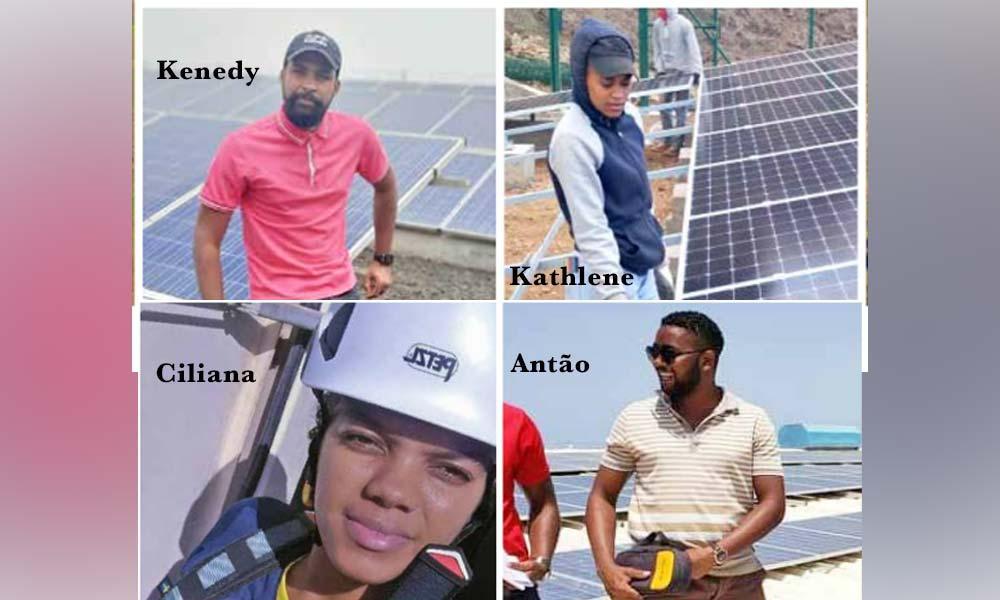
In this edition, A NAÇÃO will meet young technicians, committed to making their contribution to speeding up the process, in order to achieve the goals set for this and the coming decades.
“We are on the right track!”
Cape Verde is on the right path, defend four engineers heard in this report, who also recognize that the challenges are still many, namely in terms of taking advantage of existing resources and reducing dependence.
“The challenges are still many, but the gains are to be commended and praised”, argues renewable energy engineer Kenedy dos Santos, born in Ribeira Grande de Santo Antão, according to whom our motto should be “towards a seamless energy transition dependency”, both in terms of fossil fuels and in terms of a possible external technological dependence that this so-called transition may cause.
It is necessary, in his opinion, to be careful not to fall into the error of “anything goes”, just to try to reach the goals set.
“The term “energy transition”, by itself, already says a lot. This is a transition”, he says, also drawing attention to the inclusion of national companies in public tenders for the development of projects in the sector.
“National companies must be protected in certain public tenders, as they must be part of this energy transition process. We have to create the contractual conditions for these tenders to be accessible, perhaps through a consortium with foreign companies”, points out the engineer.
By doing so, he argues, technological dependency will be avoided, while national companies create structures and conditions to serve the country and boost the sector in the vast ECOWAS market.
Along the same lines, Ciliana Lima, with a master’s degree in Electrical and Computer Engineering, stresses that the resources already exist in Cape Verde, but in order to improve their use, much work will still be needed, namely through the improvement of the Electrical Systems and the investment in new technologies and storage systems, through large investments.
“Cape Verde is a country that stands out in relation to the production and promotion of the use of renewable energies. There are currently several renewable energy producers in the country and several generation projects have emerged, distributed in buildings that are already connected to the grid. About 20% of the energy produced in Cape Verde is from renewable energy and several projects are underway to increase the use of renewable sources in the energy matrix”, points out the engineer, responsible for the São Vicente wind farm.
“We’ve already gone further”, also analyzes the engineer and inspector Antão Pedro, for whom the steps taken have been “reasonably satisfactory”.
Electricity with better advances
At the moment, the most advanced sectors in terms of use/production of clean energy, in Cape Verde, are photovoltaic solar energy and wind energy, point out the engineers, pointing out that even these are still very limited.
“Cape Verde intends to increase the penetration of renewable energies and alternatives such as the sun, wind, sea waves, biofuels, among others, to reduce dependence on petroleum derivatives”, says engineer Kathlene Flor, from the island of Santo Antony.
In these fields, says Antão Pedro, natural resources are more abundant.
The penetration rate of clean energy in the electricity sector, for example, is currently around 17.8%, according to Kenedy dos Santos.
However, studies show a “good potential” for the use of tidal and geothermal energies, adds Ciliana Lima.
“We still have the potential to explore biogas, thus giving a second use to leftover food, animal droppings”, says Antão Pedro.
Reduce fossil dependency
Although more advanced in clean energies, the electricity sector is also the one that consumes the most fossil fuels, due to the need to produce energy by conventional means (power stations with diesel generators). Therefore, explains Kenedy dos Santos, one of the main ways to reduce this consumption of fossil fuels is to invest in the production of electricity through renewable energy sources, namely through the use of solar, wind, geothermal, water and marine resources.
Another fossil fuel consumption activity is in the transport sector, in which electric mobility promises to be an option to reduce this dependence.
It should be noted that Cape Verde has an Electric Mobility Policy Charter (CPME), through Resolution No. 13/2019 of February 1, 2019. At this time, the country is taking the first steps towards this transition, having already imported more than a hundred and a half of electric vehicles, with plans to install 40 charging stations on all islands.
Equally important for reducing the use of fossil fuels, points out the engineer, is energy efficiency, through assertive policies that encourage the rational and efficient use of energy.
Cost of large investments remains one of the biggest challenges
Renewable energies, namely solar and wind, explains Ciliana Lima, are intermittent sources, with a daily oscillation. Therefore, she argues, the best way to design them is with storage systems, which makes projects more expensive.
“The strong demand from many countries for the adoption of renewable power plants has had an impact on the increase in prices for this technology. In the process of energy transition, Cape Verde will depend on a great deal of financial support”, he acknowledges, stressing that the electrical system, in order to receive the large flow of energy from renewable sources, needs to have an improvement in the system.
Antão Pedro also praises that our electricity network is not prepared to manage the mix between renewable energies and conventional thermal power stations that already exist, so that one of the biggest challenges is related to the integration of renewable energies in the electricity system.
On the other hand, stresses Kathlene Flor, the scarcity of water resources calls into question the need, for example, to produce potable water, using sea water, for human consumption, the desalination of brackish water for agriculture, the use of water from boreholes , wells and springs, as well as the reuse of wastewater in agriculture.
For More News And Analysis About Cape verde Follow Africa-Press