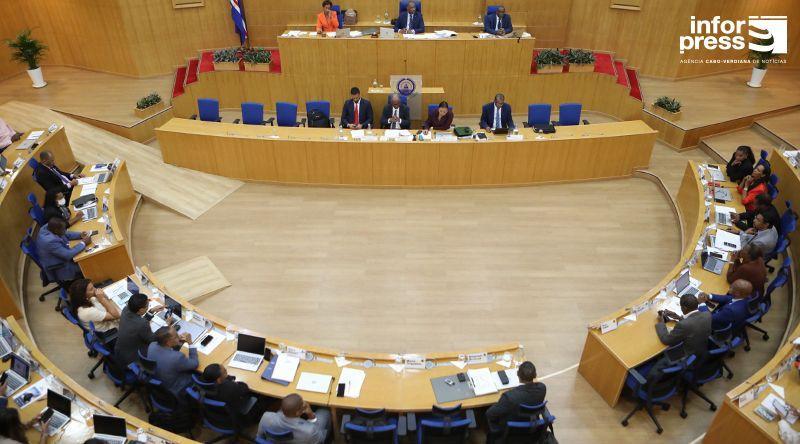
Africa-Press – Cape verde. Deputy Paulo Veiga stated today in Parliament that the Draft of the New Rules of Procedure of the National Assembly represents a significant advance in internal democratization, transparency, and efficiency of parliamentary functioning, adapting the institution to contemporary challenges.
During the presentation of the document, in the general debate this afternoon, Paulo Veiga explained that the new rules introduce a set of norms aimed at strengthening the balance between political pluralism, ethics, and oversight of government action, consolidating the role of Parliament as a central pillar of Cape Verdean democracy.
According to the deputy, the draft is the result of a “process of in-depth reflection” involving all parliamentary groups, parties with parliamentary seats, technicians, and consultants, highlighting the role of the Ad Hoc Committee for the Reform of Parliament, created in February 2023.
According to the parliamentarian, although the current rules of procedure, approved more than six years ago, have been fundamental to the organization of Parliament, technological evolution and the demands for greater democratic participation require its updating.
Among the main innovations, Paulo Veiga highlighted the enhanced role of deputies and parties with parliamentary representation, even those that do not form a parliamentary group, guaranteeing them greater participation and pluralism, particularly in the conference of representatives.
The new text also foresees the strengthening of parliamentary committees, with the creation of the Ethics and Transparency Committee, intended for the prevention and analysis of conflicts of interest, and the Specialized Drafting Committee, to ensure greater technical quality of legislative decrees.
The project also introduces changes to the legislative process, with new deadlines, greater technical justification for initiatives, and recourse to comparative law, aiming to increase the rigor of the laws produced. The regulations will also detail the procedures for declarations of vote and establish more restrictive rules for votes of condolence.
Another highlight mentioned by the deputy concerns the possibility, upon request of at least 15 deputies, of holding the discussion and voting on the specifics of the State Budget in plenary session, as well as the institutionalization of the monthly debate between the Prime Minister and the deputies, with a maximum duration of three hours and proportionally distributed speaking time.
In the area of technological modernization, the regulations allow for meetings and voting via telematics, reinforce the electronic dissemination of parliamentary work, and make the publication of the National Assembly’s yearbook mandatory.
For Paulo Veiga, the new regulations “are more than a set of rules,” constituting an instrument at the service of democracy, citizenship, and national development, appealing to the sense of state and the spirit of collaboration of the deputies for the improvement of the legislation in detail.
The approval of the new regulations, he concluded, will be “a legacy for future generations” and a decisive step in the consolidation of Cape Verdean democracy.
For More News And Analysis About Cape verde Follow Africa-Press