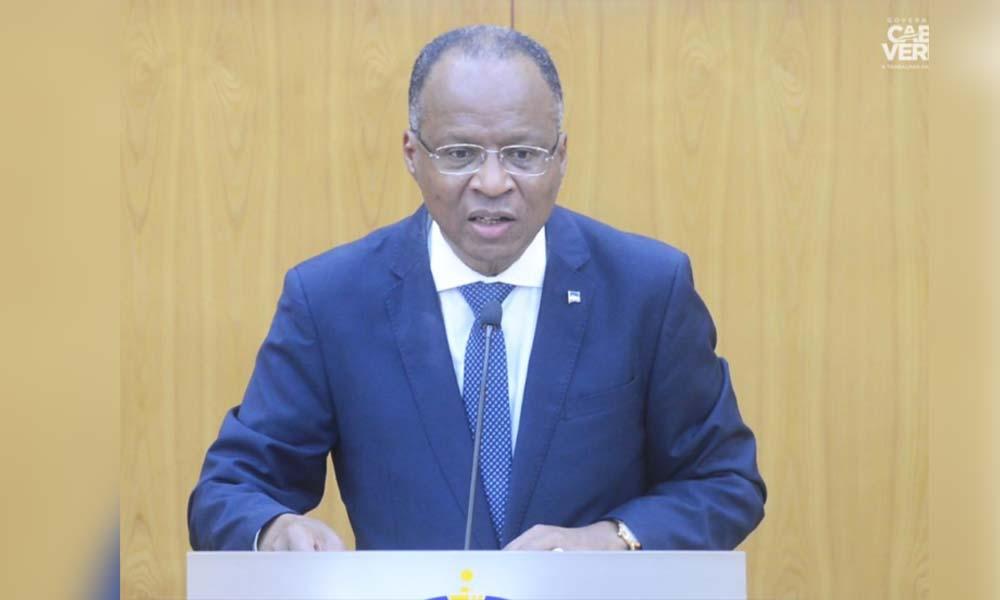
Africa-Press – Cape verde. The Government of Ulisses Correia e Silva faces, this Friday, the State of the Nation debate, the second of this X Legislature, at a particularly difficult time, imposed by successive droughts, covid-19 and now with the consequences of the war in Ukraine. Crises cannot justify everything and, therefore, opposition parties will ask for explanations in relation to successive “unrealized” announcements to solve the country’s most pressing problems.
The prime minister will certainly justify some of his executive’s mistakes with this scenario of successive crises, but there have been problems that he will hardly be able to avoid, pointing out as a justification for these misfortunes. First of all, the obesity of its government cast designed and imposed in the midst of the covid-19 pandemic, which does not prevent him from asking Cape Verdeans to sacrifice.
The excess trips abroad cannot, either, be justified by the crisis, as well as the astronomical expenses for the renovation of the State’s car fleet, with the acquisition, by public companies, deconcentrated services and autonomous funds, of top-of-the-line vehicles. range for the personal use of some directors and managers.
Ulisses Correia e Silva will also find it very difficult to explain the causes of the chaos in the transport sector, a reflection of alleged situations of mismanagement and breach of contracts. In terms of privatization and concessions, this government, which, since the previous legislature, proposed to transfer almost all public and state-owned companies to private companies, only managed to grant concessions for airports, after a troubled renationalization of TACV.
At the moment, one of the main challenges for the UCS Government is to try to contain inflation, unemployment, food insecurity and the crime wave that plagues the main urban centers of the country.
On the other hand, the Chief Executive has as an asset the fact that he has successfully dealt with the pandemic crisis resulting from the covid-19, with Cape Verde standing out as one of the countries with the highest vaccination rate and for having implemented preventive measures. support for families and businesses at a time of many uncertainties regarding the impacts of this pandemic on the economy.
Difficult Economic Context
According to the World Bank, before the global economic crisis of covid-19, Cape Verde experienced “robust” economic growth driven by a thriving tourism sector and strong structural reforms, but the crisis paralyzed the economy in 2020. Between 2016 and 2019, the average growth was 4.7 percent (3.2 in per capita terms).
“Sustained and robust” economic growth, according to the same source, led to a decline in poverty from 35 percent in 2015 to 28 percent in 2019. “The covid shock had a negative impact on the country through the tourism sector, which represents 25% of GDP and drives around 40% of all economic activity; and through reducing FDI, a critical source of external finance and an essential engine of growth. As a result, the economy contracted 14.8 percent in 2020.”
Real GDP is estimated to have increased by 7% in 2021, reflecting a gradual recovery in the tourism sector, as well as a “base effect”. The crisis led to a significant increase in the budget deficit in 2020, which remained high in 2021.
On the demand side, economic growth measures led by private consumption and investment, supported by the gradual reopening of the economy, put in place by the Government to support companies and sectors hard hit, and the gradual resumption of FDI projects, helped the recovery .
On the supply side, the trade and construction sectors drove economic growth. The overall fiscal deficit was 8.8% of GDP, and public debt increased to 155.3% of GDP in 2021, with the need to resort to additional concessional external borrowing to finance the public investment program and bond issuance. of the Treasury on the domestic market.
According to the World Bank, the economy is likely to grow at a slower pace in 2022, reflecting the impact of the Ukraine crisis. Real GDP growth is projected at 4.0 percent in 2022, but above potential (4.5 percent) in 2023 and 2024, with real GDP per capita expected to return to the 2019 level in the last year.
For More News And Analysis About Cape verde Follow Africa-Press