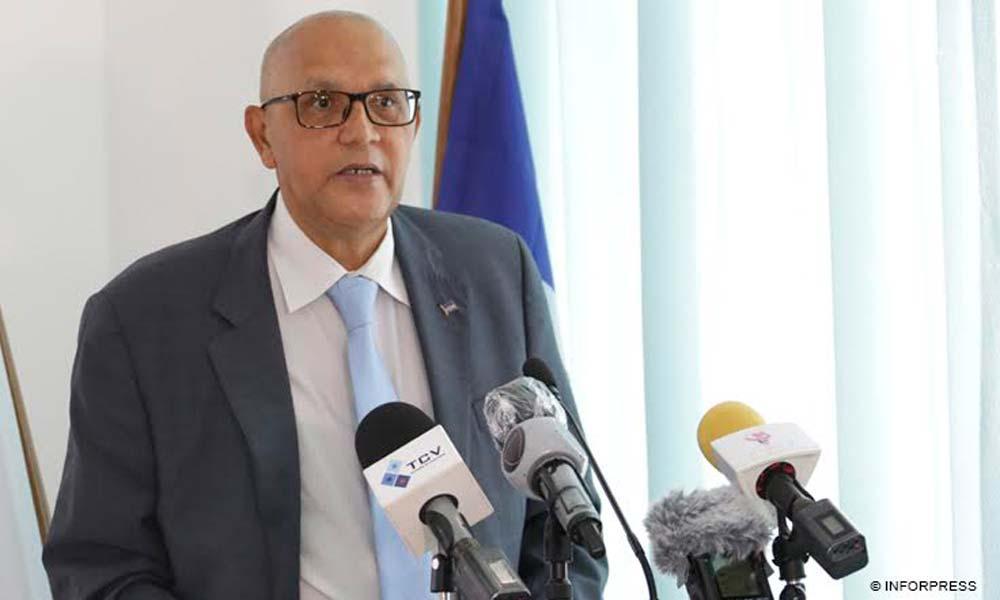
Africa-Press – Cape verde. The Ombudsman, José Carlos Delgado, warns that it is “wrong” to devalue the public manifestations of civil society. The same argues that the reasons that lead people to the streets should be analyzed and who should find the right solutions, because, as he says, they are legitimate claims.
In a week that is almost at an end, and that will be marked by several demonstrations in Brava, São Nicolau and Praia, especially due to transport and health issues, but also insecurity and unemployment, the Cape Verdean Ombudsman, José Carlos Delgado, recognizes that these citizenship movements are legitimate.
“I see this, first of all naturally. Being in a democratic country, people have the right to without manifesting and expressing what they consider, what they think, which in their perspective, is not okay. stated in an interview with A NAÇÃO online.
In his view, demonstrations should not be partisan or politicized, quite the contrary.
“It is wrong, from my point of view, for any type of demonstration to be said to be promoted by the MpD or PAICV. I think we have to see things from the perspective not of people demonstrating because you are against such a government, or such a minister, but rather, from my perspective, we should see these demonstrations in a positive light”, he explains.
call to attention
In this context, he argues that the demonstrations are a “call for attention” to those who “have responsibility in these matters”, which are being demanded.
“I think that, honestly, one should analyze, be attentive, listen to what people have to say about these problems and draw the appropriate conclusions. No manifestation should be devalued. It is not a good way to devalue what people claim”, he warns.
From his point of view, the strategy must go through “calming tempers and presenting solutions”.
“Explaining to people the reasons, sometimes, why certain situations happen”, he says, defending that dialogue is the “most fundamental” thing there should be.
Transport issue is transversal
As he recognizes and exemplifies from his own experience, people feel harmed, “in one way or another”, so it is “absolutely legitimate” to speak out.
“For example, in the case of transport, in all the visits I made, I couldn’t go to Brava, precisely because of transport. I have been to Fogo, Boa Vista, Maio and in all these islands the issue of transport is a pressing and transversal issue. In some cases the air connections, but mainly the maritime connections”, he attests.
In all the visits that the Ombudsman makes, he claims to produce a detailed report that he sends to the competent authorities or institutions, depending on the problems raised.
May example
“For example, in the case of Maio, there was a drama, which is that of the rabid women who live from the trade of fresh products, who buy in Santiago to sell in Maio. For example, they take out a shipment order to send the products one day and then the boat doesn’t go on Tuesday, it doesn’t go on Wednesday, it doesn’t go on Thursday and the products get spoiled….”. Therefore, he reinforces, they are legitimate claims.
In this case, he even had a meeting with the shipping company, at the time, because there was a problem of compensating people for the products. “At the end of last week I received an email about how they are going to meet with the people of Maio to see how they resolve this issue”, he explains.
Case of Saint Nicholas and Brava
The Ombudsman admits that we all “know that there are very serious problems in terms of maritime connections for passengers”.
“There were huge dramas, in the case of São Nicolau, of people who came to have meetings with their families and could not. People who spent almost a week in Sal in order to go to São Nicolau. And even the case of Brava. But this has been going on for a long time,” she laments.
This official also recalls that there are people who come on vacation and send the “celebrity drums”, and manage to return to the country they came from, “without lifting” the drums, where they put gifts for their families. “And that’s a big frustration.”
José Carlos Delgado ends by concluding that Cape Verde is experiencing a “very difficult” social moment and that, as he reiterates, “what matters is to analyze what people demand” and seek “solutions”.
For More News And Analysis About Cape verde Follow Africa-Press