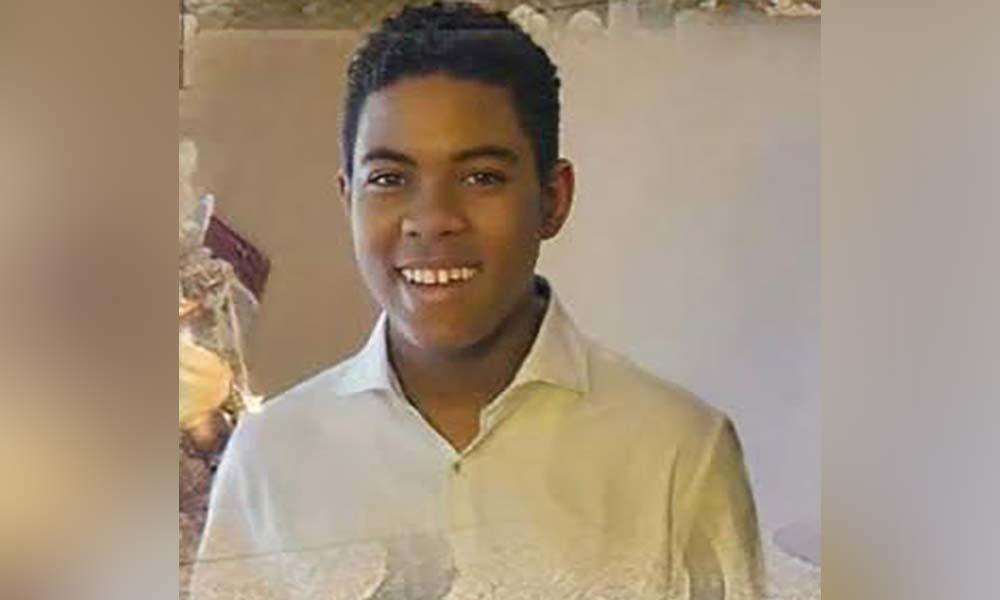
Africa-Press – Cape verde. Today, the result of the investigation launched into the death of the young teenager João Carlos Martins da Cruz, known as Djonny, was revealed, who died on 1 August at the hospital in São Filipe, Fogo, after being evacuated from Brava the night before, maritime way. The document rules out medical malpractice, and reiterates the death from acute leukemia. However, he recognizes that if there were no inconveniences caused by transport, the patient would arrive earlier at the hospital in Fogo, but without “certainty that he would survive given the clinical evolution”, which was “very acute, fast and aggressive”.
The 17-page survey was carried out by Iolanda Landim, Hélida Djamila L. Fernandes and Natasha Cilene Sena-Silva, and documents all the procedures that were carried out from the moment young Djonny, a 14-year-old emigrant on vacation in Brava, was admitted to the emergency department of the health center on the island, as well as the portrait of the clinical picture preceding this emergency episode.
“The patient had been treated by the father/nurse at the Nossa Senhora Do Monte sanitary post, the structure where he works, on July 29, with fever and sore throat and was symptomatically medicated and followed by him at home. ”, points out the report.
Go to the emergency health center
The young man was then admitted on July 31, 2022, at 10:35 am, to the emergency department of the Brava Health Center, “with a history of malaise, tonsillitis, vomiting with traces of blood, fever with 5 days of evolution, yellowish color and reference of a vomit without traces of blood, at the entrance to the emergency room”, where he was treated, and analyzes were carried out in the afternoon.
In view of the worsening of the clinical picture and the receipt of the analytical results at 17:00, where “severe changes such as severe anemia (hemoglobin 5.1g/dl), decrease in platelets (32,000) and increase in leukocytes (53,350) were observed”, the doctor called the Health Delegate “immediately”, who “discussed” the case with the Clinical Director of Hospital do Fogo.
It was then that they decided to evacuate the patient and began the transfer procedures, “with diagnostic hypotheses of anemic syndrome (hemolytic anemia), jaundice syndrome and acute febrile syndrome”.
Evacuation
It was here that the drama of the evacuation began. According to the report, the evacuation trip started at 7:10 pm, “in the presence of a patient with a stable clinical condition, with fever, decreased muscle strength of the right upper limb, without change in consciousness (nursing report), with venous hydration and accompanied by mother and father, also as an accompanying nurse, who requested the presence of another health technician during the evacuation.
But, around 7:30 pm, the father and nurse informed the Health Delegate of the vessel’s breakdown and the worsening of the patient’s clinical condition, requesting his presence to accompany the patient as a doctor, on the second trip.
Returning to the port of Furna, the document continues, the patient remained on the pier having been assisted, under “possible conditions” by the doctor and nurse present.
reanimated twice
The second vessel where Djonny was evacuated, Rabo de Junco, left the port of Furna, at 10:40 pm, with the patient, accompanied by a doctor and nurse.
“During the trip, the patient went into cardiac arrest, having been successfully resuscitated”, and the emergency doctor at the Fogo hospital was informed of the “severity of the condition” and “the need for an ambulance to transport the patient”.
Upon arrival at the port of Vale dos Cavaleiros, Fogo, instead of an ambulance, they found a hiace for transport to the hospital, “without the possibility of storing the patient”.
Djonny started a “bleeding from the mouth and nostrils” and given the severity “it was decided to transport the patient in an open box van that was on the pier”.
During the journey, the document points out, he made a second cardiorespiratory arrest and was “successfully resuscitated, having arrived at the hospital alive at 11:45 pm”.
But, not resisting, at 0:22 am, death was declared, “with the hypothesis of diagnosis of septicemia x DIC, severe anemia, thrombocytopenia and leukocytosis”.
At the Fogo hospital, the report points out that blood was collected for analysis, which confirmed the initial changes, and a peripheral slide was sent to the Praia hospital, where the diagnosis of acute leukemia was confirmed.
conclusions
Regarding the conclusions, in relation to the medical and hospital services provided to the young Djonny, at the Brava Health Center and at the São Francisco de Assis Hospital in Fogo, the survey concluded, among other things, that “all medical and hospital assistance provided from the admission of the sick adolescent to the Brava Health Center until death at Hospital do Fogo was within an acceptable time, and with the necessary conditions for the provision of the care that the clinical situation demanded”.
He also reports that “if there were no inconveniences caused by transport”, the patient would “arrive earlier” to the Fogo hospital, “but not sure that he would survive given the clinical evolution, which was very acute, fast and aggressive”.
“A rare clinical situation, but it happens according to the literature”, points out the document.
Even if he had arrived earlier, the treatments he would receive, such as the blood cell transfusion available at that hospital “would serve as supportive treatment, not as a guarantee of survival”.
Helicopter for evacuations
Among other considerations about the evacuations, the survey also notes that the absence of the ambulance at the pier at the port of Cavaleiros “was serious”, so it recommends the “acquisition” of this vehicle for that hospital unit.
However, the Committee of Inquiry concluded that the “recommended and necessary procedures in the clinical picture presented by the patient from entry to the Brava Health Center until death in Fogo were carried out, in accordance with the existing conditions, which leads us to conclude that in relation to the hospital medical services provided, there was no medical negligence in the care provided to the adolescent/patient”.
Among the recommendations to improve the evacuation process, the inquiry calls for the “relocation of a Coast Guard detachment and one of the vessels under the management of the National Search and Rescue System, to the island of Brava, in the short term”, with subsequent reinforcement of this military unit, with a helicopter intended for medical evacuations.
The document also says that it is necessary to “develop and implement the pre-hospital emergency care protocol at the national level”.
For More News And Analysis About Cape verde Follow Africa-Press