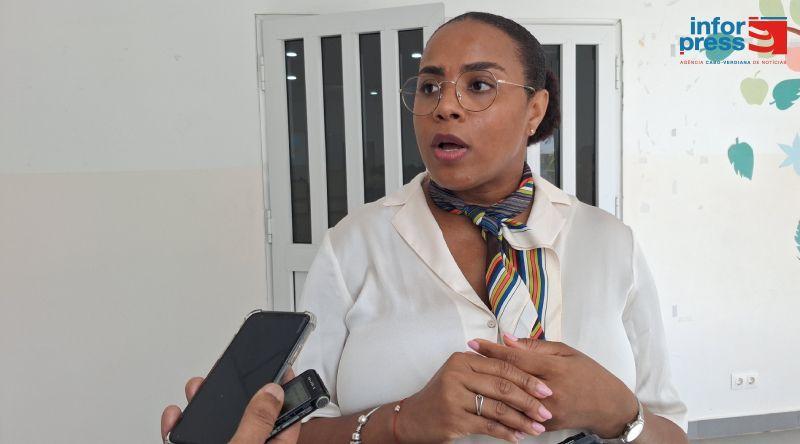
Africa-Press – Cape verde. A study by the University of Cape Verde (Uni-CV) indicates that healthcare professionals in Cape Verde still have a superficial understanding of female genital mutilation and demonstrate weaknesses in the treatment of complications associated with this practice.
This information comes from Uni-CV researcher and professor Deisa Semedo, who is a researcher at the Center for Gender and Family Research (CIGEF).
The same source explained that the study was conducted on the islands with the highest concentration of immigrant communities, namely Sal, Santiago, São Vicente, and Boa Vista, and also included technical visits to Portugal to better understand the reality and support the research methodology.
The research involved healthcare professionals, survivors, Cape Verdean women, immigrants, and partners of immigrants, and allowed for the identification of cases of women who underwent mutilation in their countries of origin, especially among immigrant communities residing in Cape Verde.
According to the researcher, in general, the lack of knowledge about female genital mutilation is significant, with the level of knowledge considered superficial among healthcare professionals. “There is an urgent need for more training to ensure a better response from the health system,” he said.
The study also revealed that, among other groups analyzed, some women and partners of immigrants have some understanding of the practice, but are unaware of the profound impacts it has on the physical, psychological, and social health of the victims.
Non-governmental organizations also presented knowledge gaps on the subject, according to the same source.
Deisa Semedo also highlighted the widespread lack of knowledge of national legislation on sexual mutilation, which covers any procedure not clinically indicated, in both women and men.
“The lack of knowledge of the law can lead to wrong behaviors and hinders the protection of victims,” she warned.
The researcher explained that the study did not provide prevalence data in Cape Verde due to the sensitivity of the topic and the difficulty in obtaining direct information from victims, many of whom do not recognize the practice as violence.
Regarding the motivations for the practice, the study pointed to cultural factors as predominant, including the control of female sexuality, gender norms, social pressure, and religious interpretations, despite the lack of foundation in sacred texts.
Among the identified consequences are immediate risks such as hemorrhages, sexually transmitted infections (given that the same cutting material is used on several girls), and death, in addition to long-term complications, including infertility, chronic pain, psychological problems, and complications during childbirth.
According to Deisa Semedo, none of the Cape Verdean women interviewed had undergone the practice, although some have relationships with partners from countries where female genital mutilation is culturally ingrained.
She clarified that female genital mutilation is any procedure involving the partial or total removal of organs from the female genital area without a clinical reason.
He further explained that, in many countries where this practice exists, mutilation is considered a rite of passage from childhood to womanhood, performed up to the age of 15, although most occur around the age of 10.
In these societies, according to Deisa Semedo, those who are not subjected to this rite of passage are stigmatized by their cultural group, by their community, and risk not being able to marry.
She added that mutilation is seen as a form of control over female sexuality.
“The objective is to control female sexuality. They consider that a girl who has not been subjected to genital mutilation is not as pure or worthy of marrying a man from that culture,” she concluded.
For More News And Analysis About Cape verde Follow Africa-Press