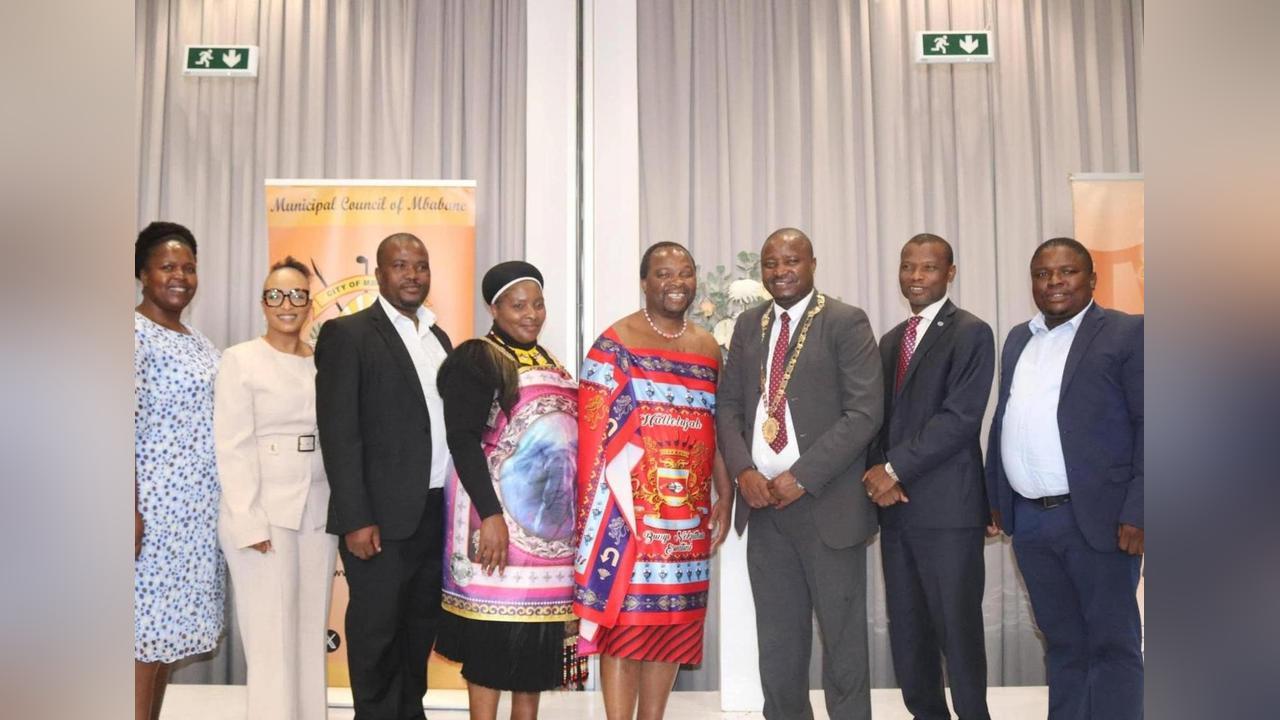
Africa-Press – Eswatini. A new era of coordinated governance has been ushered in following the signing of a landmark Memorandum of Understanding (MoU) between the Municipal Council of Mbabane, Mbabane East Inkhundla and Mbabane West Inkhundla.
The agreement was officially signed on April 2, 2026, at the Hilton Garden Inn in Mbabane, where key stakeholders gathered to formalise a unified approach to development and service delivery in the capital city.
Themed “The Mbabane Accord: From Overlap to Synergy,” the agreement marks a decisive step towards harmonising service delivery and development planning, shifting from fragmented institutional mandates to a unified and citizen-centred governance model.
Led by the Ministry of Housing and Urban Development Hon Appolo Maphalala in collaboration with the Ministry of Tinkhundla Administration and Development Hon SikhumbuzoDlamini, the accord symbolises strengthened cooperation between urban and grassroots governance structures.
Minister for Housing and Urban Development, Appolo Maphalala (MP), described the agreement as a turning point for the capital city.
“This moment is a turning point for Mbabane, where longstanding operational silos are replaced by a shared purpose,” he said.
He emphasised that residents experience governance through service delivery, not institutional boundaries, noting that the MoU prioritises seamless, citizen-centred services.
At the core of the agreement is the concept of a “Unified Front for Development,” which aligns the Mbabane Smart City vision with the grassroots reach of the Tinkhundla system. Key areas of cooperation include joint resource mobilisation for infrastructure and social programmes, shared data systems for improved service delivery, and strengthened fiscal discipline to eliminate duplication.
Maphalala noted that while the MoU is not legally binding, it carries significant moral authority and requires disciplined implementation anchored in accountability and mutual respect.
The initiative is also being positioned as a national blueprint for integrating the Urban Government Act with the Tinkhundla system.
However, the event was not without controversy
Minister of Tourism and Environmental Affairs who is Mbabane West Member of Parliament , Jane Mkhonta-Simelane, raised concerns over lack of consultation, stating that the matter should first be taken to the communities. She revealed that she only received the document at around 1:00am on the day of the signing.
The MP left the event before the signing ceremony, although Maphalala indicated that she had another engagement to attend.
Despite the concerns, Mbabane East Member of Parliament Welcome Dlamini threw his full support behind the agreement.
“We are in full support of the document. It has input from both constituencies and the municipality. It is an agreed document aimed at the development of this capital city and its residents,” he said.
Minister of Tinkhundla Administration and Development, Sikhumbuzo Dlamini, highlighted long-standing challenges that necessitated the agreement. He said Members of Parliament had previously raised concerns about difficulties in utilising the Regional Development Fund due to overlapping jurisdictions between municipal and Tinkhundla areas.
He noted that improved collaboration would ensure that funds allocated to each Inkhundla are fully utilised instead of being returned unused.
Mbabane Mayor, Councillor Thulani Mkhonto, acknowledged that lack of coordination between the municipality and Tinkhundla structures had hindered development.
“This MoU is meant to bridge that gap. Our plans and their plans should be aligned so that we serve the people of Mbabane better,” he said.
Mkhonto also raised concerns over the existence of nine informal settlements in the city, stressing the need for development and improved housing solutions. He pointed to outdated legislation that has, for over three decades, restricted residents from building durable homes.
Meanwhile, Micro Projects Chief Executive Officer, Sibusiso Mbingo, commended the Ministry of Tinkhundla for successful initiatives elsewhere, citing the Big Bend sugarcane project where emaSwati benefited through transport contracts funded under the Regional Development Fund.
He suggested similar initiatives could be introduced in Mbabane, particularly targeting youth empowerment.
“For example, young people could acquire waste management trucks and secure contracts with the municipality. This would reduce youth unemployment while improving service delivery,” he said.
Mbingo also highlighted the issue of duplication of work, where different entities unknowingly carry out the same projects, attributing it to poor communication.
Ultimately, the MoU represents a commitment to improved infrastructure, efficient service delivery and inclusive urban development. It sets the stage for a more coordinated and responsive governance system in Mbabane one that places citizens at the centre of development.