Africa-Press – Eswatini. United Nations Development Programme (UNDP) employee Bhekithemba Dlamini has suggested that women should be allowed to have more than one husband.
His submission was well received by a majority of the women present who agreed that they should indeed be allowed to have more than one husband. Dlamini said if it was a matter of gender equality, it should be considered that women should have polygamous marriages.
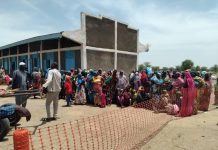
This was during the ongoing consultative meetings conducted by the House of Assembly ministry of justice portfolio committee on the Marriage Bill and Matrimonial Property Bill held on Friday.
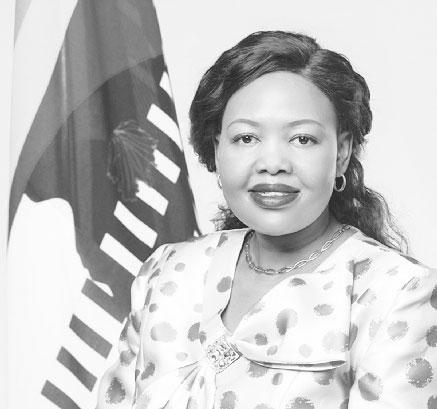
The committeemembers were joined by Minister of Justice and Constitutional Affairs Pholile Shakantu.
Dlamini said it would be fair to allow women to have more than one husband. He stated that if men were allowed to have more than one wife; women should also be able to enjoy the same privilege.
He further enquired if polygamous marriages were still required and said there should be a consideration to do away with polygamy since it was the root cause of many problems within families.
He added that if polygamy remained legal, the same problems that have been experienced in the past would continue. World Health Organization (WHO) representative Dr Cornelia Atsyer noted that the Marriage Bill only considered women to commit adultery and it was not the same case for men who were seemingly allowed to have extra marital affairs.
She said it was not fair that only women were considered to commit adultery.
She said there should be a provision in the law that if a husband was found to have committed adultery, it should be groundsfor divorce. She said the current law was discriminatory to women and insisted that women and men should be treated equally.
“If a wife found that her husband had committed adultery, it should be strand as ground for divorce instead of only women being found to have committed adultery,” she said.
She said she did not understand why adultery should be considered for women and not for men.
Another participant said she found it interesting that on the definition of adultery, men who were married under Swazi Law and Custom committed adultery only when they had extra marital affairs with married women and that was not the case if the woman was not married.
She enquired what informed that definition and why it was specific.
‘Matrimonial Property Bill not meant to give licence to cohabit’
Minister of Justice and Constitutional Affairs Pholile Shakantu has clarified that the Matrimonial Property Bill does not seek to give licence to cohabitation, but provided for people who have been cohabiting for a certain period of time.
During the course of the ongoing consultative meetings, Emaswati submitted that cohabitation should be legalised while others sternly opposed the concept.
The minister explained that the Bill was not formalising cohabitation, but it was talking about the property of those who have been cohabiting for a certain period of time.
“The Bill is not giving a licence to staying together without getting married, but it is looking at cases where people have been living together,” she said.
She added that currently, the Master of the High Court had a challenge when executing estates for people who were not married but had accumulated estates together.
She said Section 34 (1) provided that a surviving spouse was entitled to a reasonable provision out of the estate of the other spouse, whether the other spouse died having made a valid will or not, whether the spouses were married by civil or customary rights.
Sub-Section 2 provides that Parliament shall, as soon as practicable after the commencement of the Constitution enact legislation regulating the property rights of spouses including common law husband and wife.
Shakantu said this legislation was not granting a blanket approval for cohabitation but it was trying to implement the Constitution which obligated Parliament to enact a legislation that provided for common law marriages.
For More News And Analysis About Eswatini Follow Africa-Press