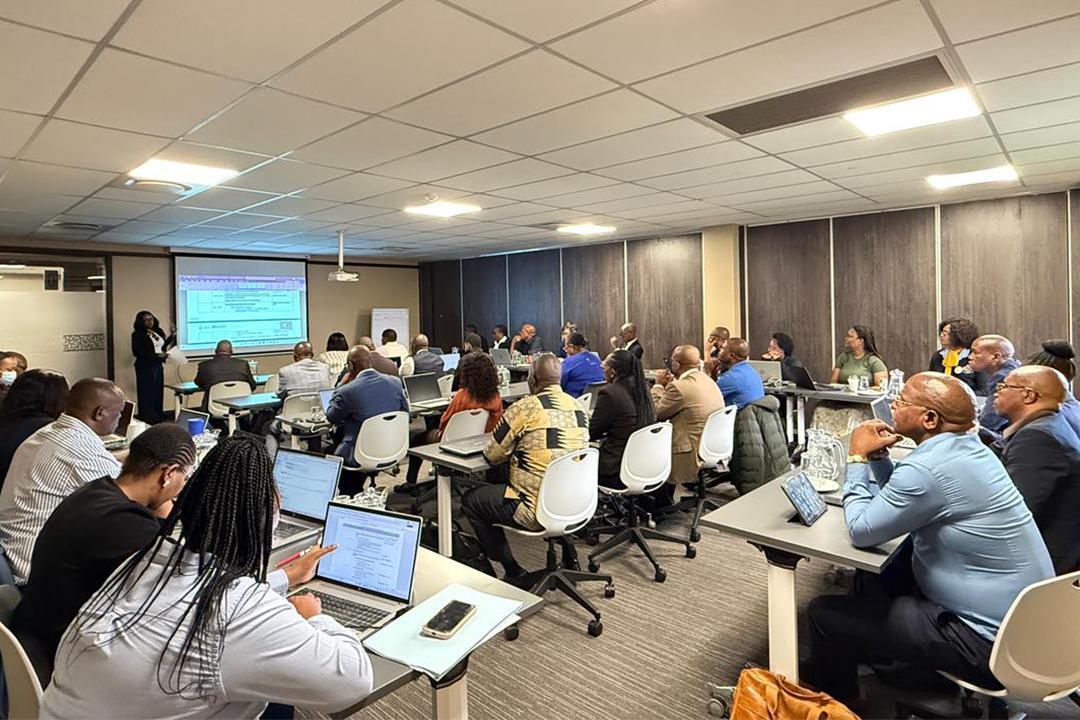
Africa-Press – Eswatini. In a landmark display of national unity, Eswatini has laid a strong foundation for a seamless trade environment following a transformative two-week Coordinated Border Management (CBM) workshop.
Facilitated by the World Customs Organization (WCO), the session achieved what was once considered a formidable challenge, bringing together all government agencies operating at the border under one purpose and one actionable plan.
The workshop, which concluded on Friday, 17 October 2025, marked an unprecedented level of collaboration. Key agencies such as the Eswatini Revenue Service, Ministry of Agriculture, Police Service, national intelligence bodies, and NAMBOARD worked in lockstep under the National Trade Facilitation Committee (NTFC).
For the first time, the concept of a “one border stop” evolved from an idea into an actionable plan. The collaborative energy in the room signaled a major cultural shift—breaking down long-standing silos and fostering a unified pursuit of trade efficiency.
“This level of all-inclusive commitment marks a pivotal moment for Eswatini’s trade landscape,” shared a source within the NTFC leadership. “Seeing intelligence officers, police, and agricultural inspectors sitting side-by-side with customs officials, all dedicated to designing a streamlined process, is a game-changer. It proves that a seamless border is within reach.”
Setting an ambitious vision for the future, the ERS Commissioner General challenged stakeholders to aspire toward a revolutionary model:
“Our ultimate goal must be a ‘No-Stop Border’. Trusted, compliant traders who are part of the Authorised Economic Operator (AEO) programme should be able to cross without stopping. This is the zenith of trade facilitation, and it is achievable if we continue this collaborative spirit and if businesses take advantage of the AEO facility.”
This vision elevates the initiative beyond merely speeding up clearance processes. It imagines a future where pre-cleared goods and trusted companies flow across borders smoothly and efficiently.
A key highlight of the workshop was the private sector dialogue led by the NTFC and its co-chair, Business Eswatini. This engagement ensured that importers, exporters, and freight forwarders could contribute directly to shaping the new trade facilitation framework.
During the session, WCO experts and agency heads outlined the CBM vision, including the new Standard Operating Procedure (SOP) framework, its integration with the AEO programme, and clear implementation timelines. Traders’ feedback was incorporated into the national action plan to ensure the system remains practical for daily business operations.
The workshop also produced significant technical milestones, including drafts of the Inter-Agency Cooperation Framework and the National Data Harmonisation Plan, blueprints for Eswatini’s future National Single Window.
The momentum has already led to tangible progress. Following consensus built during the workshop, serious discussions are now underway to extend operating hours at the Lavumisa Border Gate, with an initial target of midnight and a clear path toward full 24-hour operations.
“This is a major achievement for traders in the agriculture and transport sectors, where time is perishable and delays are costly,” the source added. “Having a seat at the table ensures that the voice of business leads to outcomes that will boost Eswatini’s competitiveness.”
The successful completion of this workshop, the bold vision of a “No-Stop Border,” and immediate progress toward extended border hours send a powerful message: Eswatini is building one of the most modern, efficient, and collaborative trade systems in the region, with the private sector as a key partner in shaping its future.
For More News And Analysis About Eswatini Follow Africa-Press