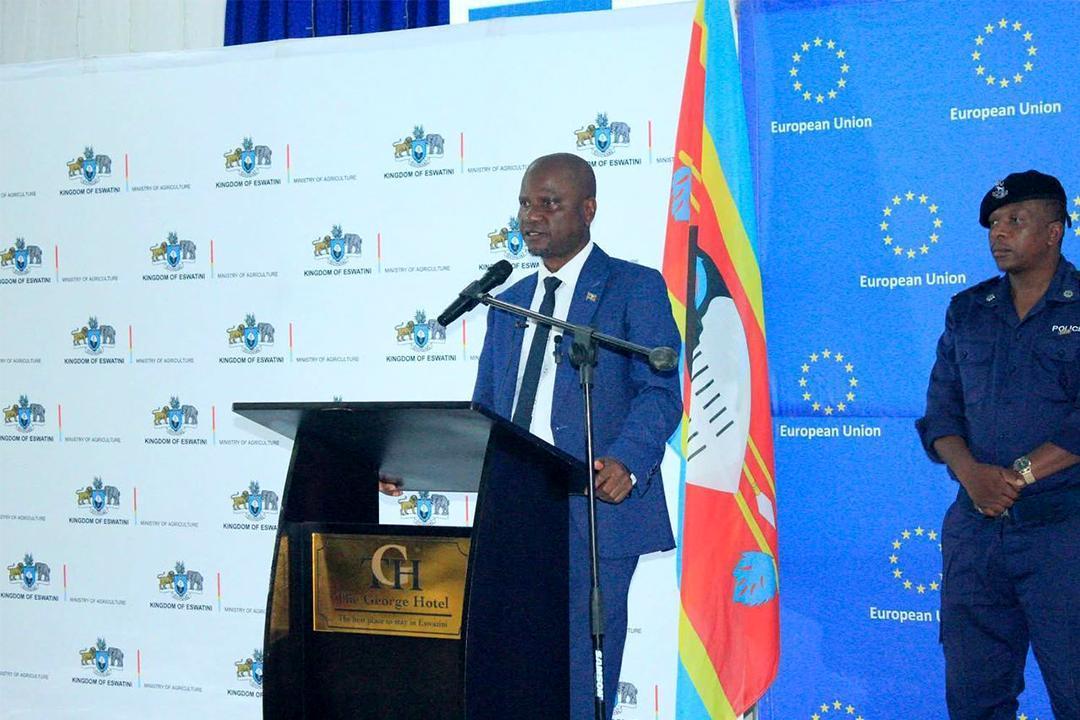
Africa-Press – Eswatini. Renewed hope and determination defined the start of the Feedlot Indaba 2026 on March 25, 2026, as farmers, policymakers, investors, and development partners gathered at The George Hotel to chart a clear path toward a stronger, more resilient livestock sector.
The event showcased a practical Feedlot Roadmap designed to revive micro, small, and medium enterprises (MSMEs), boost productivity, and unlock new opportunities for rural communities across Eswatini.
The roadmap was presented under the Eswatini Livestock Value Chain Development Programme, supported by the European Union and implemented in partnership with the International Trade Centre, the Ministry of Agriculture, and the Department of Veterinary and Livestock Services.
The gathering focused on restoring confidence in feedlot MSMEs, which have been challenged by Foot and Mouth Disease (FMD), high feed costs, limited access to finance, and declining stock levels. Feedlotting is central not only to improving meat quality for export but also to generating foreign currency, creating jobs, and driving rural economic growth.
Addressing stakeholders, the Minister of Agriculture, Mandla Tshawuka, said:
“Recently, the sector has been on a downward trajectory, even before the advent of FMD. FMD is the latest and heaviest blow dealt to the industry. That is why we must discuss how we support feedlotters in the face of these challenges.”
The Six Pillars of the Feedlot Roadmap
Disease Control and Biosecurity
National vaccination programmes are being strengthened, livestock movement regulations enforced, veterinary fences protected, and checkpoints tightened to prevent FMD spread.
“We will only conquer this through cooperation. Vandalising fences and ignoring regulations undermines all efforts to rebuild the sector,” the Minister warned.
Genetic Improvement and Herd Productivity
Artificial insemination and breeding programmes have already inseminated hundreds of cattle, improving breeds and expanding the national herd.
“The goal is to revitalise the beef cattle industry by improving genetic quality and increasing the national beef cattle population,” explained the Minister of Agriculture, Mandla Tshawuka.
Farmer Training and Mentorship
Over 500 farmers have been trained in modern feedlot production techniques, with ongoing mentorship programmes to ensure skills translate into results.
Access to Finance for MSMEs
The March Investor Roadshow connected feedlot operators with financial institutions, helping MSMEs explore funding opportunities and secure investment.
Value Addition and Industrial Opportunities
A leather tannery investment model is set to process high-quality hides locally, creating jobs and opening new markets.
Data-Driven Planning
The completed Livestock Diagnostic Study guides interventions, identifies bottlenecks, and highlights growth opportunities across the sector.
Progress Already Achieved
-Thousands of cattle and goats vaccinated at pilot sites against key livestock diseases.
-Hay baling equipment support improving fodder availability and reducing feed costs.
-Vehicle support provided to veterinary services to improve field mobility and service delivery.
-Plans underway for an Artificial Insemination Centre and a Feed Analysis Facility.
Tshawuka, emphasized that feedlotting is more than livestock finishing — it is a strategic economic activity for rural communities.
“Feedlotting adds value, improves meat quality for export, creates jobs, and contributes directly to economic growth,” he said.
With measurable targets, clear responsibilities, and broad partnerships, the Feedlot Roadmap offers a realistic, actionable, and sustainable path for Eswatini’s feedlot MSMEs to recover and thrive.