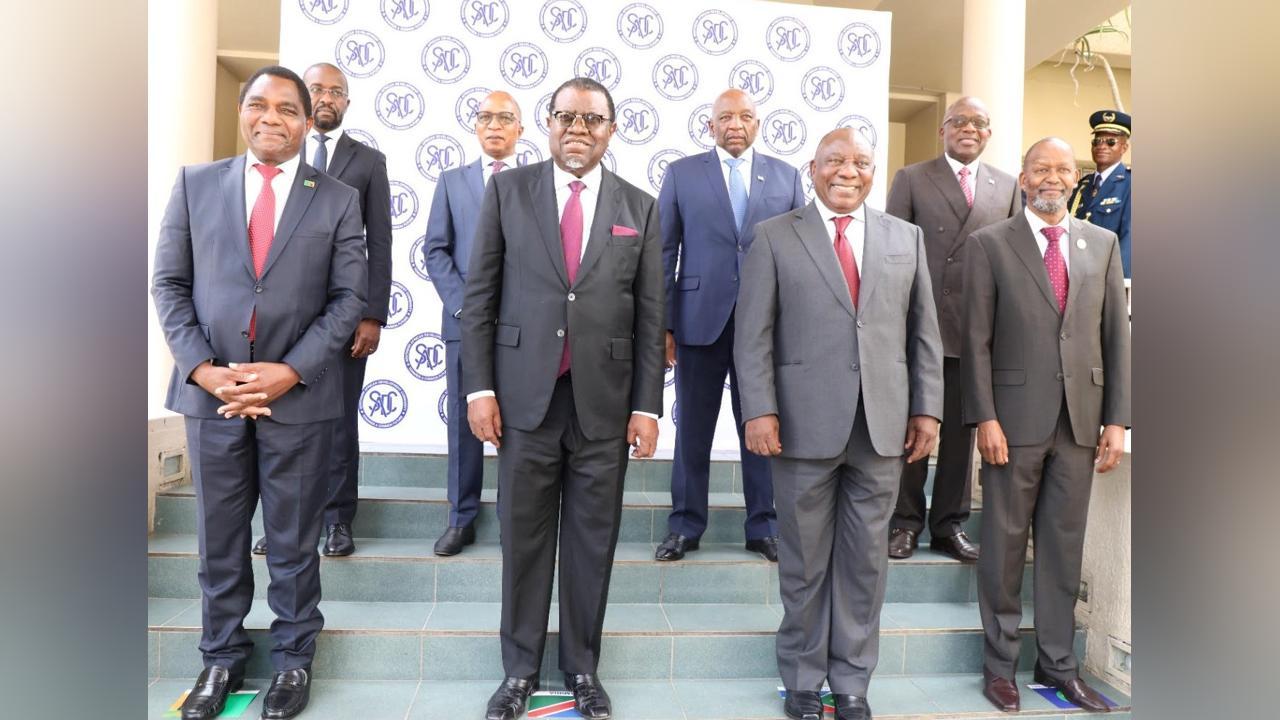
Africa-Press – Eswatini. The media recently quoted the government spokesperson as having said the dialogue process that was promised to the nation as well as SADC Trioka has been concluded at Sibaya.
This statement came as a shock but was also good in revealing the true government position on the national dialogue. Before Sibaya was held, I was invited to share my thoughts in a civil society dialogue forum on its pros and cons, especially with regard to the national dialogue issue. National dialogues are largely connected to four historical waves of political transition, the first three of which can be seen through the wider lens of ‘Third Wave Democracy’. Firstly, in order to grapple with the major political upheavals caused by the breakdown of communism in Eastern and Central Europe in 1989, Poland, Hungary, Czechoslovakia, East Germany and Bulgaria held a series of roundtable talks, opening democratic politics to newly emerging actors and agendas.
Discontent
Secondly, the widely felt discontent with the growing gap between citizens and the ruling elite in Africa. Thirdly, during the 1990s many countries across Latin America held consensus-based Constitution-making processes in an attempt to strengthen participatory governance and development. The processes by which an agreement on constitutional elements were reached, as seen in Bolivia and Colombia, reflect key features of national dialogues. Fourthly, the emergence of national dialogues today is inextricably linked to events of the Arab Spring in the broader MENA region. Spreading from one country to another, national dialogues (or similar processes) have taken place in Morocco, Libya, Tunisia, Egypt, Sudan, Lebanon, Jordan, Bahrain and Yemen, each with a varying degree of success. National dialogues are set up in response to different situations. They take place to address crises of national importance that have repercussions for the whole of society. These can be severe political deadlocks or blocked political institutions. In these situations, they seek to ease tensions, to reach political agreements or even to (re-) establish a new institutional framework, fulfilling a crisis management function.
Focus
They may focus on a more narrow set of specific or substantive objectives (i.e. security arrangements, constitutional amendments, truth commissions, etc) or on broad-based change processes, which may entail (re)building a (new) political system and developing a (new) social contract. What is the nurture of the Eswatini governance crisis? The African Union recommendation on the 2018 Eswatini elections ‘encourages the Eswatini authorities to consider reviewing the 1973 decree, which dissolved and prohibited all political parties and similar bodies in Eswatini and allow parties to freely participate in the electoral process in accordance with provisions of the African Charter on Democracy, Elections and Governance’. It further ‘urges the Eswatini authorities to consider entrenching the principle of separation of powers between the Executive, Legislature and Judiciary in accordance with the 2007 African Charter on Democracy, Elections and Governance’.
The head of the SADC Electoral Observer Mission (SEOM) preliminary reports also noted; “The SEOM in 2023 recommended that the government and the people of Eswatini must ‘conduct a peaceful and tolerant dialogue with regard to the organisation of the political system, in particular the recognition of the of the role of political parties in the context of the Tinkhundla System. The dialogue should give full effect to of the Eswatini Constitution s25 and s236 thereof that subscribe to SADC values and norms as enshrined in the in the principles and guidelines governing democratic elections which provides for the rights of association’. It was noted that various SADC missions observed that the 2021 disturbances were political, structural and systemic with the Tinkhundla System at the centre. The head of mission observed that stakeholders assured the observer mission that the national dialogue would be held after the national elections.
I would like to state that the SADC proposed dialogue cannot be what the spokesperson has said; Sibaya concluded the dialogue. These are the reasons I posit:
Article 232 on Sibaya;
1) The people through Sibaya constitute the highest policy and advisory Council (libandla) of the nation;
2) The Sibaya is the Swazi Council constituted of bantfwabenkhosi, tikhulu of the realm and all adult citizens gathered at the official residence of the Indlovukazi under the chairmanship of Ingwenyama who may delegate function to any official;
3) Sibaya functions as an annual general meeting of the nation but may be convened at any time to present the views of the nation on pressing and controversial national issues.
Therefore, Sibaya is a platform open to participation of all emaSwati. With a population of more than 1.2 million Sibaya cannot be fully representative of all emaSwati. There were a few panellists who answered certain questions like understanding of Tinkhundla, patriotism and how they can address some national challenges; and again a few were given an opportunity to pose some questions. Participants were given a topic and this year speakers were given 11 minutes.
Source: times
For More News And Analysis About Eswatini Follow Africa-Press