
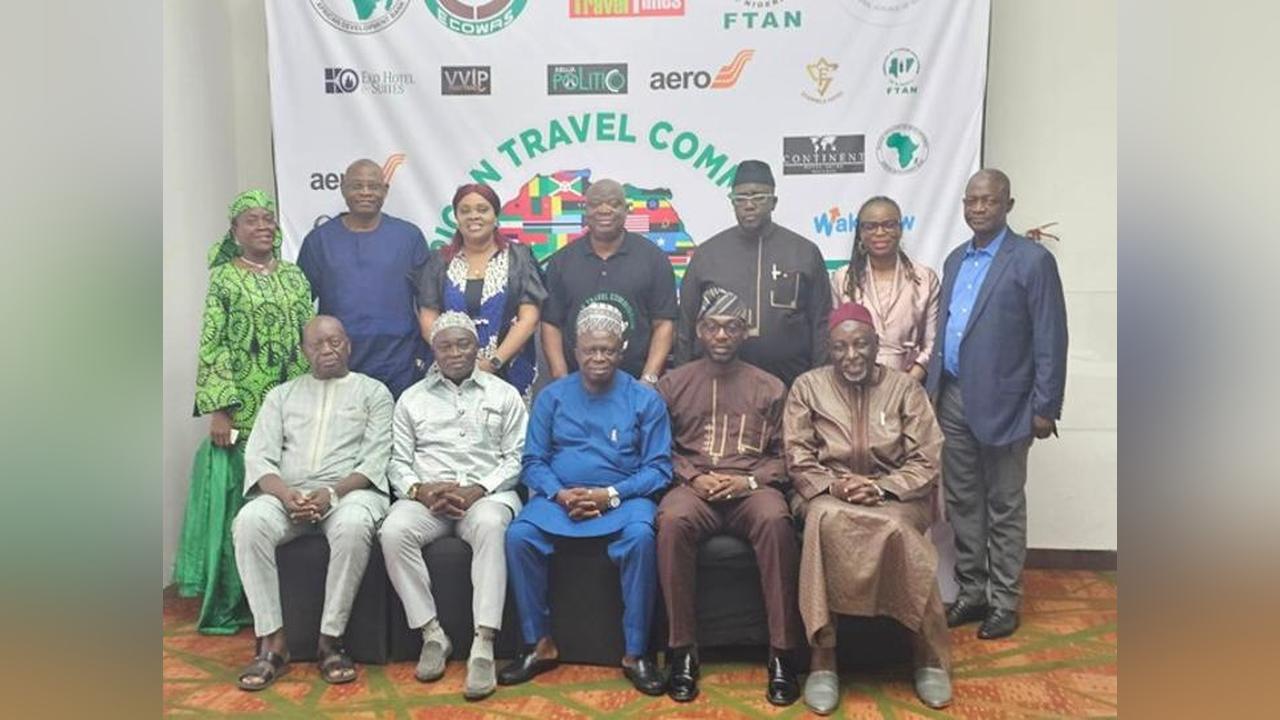
Africa-Press – Gambia. Regional tourism leaders have renewed calls for stronger collaboration, policy reform, and institutional revitalization to unlock Africa’s tourism potential, as stakeholders gathered in Lagos, Nigeria, for the ongoing Africa Tourism Summit.
Hosted under the auspices of the Africa Tourism Commission (ATC) in partnership with the Nigeria Tourism Development Authority (NTDA), the Summit was supported by major institutions including the African Development Bank (AfDB), ECOWAS, and a range of public and private sector partners. The event has drawn government officials, heads of tourism agencies, industry operators, development partners, and regional bodies, positioning the forum as a key platform for shaping Africa’s tourism future.
A central moment of the Summit was the goodwill address delivered by Dr. Badaki Aliyu, President of the Federation of Tourism Associations of Nigeria (FTAN), speaking on behalf of Mr. Mamadou Racine Sy, President of the Confederation of Private Sector Organisations of Tourism in ECOWAS (COPITOUR).
Welcoming delegates to Lagos, Dr. Aliyu said the gathering reflects Africa’s growing recognition of tourism as a powerful driver of economic diversification, employment, cultural diplomacy, and regional integration. He reaffirmed COPITOUR’s commitment to advancing sustainable tourism through institutional cooperation, capacity building, and stronger partnerships across borders.
According to him, COPITOUR continues to promote collaboration among destinations and stakeholders, aligning with Africa’s ambition to build a resilient and competitive tourism sector grounded in partnership rather than isolation.
Dr. Aliyu emphasized Nigeria’s role as a host nation and active COPITOUR member, describing tourism as both an economic opportunity and a unifying force. He noted that Nigeria’s engagement within COPITOUR enables knowledge exchange, policy alignment, and strategic partnerships that can accelerate tourism development in the country and across West Africa.
He stressed that deeper ECOWAS collaboration is essential to promote seamless travel, develop cross-border tourism products, enhance destination marketing, and improve visitor experiences. Nigeria, he said, stands ready to contribute to advancing the region’s shared tourism agenda.
However, he described the Summit as a call to action, urging African stakeholders to pursue unity and a shared vision to build a competitive, innovative, and sustainable continental tourism identity, while commending the NTDA leadership for its commitment to tourism development.
Beyond the goodwill address, the Summit featured extensive deliberations on strategic issues shaping African tourism. Participants reviewed the history and mandate of the Africa Tourism Commission, emphasizing the urgent need to revitalize the body as a central institution capable of coordinating tourism policy, advocacy, and partnerships across the continent.
Delegates also discussed strengthening collaboration between ATC and national tourism authorities to harmonize policies, improve destination competitiveness, and attract investment.
Visa barriers emerged as a major concern, with participants warning that restrictive regimes continue to discourage intra-African travel. Aviation challenges, including calls for the establishment of a strong Nigerian national carrier, were highlighted as critical to improving connectivity and tourism growth.
The role of ECOWAS was underscored, with appeals for the regional bloc to lead efforts in addressing cross-border travel, aviation, and tourism integration challenges.
High-level panel sessions brought together experts, including COPITOUR Legal Adviser Mr. Amdy Sene, AITEC publicity head Mr. Kazeem Balogun, Gambian tourism expert Sheikh Tejan Nyang, and ECOWAS representative Mr. Olalekan Afolabi, who shared perspectives on policy reform, private sector engagement, and regional cooperation.
Participants agreed that the Lagos Summit marks an important step toward a more unified African tourism landscape. Through coordinated action among governments, industry stakeholders, and development partners, Africa can dismantle barriers and harness tourism as a pillar of sustainable economic growth.
Organizers say the Summit sends a clear message: Africa’s tourism future depends on collaboration, innovation, and collective commitment to building a thriving continental industry.