
Africa-Press – Gambia. A leading Gambian tourism expert has highlighted community-based tourism (CBT) as a powerful pathway to sustainable development, sharing both success stories and hard lessons from The Gambia at a major continental tourism gathering in Nigeria.
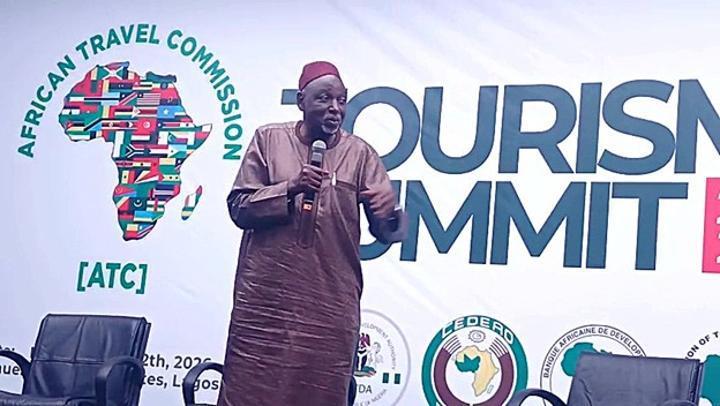
Sheikh A. Tejan Nyang, co-founder and retired Head of School of the Institute of Travel and Tourism of The Gambia (ITTOG), presented a detailed paper at the African Travel Commission (ATC) Pan African Tourism and Exhibition held in Abuja from February 11–12, 2026. His presentation focused on how community-driven tourism ventures can generate inclusive economic benefits while preserving cultural and environmental heritage.
Nyang explained that community-based tourism is broadly defined by the degree of local involvement and benefit. In its strongest form, communities participate in decision-making, ownership, management, and service delivery, ensuring that tourism revenue directly supports local development.
Meanwhile, he described community-owned ventures as models where residents maintain control and responsibility, often supported by partnerships with NGOs, donor agencies, government, or socially responsible investors.
However, he cautioned that CBT initiatives face significant obstacles. Among the key challenges he identified were limited hospitality and management skills, weak infrastructure, restricted access to financing, governance gaps within community groups, and poor visibility in competitive tourism markets. Seasonal demand and power imbalances with external partners can further undermine sustainability, while weak policy integration leaves many projects without long-term institutional backing.
Drawing from Gambian experiences, Sheikh Tejan Nyang showcased Tumani Tenda Eco-Tourism Camp as a flagship success. Established in 1997, the camp has earned international recognition and delivers wide-ranging social benefits, including conservation efforts, school support, scholarships, and income streams for community services. Inclusive governance structures, women’s participation, professional staff training through ITTOG, and strong marketing have helped sustain the venture.
Another success story, Ndemban Tenda Homestay, demonstrates how authentic cultural experiences can be packaged into viable tourism products. Located along the River Gambia’s mangrove creeks and integrated into the Ninki Nanka Trail, the homestay initiative supports water access, women’s cooperatives, and local food production, while providing employment opportunities for women in hospitality and cultural activities.
In contrast, the tourism expert pointed to struggling CBT projects in Njawara and Berefet as cautionary examples. These initiatives have been hampered by financial shortages, weak governance, deteriorating infrastructure, limited management skills, and insufficient market access, underscoring the need for stronger planning and institutional support.
Looking ahead, the former Head of School outlined a roadmap for strengthening CBT in The Gambia.
He called for a renewed focus on community ownership, transforming short-term projects into viable local enterprises, and building stronger links with mainstream tourism markets. He emphasized the importance of youth and women leadership, digital marketing visibility, environmental stewardship, and clearer coordination among government, NGOs, and private investors.
He also advocated for centralized booking systems, improved product quality, and continuous monitoring to scale successful models.
He concluded that when properly structured and supported, community-based tourism can empower local populations, preserve cultural identity, and contribute meaningfully to national tourism growth – positioning The Gambia as a model for sustainable tourism development across Africa.