Africa-Press – Gambia. President Adama Barrow said Wednesday that The Gambia’s 61st Independence Anniversary is not just a celebration of the past but a renewed commitment to translating political freedom into socio-economic progress.
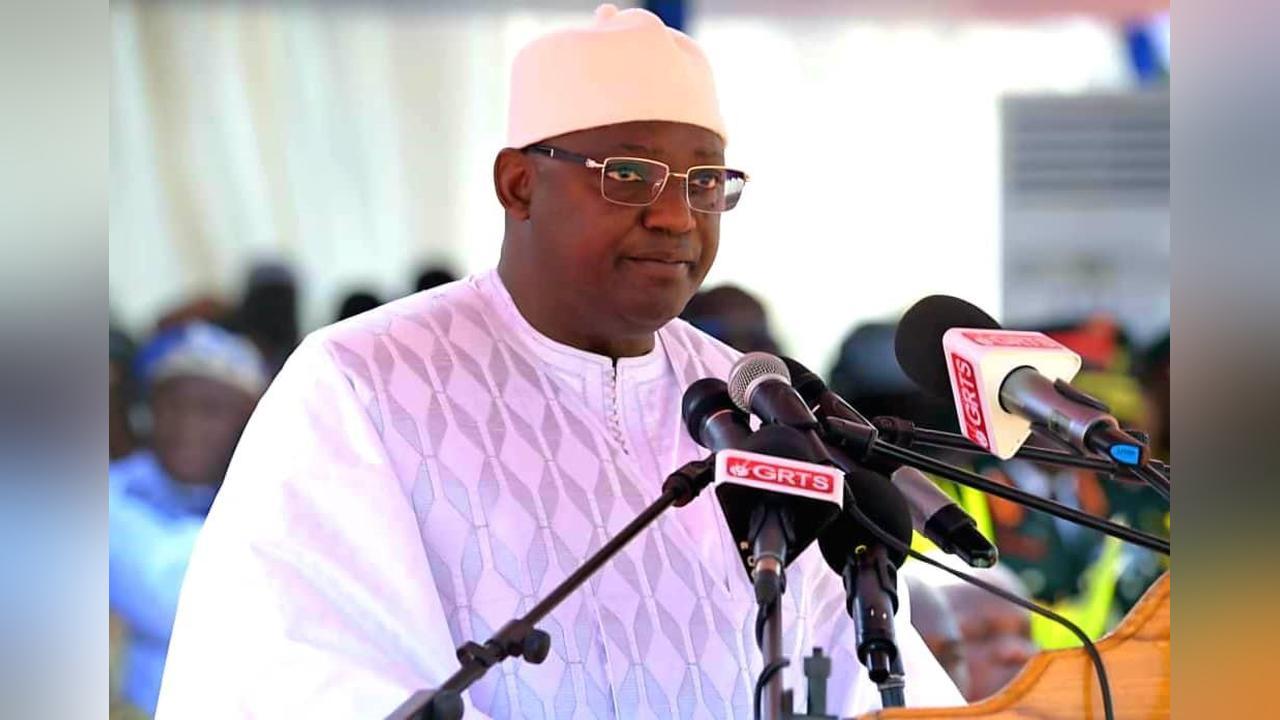
Speaking at the official celebrations, President Barrow described independence as “a living responsibility that demands vision, discipline and collective effort,” emphasizing the need to chart a national development path, harness domestic resources, and ensure shared prosperity.
This year’s theme, “Harnessing The Gambia’s Human and Infrastructural Resources for an Inclusive Leap to Prosperity,” aligns with the country’s National Development Plan, YIRIWA. According to the president, YIRIWA provides strategic guidance for economic transformation, social inclusion, and institutional strengthening, ensuring that no Gambian is left behind.
“Sixty-one years ago, our forebears fought for the right to determine our destiny. Today, YIRIWA stands as a modern expression of that struggle — a Gambian-owned blueprint focused on improving the lives and livelihoods of our people,” he said.
President Barrow highlighted the relevance of post-independence values such as hard work, resilience, honesty, and collective responsibility in addressing contemporary development challenges.
Under the YIRIWA framework, government priorities include health, energy, infrastructure, education, food security, and democratic governance. Since 2017, the administration has expanded and upgraded health facilities nationwide, strengthened service delivery, and invested in human capital to improve access to healthcare.
In the energy sector, President Barrow cited the expansion of the national grid and the commissioning of renewable energy projects, including large-scale solar investments, as steps toward energy security and economic competitiveness.
On infrastructure, he highlighted ongoing road projects, including those linked to the Organisation of Islamic Cooperation summit and regional feeder roads, noting their role in improving connectivity, trade, and national integration.
The president reaffirmed the government’s commitment to food self-sufficiency and agricultural modernization, supporting farmers with improved inputs, equipment, extension services, and market access. “A sovereign nation must be able to feed itself,” he said, stressing agriculture’s importance for employment creation, poverty reduction, and national stability.
Regarding governance, he noted expanded civic space, strengthened democratic institutions, and reinforced respect for the rule of law, including the establishment of the National Human Rights Commission. In education, reforms include a competency-based curriculum and institutional upgrades aimed at aligning skills development with national priorities.
Addressing youth issues, President Barrow described young people as a critical national asset and outlined initiatives in skills development, entrepreneurship, digital innovation, and targeted financing to boost their economic participation.
He acknowledged persistent challenges, such as youth unemployment, rising living costs, climate shocks, and global economic uncertainties, calling for unity, discipline, and national cohesion. He reiterated a policy of zero tolerance for corruption, inefficiency, and complacency in the public service, pledging continued accountability and prudent use of public resources.
President Barrow also expressed gratitude to parents, teachers, students, and members of the defence and security services for participating in the anniversary celebrations, and thanked development partners for their support of The Gambia’s national agenda.
“At 61, The Gambia reflects renewed confidence and purposeful direction. Independence must be measured by improvements in public services, institutions, and inclusive growth. Together, let us continue building a peaceful, prosperous, and resilient Gambia for present and future generations,” he said.