
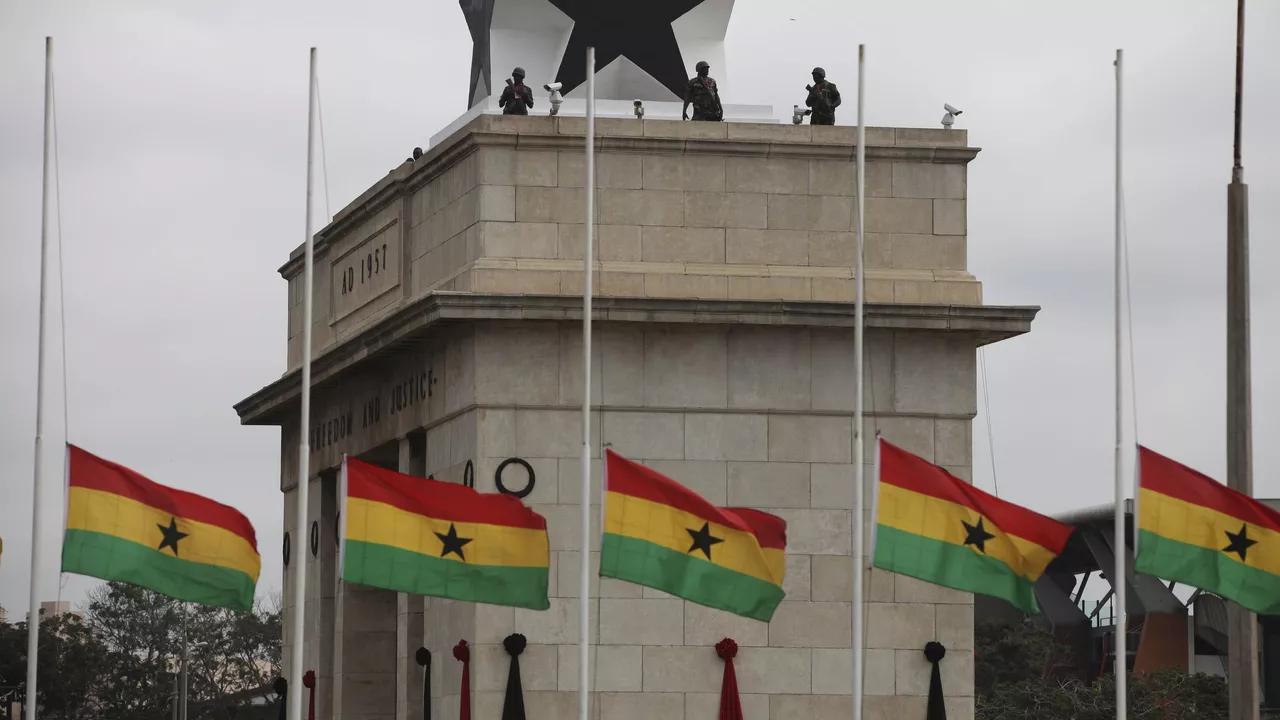
Africa-Press – Ghana. For over a century, the land litigation between the Nkonya and Alavanyo communities in Ghana’s Volta Region has been a painful reminder of how unresolved boundaries can fracture societies.
Since 1923, the contested portion of the land has been a flashpoint of violence, mistrust, and disrupted livelihoods.
Now, the government’s decision to cede the land to the Ghana Armed Forces for the establishment of a military training school is being hailed by many as a bold step towards lasting peace.
Citizens’ voices: Relief and cautious optimism
Across Ghana, citizens have reacted with a mix of relief, hope, and cautious optimism.
Ama Korkor, a trader in Accra, said: “This is long overdue. If the land is used for national security installation, then neither side can claim ownership. It’s a win for peace.”
Kwame Mensah, a teacher in Hohoe, expressed guarded optimism: “We’ve seen peace talks fail before. But if the military presence ensures no one can fight over the land again, then maybe our children will finally grow up without fear.”
Efua Adzo, a student in Kumasi, added: “Beyond peace, I hope the training school creates jobs and opportunities for the youth in the Volta Region. Development is the best peacekeeper.”
These sentiments reflect a broader national mood: a recognition that while the scars of conflict run deep, the repurposing of the land could mark a turning point.
Expert Insights: peace and development intertwined
Peace resolution experts and development analysts have weighed in on the government’s decision. Dr. Josephine Akoto, a peace and conflict resolution scholar, noted: “Transforming the disputed land into a neutral, state-owned facility is a classic conflict resolution strategy.
It removes the basis of rivalry while creating a shared symbol of national unity.
However, the success will depend on continuous dialogue with the communities to ensure they feel included, not sidelined.”
– Mr. Daniel Kpodo, a development consultant, emphasized the socio-economic angle: “Military installations often bring infrastructure—roads, electricity, water systems—that benefit surrounding communities.
If managed well, this project could stimulate local economies, reduce unemployment, and foster cooperation between Nkonya and Alavanyo.”
Both experts agree that peace cannot be sustained by force alone.
The training school must be accompanied by deliberate community engagement, reconciliation programmes, and equitable development initiatives.
Government’s assurances
The Deputy Defence Minister, Ernest Brogya Genfi, announcing the decision on the floor of Parliament on Thursday, November 06, 2025, underscored that the project was not merely about security but also about healing.
He assured that the Ghana Armed Forces would collaborate with local leaders to ensure smooth implementation and that the facility would serve as a catalyst for peace and prosperity.
“The presence of the Armed Forces will help maintain peace, prevent further clashes, and foster development,” he said, stressing that the government’s priority is to turn a century-old conflict zone into a beacon of stability.
A Symbol of National Interest
The Nkonya-Alavanyo conflict has long been a thorn in Ghana’s side, with periodic flare-ups undermining regional stability.
By converting the land into a military training school, the government is sending a strong message: national interest and peace must take precedence over parochial disputes.
For many Ghanaians, the decision represents more than just a resolution to a land feud. It is a chance to rewrite history—transforming a battlefield into a training ground for national defenders, and a symbol of unity for future generations.
The Road Ahead
While optimism is high, experts caution that peace is a process, not an event.
The military school may end the territorial dispute, but reconciliation between the Nkonya and Alavanyo people will require sustained dialogue, cultural exchange, and trust-building.
Still, for the first time in decades, there is a tangible sense that the cycle of violence may finally be broken. As one elder in the Volta Region put it: “If our land can now serve Ghana, then maybe our suffering was not in vain.”
Source: Ghana News Agency
For More News And Analysis About Ghana Follow Africa-Press